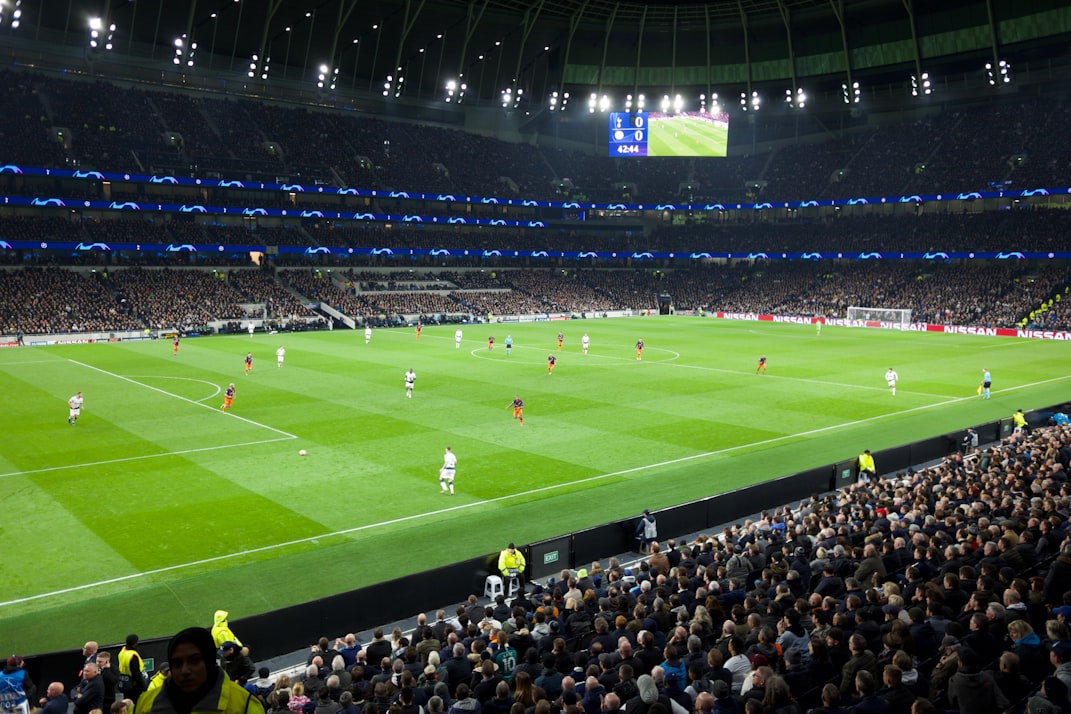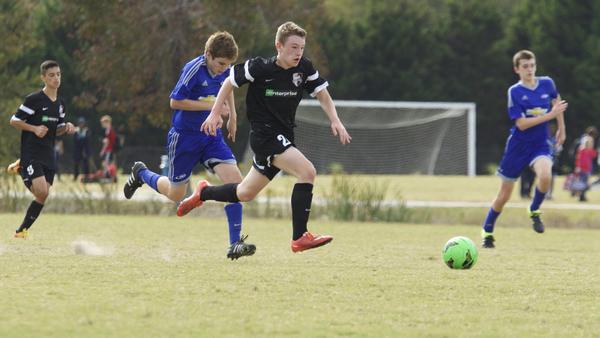

In a tight, evenly matched game, the difference between three points and one often comes down to a single moment of quality, a corner, a free-kick, a well-worked throw-in. These are the moments when the chaos of open play stops, and strategy takes over. For grassroots teams, mastering the set piece is one of the most effective ways to level the playing field, and the single best tool for achieving that mastery is video analysis.
Forget the idea that this is something reserved for professional clubs with teams of analysts. With a smartphone and a bit of know-how, you can unlock a level of tactical insight that can transform your team's effectiveness. It’s about moving from hoping for the best to creating a clear, repeatable plan for success. At TeamStats, we want to show you how to turn that match footage into your team's most powerful coaching asset.
Why Video is Your Most Honest Critic
As coaches, we see a lot from the touchline, but we don't see everything. Memory can be selective; we remember the goal-line clearance but forget the sloppy marking that led to the chance in the first place. Video doesn't have an opinion. It shows you exactly what happened, providing objective, undeniable feedback.
Think of it like a mechanic trying to diagnose a problem with a car engine. They can listen to it and make an educated guess, but it’s only when they plug it into the diagnostic computer that they get the real, detailed data. Video analysis is your diagnostic tool for football. It allows you to pause, rewind, and break down a split-second moment into its component parts, revealing the small details that make a huge difference.
From Guesswork to Game Plan
Without video, your feedback is based on memory. "Lads, we need to be better on their corners." With video, your feedback is precise. "Lads, look at this clip. We can see that on every corner, their number 5 makes a run to the near post, and we're not tracking him." This level of specific, visual evidence is far more powerful and easier for players to understand and act upon. It turns a vague feeling into a concrete, solvable problem.
Setting Up Your Analysis System
Getting started with video analysis is easier than you think. You don’t need a Hollywood budget, just a simple, consistent process.
The Essentials for Capturing the Action
The Camera: A modern smartphone that records in 1080p HD is perfectly adequate. If you have a camcorder or a GoPro, even better.
The Tripod: This is the most important piece of kit. Shaky footage is almost impossible to analyse effectively. A simple, affordable tripod will make a world of difference.
The Vantage Point: This is crucial. Get as high and as central as you can. Filming from the top of the stands at the halfway line is ideal. This elevated position gives you a tactical overview, allowing you to see the shape of both teams and the movement of all players, not just those around the ball.
Organising Your Footage
Once you have the footage, organisation is key. Create a simple folder system on your computer (e.g., "Season 2026-26" > "Matches" > "Vs Opponent - 15-09-25"). When you review a match, create short clips of each key set-piece and label them clearly (e.g., "Attacking Corner 1," "Defensive FK 3"). This will save you hours of scrubbing through full matches later on.
Analysing Your Attacking Set-Pieces
This is where you find your hidden goal-scoring opportunities. When reviewing your attacking corners and free-kicks, you’re looking for the relationship between three key elements: the delivery, the movement, and the finish.
Corners: Creating and Exploiting Space
Delivery: Is the ball consistently hitting the target area? Is an inswinger or an outswinger more effective with your players?
Movement: Are the runs timed correctly? Look for clever movements like a near-post player flicking the ball on, a player acting as a screen to block a marker, or an overload at the back post.
Finishing: Are players attacking the ball aggressively? Are they getting clean contact?
Your analysis might reveal that your deliveries are perfect, but your runners are starting their movements too early and getting crowded out. This tells you to focus your next training session on the timing of the runs, not the delivery itself.
Fortifying Your Defensive Set-Pieces
Conceding from a set-piece is one of the most frustrating things in football because, in theory, it’s a controllable situation. Video analysis is your key to plugging the gaps.
Defending Corners and Free-Kicks
System: Are you using man-marking, zonal marking, or a hybrid? The video will show you which system suits your players best. You might see that in your zonal system, one area is consistently left open.
Individual Roles: Is every player clear on their job? Who is attacking the ball? Who is protecting the posts? Who is marking their key player?
The Second Ball: What happens after the initial header? Are your players reacting quickest to the loose ball, or are they caught watching?
I once coached a team that kept conceding from wide free-kicks. It was infuriating. On the video, we spotted the problem. The opposition was putting one player right in front of our keeper. Our keeper, distracted, would take a step to the side, and they would whip the ball into the space he’d just vacated. It was a simple but clever routine. The next training session, we worked on a specific strategy to deal with it. Our biggest defender's only job was to legally stand his ground in front of their "blocker." In the next match, they tried it twice, our defender did his job, the keeper was free to attack the ball, and we cleared it easily. Without the video, we never would have spotted that tiny but crucial detail.
The Feedback Loop: From Analysis to the Training Pitch
Your analysis is only useful if it leads to action. You need a simple process for sharing your findings and integrating them into your training.
The Team Meeting
Keep it short and focused. Don't show them a 20-minute video of every mistake.
Select 3-4 Key Clips: Choose two things you did well and two areas for improvement. Starting with positives builds confidence.
Use Annotations: Use simple on-screen arrows or circles to highlight the key player or space you’re talking about.
Encourage Discussion: Ask the players what they see. This creates buy-in and helps them take ownership of the solutions.
Designing Your Training Sessions
Your analysis should directly inform your training plan. If your issue is defending the near post on corners, create a drill where a server repeatedly delivers the ball to that area, with your defenders and attackers competing. This targeted practice, based on real-game evidence, is far more effective than generic drills. You can use our team management app to schedule these specific sessions and share the relevant clips with your players beforehand. Your tactical approach to set-pieces should also align with your overall strategy, whether you're using one of the best football formations for possession or a counter-attacking setup.
By making video analysis a regular part of your coaching routine, you create a culture of continuous improvement. You empower your players with clear, visual feedback and give your team a tactical edge that can turn draws into wins and good seasons into great ones.
If you have any questions about getting started, please don't hesitate to get in touch.