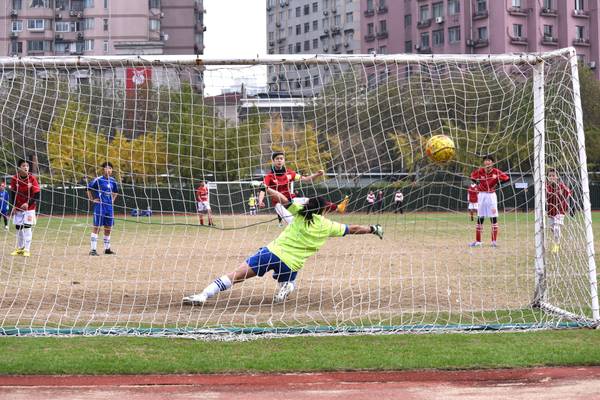

For millions across the United Kingdom, the rhythm of the weekend is defined by the shrill sound of a referee's whistle on a Sunday morning. It’s the smell of damp grass, the shouts of encouragement from the touchline, and the shared joy or despair over a post-match pint. This is Sunday league football, a cultural institution woven into the very fabric of the nation’s favourite sport.
Its story is not one of gleaming stadiums or millionaire superstars, but of muddy pitches, makeshift changing rooms, and an unwavering passion for the game. The history of Sunday league football in the UK is a tale of community, camaraderie, and pure, unadulterated love for the sport. At TeamStats, we work with thousands of these clubs, and we know that their stories are the true heartbeat of British football.
Humble Beginnings: A Working-Class Kickabout
The origins of Sunday league football trace back to the late 19th and early 20th centuries, born from the grit and grind of industrial Britain. For the working-class man, life was a relentless cycle of long hours in factories, mills, and mines. The six-day working week was exhausting, leaving Sunday as the solitary day for rest and recreation. It was on this day that the seeds of the Sunday league were sown.
These early matches were informal, spontaneous affairs, often organised between different departments of the same factory or rival workplaces. Think of them like a garage band starting out; raw, a bit chaotic, but driven by pure passion. Coats were used for goalposts, and the only prize on offer was a week's worth of bragging rights. This world existed far from the official gaze of the Football Association. In fact, due to strict Sabbatarian rules, playing organised sport on a Sunday was often frowned upon, making these early kickabouts an act of minor rebellion.
The Post-War Boom: A National Phenomenon
After the Second World War, as the country began to rebuild, Sunday league football exploded in popularity. A renewed sense of community spirit swept the nation, and local football became a central part of it. Pubs became the unofficial clubhouses, with landlords sponsoring kits in exchange for the team’s custom after the match. Local businesses, from butchers to builders, would put their names on shirts, proudly supporting their local lads.
This era saw the formalisation of countless leagues across the country. Suddenly, the informal kickabout had a structure, with league tables, cup competitions, and official referees. The Sunday morning match became a proper event. Families would line the pitches, and the post-match debrief in the pub was as important as the 90 minutes that preceded it. This was more than just a game; it was the social glue holding communities together, a weekly ritual that bonded fathers, sons, and neighbours.
The Golden Age: Legends of the Local Pitch
The 1960s and 70s are widely regarded as the golden age of Sunday league. Participation was at an all-time high, pitches were packed every weekend, and local rivalries were the stuff of legend. This was the era that produced countless stories of larger-than-life characters and unforgettable moments, shaping a rich folklore that is still passed down in clubhouses today.
But what was it about this period that etched it so deeply into the nation's footballing soul? It was the sheer diversity of players. You’d have ex-professionals, whose legs weren't quite what they used to be, playing alongside enthusiastic amateurs living out their dreams. The standard could be surprisingly high, and the competition was always fierce, often boiling over into legendary on-pitch battles. The game was intensely physical, a world away from the non-contact training sessions of today.
I'll never forget the stories my old gaffer used to tell about the 1975 Cup Final between his pub team, The Red Lion, and their bitter rivals, The Nag's Head. The whole village turned out. The game was a brutal 1-1 draw until the last minute when the Lion’s striker went down in the box. The ref pointed to the spot, a decision still debated in that pub today. He scored, they won the cup, and the striker didn't have to buy a pint for the next decade. That’s what it was all about: moments of local glory that felt as big as any FA Cup final.
Modern Challenges: An Evolving Game
Like any long-standing tradition, Sunday league football has faced its share of challenges in recent decades. The rise of satellite television, offering wall-to-wall professional football, has provided stiff competition for people's attention. The demands of modern life, with work patterns becoming more varied, have made it harder for players to commit to a full season.
Pitch availability and quality have also become significant hurdles. Local councils, facing budget cuts, have struggled to maintain playing fields, leading to waterlogged pitches and postponed games. The sale of playing fields for housing developments has further reduced the number of available spaces. Furthermore, the rising cost of pitch hire, insurance, and affiliation fees has placed a significant financial burden on many clubs. Despite these pressures, the game has not faded away. Instead, it has adapted. The history of Sunday league football in the UK is a story of resilience, and its modern chapter is no different.
Sunday League Today: Passion Endures
Today, Sunday league football remains a vital part of the UK's sporting landscape. While the number of teams may have declined from its peak, the passion of those who remain is as strong as ever. Technology has played a huge role in this evolution. Where managers once spent hours on the phone chasing players for their availability, modern tools have streamlined the process.
Our team management app, for example, helps with everything from scheduling fixtures to collecting subs, freeing up volunteers to focus on the football. Finding a team to join has also never been easier. Directories of Sunday League teams allow new players to connect with clubs in their local area, ensuring a steady flow of fresh talent.
The game has also become more diverse. While the traditional men's game is still at its core, there has been a significant growth in women's, veterans', and youth Sunday leagues, reflecting the changing face of modern Britain. The spirit of the game endures. It’s still about a group of mates coming together to play the sport they love. It’s still about that one moment of magic, that last-ditch tackle, or that perfectly struck volley that becomes a story for the ages. This is the essence of what is grassroots football, and it is as important today as it has ever been.
The enduring appeal is simple. It's the camaraderie, the competition, and the sheer, unadulterated joy of the game. It’s a community, a place where friendships are forged and the love of football is celebrated in its purest form.
If you have any questions about running your own team, please feel free to get in touch.