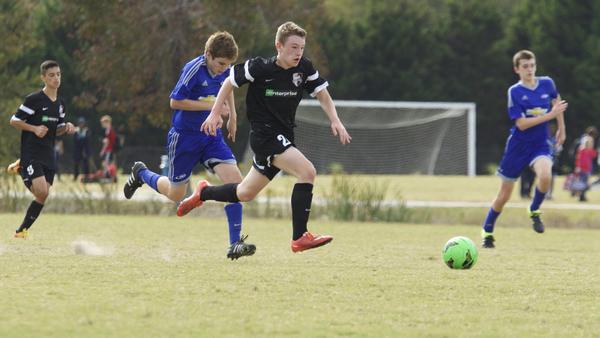

Spatial awareness stands as one of the most critical yet often underdeveloped skills in grassroots football. Young players who understand how to scan their surroundings, recognise available space, and position themselves effectively gain a significant advantage on the pitch. Group drills offer the ideal environment for developing this essential skill, combining realistic match scenarios with structured learning opportunities that accelerate player development.
Unlike individual training methods, group drills create the dynamic, interactive environment that mirrors actual match conditions. Players learn to read the movement of teammates and opponents simultaneously, developing the tactical intelligence that separates good players from exceptional ones. Through carefully designed exercises, coaches can systematically build spatial awareness whilst maintaining the enjoyment and engagement that keeps young players motivated.
This comprehensive guide explores proven group drill methodologies for teaching spatial awareness across all age groups, from foundation-level players to advanced youth teams. Whether coaching small-sided games or full 11v11 squads, these practical strategies will enhance your players' understanding of space, positioning, and movement.
Understanding Spatial Awareness in Football
What Is Spatial Awareness
Spatial awareness in football refers to a player's ability to understand their position relative to teammates, opponents, the ball, and the pitch boundaries. This cognitive skill enables players to make informed decisions about when to move, where to position themselves, and how to exploit available space during matches.
Effective tactical awareness training develops through consistent exposure to game-realistic scenarios where players must constantly assess their surroundings. Young players naturally focus on the ball, but spatial awareness requires them to expand their field of vision, scanning regularly to gather information about the evolving tactical situation.
As players mature and their cognitive abilities develop, spatial awareness becomes increasingly sophisticated. Foundation-level players might simply learn to find empty space, whilst older youth players develop nuanced understanding of creating space for teammates, recognising pressing triggers, and coordinating complex positional rotations.
Why Group Drills Work Best
Individual training has its place in player development, but spatial awareness fundamentally requires interaction with other players. Group drills create authentic learning environments where players experience realistic decision-making pressure, time constraints, and the unpredictable movement patterns that characterise actual matches.
Working within groups also builds communication skills naturally. Players learn to call for the ball, provide directional guidance to teammates, and develop the verbal and non-verbal communication patterns that effective teams rely upon. These social interactions reinforce learning whilst making training sessions more enjoyable and engaging for young players.
TeamStats provides grassroots coaches with the organisational tools needed to plan progressive training sessions that build spatial awareness systematically throughout the season. Managing squad rotations, tracking attendance, and coordinating multiple groups becomes straightforward with proper team management systems.
Fundamental Group Drills for Spatial Awareness
Rondo Variations for Positioning
Rondos remain amongst the most effective drills for developing spatial awareness and quick decision-making. The classic format places defenders in the centre whilst attackers maintain possession around the perimeter, forcing players to scan constantly, adjust positioning, and recognise passing angles.
Begin with simple numerical advantages such as 5v2 or 6v2, ensuring players experience success whilst learning fundamental principles. As spatial awareness improves, reduce the advantage to 5v3 or introduce conditions such as two-touch limits or requiring players to receive with their back foot.
The confined space in rondos accelerates learning by creating frequent decision-making moments. Players quickly discover that proper body positioning - opening up to see both the ball and available passing options - dramatically improves their effectiveness. Progressive coaches should experiment with different shapes, adding neutral players or creating multiple zones to challenge developing players appropriately.
Possession Games With Zones
Zoned possession games teach players to recognise and exploit space across larger areas. Divide the pitch into thirds or create a grid with designated zones, then challenge teams to maintain possession whilst moving the ball between different areas.
This drill type directly addresses one of grassroots football's most common weaknesses - teams that bunch together rather than spreading across available space. By requiring players to occupy different zones, coaches enforce spatial discipline whilst players learn to scan for teammates in advantageous positions.
Start with simple rules such as requiring one player in each zone, then progress to more complex conditions. Advanced variations might require the ball to travel through each zone in sequence, or award bonus points for successfully switching play between wide zones. Understanding best football formations helps coaches design possession games that mirror their preferred match-day systems.
Small-Sided Directional Games
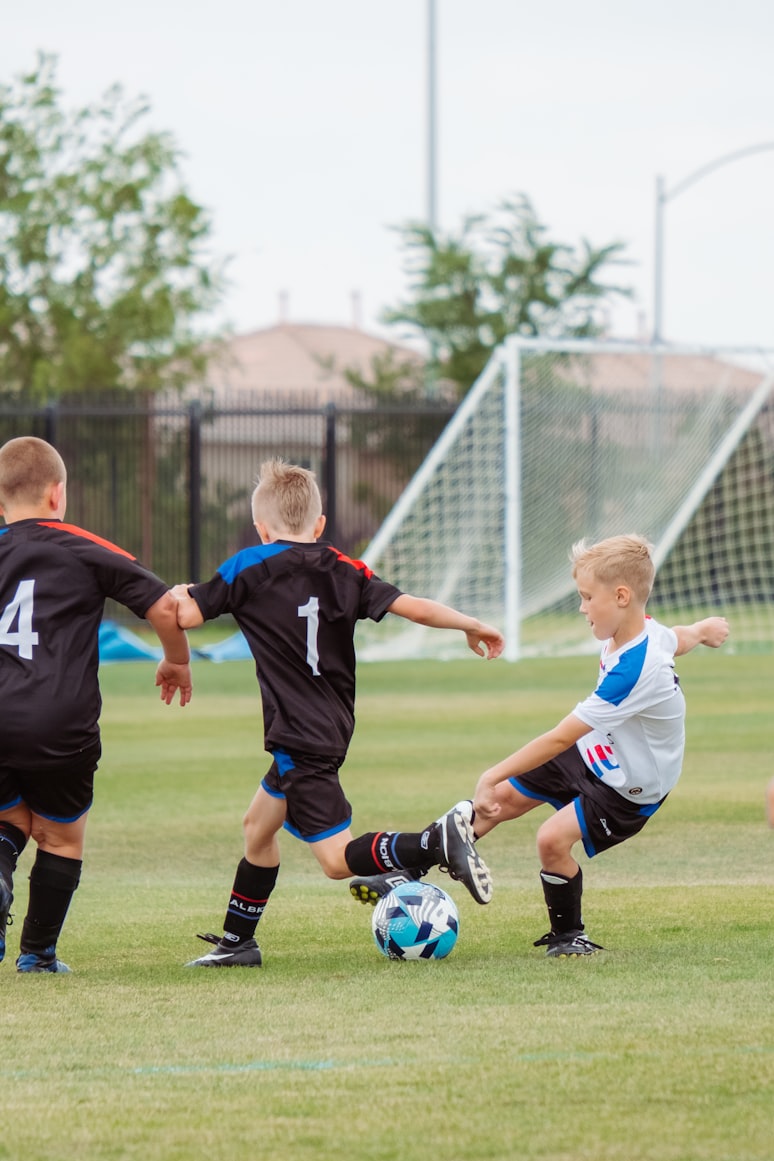
Small-sided games represent the pinnacle of functional training, combining technical practice with tactical learning in match-realistic formats. Games of 4v4, 5v5, or 6v6 on appropriately sized pitches create numerous decision-making opportunities whilst ensuring all players remain actively engaged.
The restricted space in small-sided games forces players to think quickly and move intelligently. Unlike full-pitch training where players might hide or drift passively, smaller formats ensure constant involvement, dramatically increasing the repetitions of scanning, positioning, and spatial problem-solving.
Directional games with goals add competitive motivation whilst teaching players to recognise attacking and defensive spatial principles. Players learn when to drop into space to receive, when to make runs in behind, and how to create passing angles through coordinated movement. For teams playing 7-a-side formations, these scaled-down games provide ideal preparation for match-day situations.
Advanced Spatial Awareness Training Methods
Shadow Play and Movement Patterns
Shadow play involves unopposed movement where the entire team practices positional rotations, passing patterns, and coordinated runs without defensive pressure. This methodology allows coaches to freeze play, correct positioning errors, and ensure players understand their spatial responsibilities before adding the complexity of opposition.
Begin shadow play sessions by walking through movements, gradually increasing tempo as players demonstrate understanding. Focus on maintaining proper spacing between players, coordinating movement timing, and developing the automatic positional relationships that characterise well-coached teams.
Whilst shadow play lacks the unpredictability of opposed practice, it provides essential foundations for complex tactical systems. Players internalise proper positioning principles that persist when defensive pressure arrives. This approach proves particularly valuable when introducing new formations or tactical concepts to youth teams.
Transition Drills
The moments when possession changes hands present football's greatest spatial challenges. Players must instantly reorganise, whether sprinting to press opponents or dropping into defensive shape. Tactical awareness training focused on transitions develops the cognitive flexibility that separates elite teams from average ones.
Design transition drills with clear triggers - perhaps when the coach calls "turn" or when the ball enters a specific zone. One team immediately transitions to attack whilst their opponents must recognise the change and adjust positioning accordingly. These high-intensity exercises simulate the chaotic nature of actual matches whilst teaching players to read transitional moments.
Progress from predictable transitions to increasingly random scenarios. Advanced variations might involve multiple balls, neutral players who switch allegiance, or specific objectives such as pressing to win possession in certain zones. The cognitive load created by these complex drills accelerates the development of spatial intelligence.
Functional Practice in Match Context
Functional practice connects specific positional units whilst maintaining match-realistic demands. Unlike isolated drills, functional practice involves multiple lines - perhaps midfielders and forwards attacking against defenders - creating authentic spatial relationships and decision-making scenarios.
Position-specific spatial awareness develops through repeated exposure to functional situations. Defenders learn to cover space behind pressing teammates, midfielders understand when to drop between defensive lines, and forwards recognise when to stretch defences versus when to drop deep.
These practices should directly mirror your team's match-day approach. If playing with a holding midfielder in the number six position, functional practice should emphasise that player's spatial responsibilities, teaching them when to drop between centre-backs, when to screen the defence, and how to position themselves to receive under pressure.
Age-Appropriate Considerations
Adapting Drills for Younger Players (U7-U10)
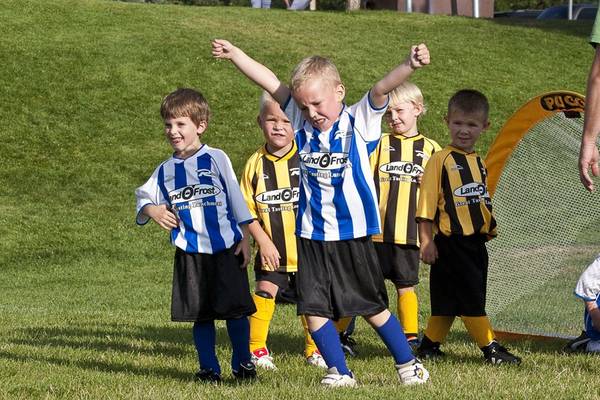
Foundation-age players require simplified concepts presented through fun, game-based methods. Their developing cognitive abilities and shorter attention spans demand frequent variation and high enjoyment levels to maintain engagement.
Focus on fundamental concepts such as finding empty space, keeping your head up, and spreading out across the pitch. Use colourful cones, engaging games with creative names, and frequent positive reinforcement to build confidence. Small-sided games should feature very small numbers - often 3v3 or 4v4 - ensuring maximum touches and constant involvement.
Avoid overwhelming young players with complex tactical instructions. Instead, use simple cues such as "can you find a space where nobody is standing?" or "look around before you receive the ball." Understanding what age to introduce football helps coaches set developmentally appropriate expectations for spatial awareness.
Developing Technical-Tactical Understanding (U11-U14)
Players entering the development phase can handle increased complexity and begin understanding how spatial awareness connects to team tactics. This crucial period establishes whether players develop into tactically intelligent footballers or remain technically skilled but positionally naive.
Introduce formation-specific concepts gradually, explaining how players in different positions should position themselves relative to teammates. Tactical awareness training becomes more explicit, with coaches naming specific principles such as "creating width," "compacting centrally," or "maintaining defensive balance."
Balance technical skill development with tactical learning, ensuring players don't become so focused on positioning that their ball mastery suffers. The best development programmes integrate both elements, using possession drills and small-sided games that simultaneously develop technique and spatial intelligence.
Preparing Older Youth Players (U15+)
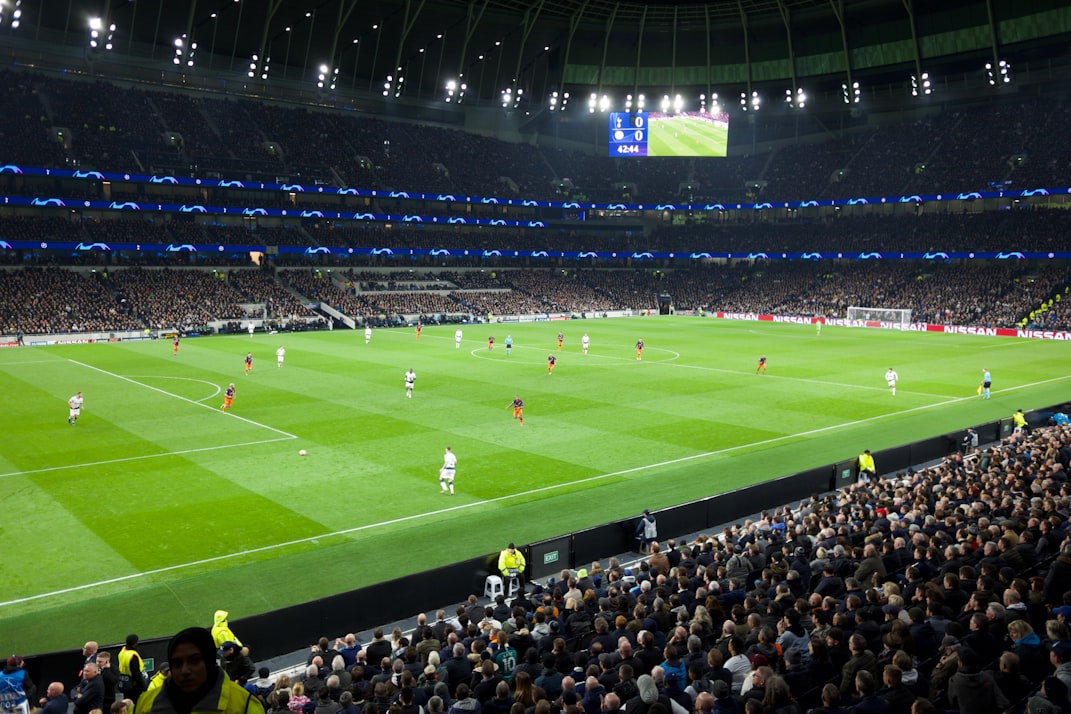
Advanced youth players should train in match-realistic scenarios that mirror adult football's tactical sophistication. Spatial awareness at this level involves understanding complex pressing schemes, coordinated defensive movements, and sophisticated attacking patterns.
Position-specific intelligence becomes paramount. Wide players learn when to hold width versus when to move inside, central midfielders understand defensive balance principles, and forwards develop sophisticated movement patterns to create space for teammates. These nuanced concepts require detailed coaching and frequent video analysis.
Older players benefit from tactical discussions that involve them in problem-solving. Rather than simply dictating positions, effective coaches pose questions: "Where should we position ourselves when the ball is in that area?" This collaborative approach develops thinking players who can adapt to changing match situations independently.
Coaching Points and Common Mistakes
Key Coaching Cues for Spatial Awareness
Effective coaching of spatial awareness relies on consistent, memorable cues that players can quickly process during matches. "Scan before you receive" stands as the foundational principle - players must look over their shoulders before the ball arrives, gathering information about available options.
Body positioning represents another critical coaching point. Teach players to adopt an "open body shape" where possible, positioning themselves to see both the ball and the maximum number of passing options simultaneously. This seemingly simple concept dramatically improves decision-making speed and quality.
Timing of movement presents particular challenges for young players. Many move into space too early, allowing defenders to adjust, whilst others remain static when movement could create advantages. Use freeze-frame moments during training to highlight good and poor timing decisions, gradually developing players' intuitive understanding.
Common Errors to Address
Ball-watching remains the most prevalent spatial awareness error across grassroots football. Players fixate on the ball's location, neglecting to monitor their surroundings, mark opponents, or recognise available space. Constant reinforcement of scanning habits gradually overcomes this natural tendency.
Poor body positioning limits many developing players. They receive passes whilst facing their own goal, or position themselves where they can't see approaching opponents. Patient coaches must repeatedly demonstrate proper angles, positioning, and receiving techniques that facilitate effective spatial awareness.
Bunching represents a team-level spatial awareness failure common in youth football. Players congregate around the ball rather than maintaining proper spacing, reducing passing options and making defending simpler. Implementing games where players must occupy specific zones can break this tendency, developing better spatial discipline.
How to Provide Effective Feedback
Freeze moments during drills provide powerful learning opportunities. Stop play when you observe excellent or poor positioning, gather players around, and discuss what made that moment effective or problematic. This immediate, contextual feedback proves far more impactful than post-training discussions.
Video analysis benefits older youth players tremendously, particularly when reviewing actual match footage. Players often don't realise their positioning errors until seeing themselves on video, making this tool invaluable for developing spatial self-awareness.
Encourage self-awareness by asking questions rather than providing answers. "What could you have done differently there?" or "Where was the available space in that moment?" prompts players to think critically about spatial decisions, developing the analytical skills needed for continued improvement.
Measuring Progress and Development
Observable Indicators of Improvement
Improved scanning frequency provides the clearest indicator of developing spatial awareness. Players who regularly check their shoulders before receiving possession demonstrate growing tactical maturity. Count scanning actions during training games to quantify this behaviour.
Decision-making speed improves noticeably as spatial awareness develops. Players who previously hesitated with the ball begin making quicker, more confident decisions. They recognise available options faster because they've scanned earlier, gathering critical information before receiving possession.
Match-day positioning offers the ultimate measure of spatial awareness development. Players begin appearing in advantageous positions more frequently, making intelligent runs into space, and maintaining better team shape throughout matches. These improvements often manifest gradually, requiring patient observation across multiple weeks.
Using Technology and Apps for Tracking
Recording training sessions allows detailed analysis of player development over time. Simple smartphone recordings provide valuable review material, helping players visualise their positioning and movement patterns. Share clips with parents to demonstrate progress and maintain engagement.
Modern team management apps streamline organisation whilst providing features for tracking individual development. Recording observations about spatial awareness progress, sharing video clips, and maintaining consistent communication with parents becomes straightforward with proper digital tools.
Tracking attendance and participation patterns helps identify players who might need additional support. Those missing frequent sessions often lag behind teammates in spatial understanding, requiring targeted remediation work to maintain overall squad cohesion.
Conclusion
Teaching spatial awareness through group drills represents one of football coaching's most rewarding challenges. The transformation from players who cluster around the ball to tactically intelligent footballers who understand space, timing, and positioning unfolds gradually through consistent, progressive training.
The drills and methodologies outlined provide a comprehensive framework for developing spatial awareness across all youth age groups. Remember that progress requires patience - cognitive skills develop more slowly than physical attributes, and spatial intelligence represents one of football's most sophisticated cognitive demands.
Whether coaching in competitive grassroots football leagues or recreational programmes, prioritising spatial awareness development pays long-term dividends. Players who understand space become more effective regardless of their technical ability level, contributing more meaningfully to team success whilst enjoying enhanced football understanding.
Implement these group drills consistently throughout your season, adapting complexity to match your players' developmental stage. With proper planning, progressive coaching, and sustained focus on spatial principles, you'll develop tactically aware players who excel both individually and collectively. Start integrating these methods into your training programme today and witness the transformation in your team's spatial intelligence and match-day performance.
═══════════════════════════════════════════════════════════════