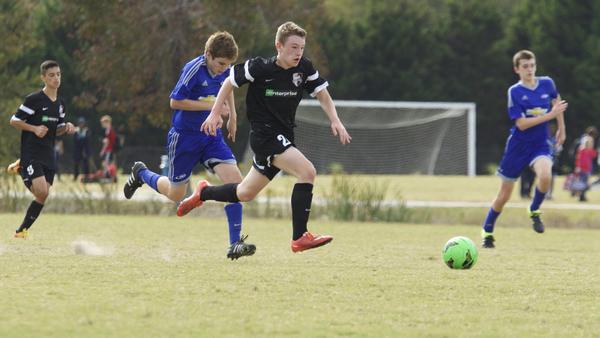

Post-match analysis represents a critical development opportunity in grassroots football, yet many coaches struggle to engage players meaningfully beyond brief pitch-side feedback. Traditional approaches - coaches delivering lengthy monologues about what went wrong - often leave young players disengaged, defensive, or confused. The most effective development occurs when teams review match reports collectively, transforming passive listening into active learning.
Match report discussion shifts the dynamic from coach-directed critique to collaborative analysis. When players contribute observations, question tactical decisions, and reflect on collective performance, they develop football intelligence that extends far beyond executing instructions. This participatory approach builds ownership, accountability, and a deeper understanding of the game's tactical and strategic dimensions.
TeamStats provides grassroots clubs with accessible tools to generate comprehensive match reports that facilitate meaningful team discussions. Modern platforms streamline data collection and presentation, enabling coaches to focus on facilitation rather than administrative burden. Effective match report discussion becomes practical even for volunteer coaches managing multiple responsibilities.
The Value of Collective Match Analysis
Building Tactical Understanding Through Discussion
Players learn tactical concepts more effectively when they discover insights themselves rather than receiving instruction passively. Collaborative match report discussion allows team members to share perspectives from different positions, revealing how individual actions affect collective performance. A defender explaining why they held their line helps attackers understand positional discipline, whilst forwards describing their movement patterns illuminates space creation for midfielders.
Shared ownership of performance emerges naturally when teams analyse reports together. Players stop viewing matches as coach-evaluated tests and start seeing them as collective challenges requiring coordinated solutions. This mindset shift proves particularly valuable in grassroots football, where volunteer coaches often lack professional credentials but compensate through facilitated learning environments.
Developing football intelligence requires more than physical training and tactical drills. Young players need opportunities to think critically about the game, assess evidence, and form reasoned conclusions. Team-based report reviews provide structured settings for this cognitive development, accelerating tactical maturity beyond what pitch training alone achieves.
Creating Accountability Without Blame
Team responsibility differs fundamentally from individual blame. Effective match report discussion acknowledges individual contributions within collective contexts - a missed defensive assignment becomes "we lost shape" rather than "you made a mistake." This framing maintains accountability whilst fostering psychological safety essential for honest reflection and risk-taking in matches.
Growth mindset principles apply directly to youth football development. Players who view mistakes as learning opportunities rather than personal failures demonstrate greater resilience and faster improvement. Team-based report reviews normalise imperfection and celebrate improvement, creating cultures where players actively seek feedback rather than avoid scrutiny.
Fostering resilient players requires balancing challenge with support. Match reports highlight areas needing improvement without diminishing effort or undermining confidence. When teams discuss performance collectively, players recognise challenges as shared rather than personal burdens, building mental toughness through mutual support.
Preparing Matchday Reports for Team Review
What Data to Include
Key statistics and performance metrics provide objective foundations for discussion. Possession percentages, shots on target, passing accuracy, and territorial control data quantify performance aspects that memory alone struggles to capture accurately. However, numbers require context - statistics prompt questions rather than provide definitive answers about match quality.
Tactical observations complement statistical data with qualitative insights. Did the team maintain defensive shape during transitions? Were attackers making runs that stretched opposition defences? Did midfielders support both attack and defence effectively? These observations focus the discussion on controllable tactical execution rather than uncontrollable outcome variables like opposition quality or referee decisions.
Individual and collective highlights balance developmental feedback with recognition. Every match contains positive moments worth celebrating, even in defeats. Highlighting excellent tackles, creative passes, strong communication, or improved positional discipline reinforces behaviours coaches want to encourage whilst maintaining morale through difficult learning periods.
Making Reports Accessible for Youth Players
Age-appropriate presentation ensures reports inform rather than overwhelm. Younger players benefit from simplified summaries focusing on 2-3 key areas, whilst older youth teams engage with more detailed analysis. Text-heavy documents lose attention quickly - effective reports prioritise clarity and visual appeal over comprehensive detail.
Visual elements communicate more effectively than dense paragraphs, particularly for younger players. Football formations diagrams showing positioning, heat maps illustrating ball activity, and simple charts comparing match statistics make data accessible regardless of reading ability. One well-chosen image often conveys more tactical insight than several paragraphs of description.
Balancing detail with digestibility requires understanding your audience. Under-10 teams might review three key points in five minutes, whilst under-16 squads engage with comprehensive 20-minute sessions. Matching report complexity to player development stage maximises engagement and learning outcomes without overwhelming or boring participants.
Structuring Effective Team Review Sessions
Setting the Right Environment
Timing considerations post-match significantly affect discussion quality. Reviewing reports immediately after matches - particularly defeats - often triggers emotional rather than analytical responses. Allowing 24-48 hours for emotions to settle enables more productive, learning-focused discussions. Some coaches find mid-week review sessions, scheduled before the next training, work particularly well.
Creating a safe space for honest feedback requires establishing clear ground rules. Players must feel comfortable sharing observations without fear of ridicule or retribution. Coaches model this by acknowledging their own tactical mistakes and thanking players for constructive challenges. Psychological safety doesn't happen accidentally - it requires deliberate cultivation through consistent, supportive facilitation.
Balancing positivity with constructive criticism prevents sessions from becoming demoralising autopsy sessions. Starting with successes establishes a positive tone, making subsequent development discussions feel supportive rather than critical. A useful framework: celebrate what worked, analyse what didn't work as planned, and identify specific improvements for the next match.
Facilitation Techniques That Work
Open-ended questions prompt discussion more effectively than statements. Rather than telling players "our pressing was too slow," asking "what did you notice about our defensive pressure?" invites observation and analysis. This approach develops critical thinking whilst revealing player understanding levels, helping coaches identify tactical concepts requiring additional explanation.
Encouraging player-led observations transforms passive audiences into active participants. Asking "who noticed something interesting about our attacking patterns?" gives players agency in directing discussion toward topics they found significant. This technique works particularly well for 7-a-side formations, where compact formats make tactical patterns highly visible to all players.
Managing different personality types ensures an inclusive discussion. Confident players might dominate conversations whilst quieter teammates disengage. Directly inviting contributions from quieter players - "Jordan, what did you notice from your position?" - ensures diverse perspectives whilst making all players feel valued. Small-group discussions before whole-team sharing help less confident players formulate thoughts in lower-pressure settings.
Discussion Frameworks for Different Age Groups
Under-9 to Under-12 Sessions
Simplified focus areas prevent overwhelming young players with excessive detail. Limiting discussions to 2-3 key themes - perhaps "keeping our shape," "supporting teammates," and "being brave on the ball" - provides clear, actionable focus. Young children struggle to process multiple priorities simultaneously, so selective emphasis drives better retention and application.
Celebration-heavy approaches suit developmental stages where confidence-building matters more than tactical sophistication. Young players need frequent recognition to maintain enthusiasm and persistence. Even in difficult matches, highlighting moments of bravery, improvement, or good teamwork maintains motivation whilst establishing expectations for effort and attitude.
Building confidence through recognition creates foundations for handling constructive feedback later. Players who experience predominantly positive review sessions develop trust in coaching processes, making them more receptive when discussions include developmental challenges. This investment in psychological safety pays dividends as players mature and engage with increasingly sophisticated tactical analysis.
Under-13 to Under-16 Sessions
Deeper tactical analysis becomes appropriate as players develop cognitive capacity for abstract thinking. Older youth teams can discuss positional relationships, defensive pressing triggers, and attacking combination play with genuine understanding. Match reports for these age groups benefit from tactical depth that respects growing football intelligence whilst maintaining clarity.
Increased player responsibility reflects their advancing development stage. Under-16 players should contribute significantly to report analysis, potentially leading discussion segments on their positional areas. This ownership prepares players for senior football, where tactical understanding and self-analysis separate good players from excellent ones.
Preparing for senior football requires gradually increasing analytical expectations. By the under-16 level, players should independently identify tactical patterns, question strategic decisions constructively, and propose alternative approaches. Match report discussion at this stage resembles semi-professional analysis, bridging youth development and adult football culture.
Common Pitfalls in Team Report Reviews
Coach-Dominated Discussions
Why monologues fail to engage becomes obvious when watching players' body language during one-way presentations. Passive listening generates minimal learning compared to active participation. Coaches who dominate discussions miss opportunities for players to develop critical thinking skills essential for in-match decision-making without constant instruction.
Balancing expertise with participation requires conscious facilitation. Coaches possess greater tactical knowledge and experience, yet effective development involves players discovering insights through guided exploration. The facilitation sweet spot combines enough structure to ensure productive discussion with sufficient openness for player-led discovery.
Knowing when to listen represents an underappreciated coaching skill. Sometimes players articulate tactical insights coaches hadn't considered, or identify practical implementation challenges that seemed straightforward in theory. Creating space for these contributions enriches tactical understanding for everyone involved whilst demonstrating respect for player perspectives.
Overemphasis on Negative Aspects
The demotivation trap catches well-intentioned coaches who thoroughly analyse mistakes whilst glossing over successes. Human psychology responds more strongly to criticism than praise, creating psychological imbalance even when coaches believe they're providing "balanced" feedback. Deliberate overweighting of positive recognition counteracts this natural negativity bias.
Constructive versus destructive feedback distinguishes development-focused discussion from dispiriting criticism. Constructive feedback identifies specific behaviours requiring change and explains why improvement matters, often suggesting practice strategies. Destructive feedback simply highlights failure without context, explanation, or actionable next steps, leaving players feeling criticised but unclear on improvement pathways.
Maintaining player morale through difficult periods requires perspective and patience. Development involves setbacks, particularly when teams face stronger opposition or implement new tactical systems. An effective match report discussion acknowledges challenges whilst reinforcing progress indicators, keeping players motivated through temporary performance dips.
Using Technology to Enhance Reviews
Digital Platforms for Sharing Reports
Accessibility for players and parents extends match analysis beyond dedicated review sessions. Digital platforms allow players to revisit reports independently, reinforcing key messages and accommodating different learning speeds. Parents gain insight into coaching priorities, enabling supportive conversations at home that align with team development goals.
Interactive features boost engagement beyond static documents. Football coaching apps increasingly include commenting capabilities, allowing players to ask questions or share observations between sessions. Polls or reaction features let coaches gauge which topics resonate most, informing future training emphasis.
Tracking progress over time transforms isolated match reports into developmental narratives. Players seeing evidence of improvement across multiple matches builds confidence and validates training efforts. Conversely, persistent challenges become undeniable when documented across several matches, motivating change without coaches needing to repeatedly raise issues.
Video Integration With Written Reports
Showing versus telling dramatically increases feedback impact. Describing poor defensive positioning generates limited understanding compared to showing 10-second clips demonstrating the issue. Video evidence makes tactical concepts concrete, particularly for younger players or those new to organised football who lack experience contextualising verbal descriptions.
Clip selection strategies determine video integration effectiveness. Short, focused clips (5-15 seconds) maintain attention better than lengthy sequences. Showing both positive examples and areas for improvement provides a balanced perspective whilst demonstrating that effective review values success recognition alongside challenge identification.
Copyright and privacy considerations require attention in grassroots contexts. Recording matches needs appropriate permissions from leagues, opposition teams, and parents. Many grassroots organisations permit filming for coaching purposes whilst restricting public sharing. Clear policies protect everyone involved whilst enabling video-enhanced analysis for legitimate development purposes.
Action Points and Follow-Up
Translating Discussion Into Training Plans
Identifying specific areas for development ensures that match report discussion drives tangible improvement rather than remaining an abstract conversation. If review sessions highlight weak pressing coordination, subsequent training must include pressing drills with clear success criteria. This explicit connection between analysis and practice demonstrates that discussions serve development, not ritual.
Setting measurable goals makes progress visible. Rather than vague aims like "improve passing," effective action points specify "increase completed passes in the attacking third from 12 to 18 per match." Measurable targets enable objective assessment whilst providing clear motivation. For teams playing 9-a-side tactics, formation-specific goals help track tactical implementation success.
Linking reports to training sessions completes the development cycle. Players see direct connections between match challenges, review discussions, training focus, and subsequent match application. This integrated approach transforms isolated activities into coherent development programmes where each element reinforces others.
Tracking Improvements Match to Match
Creating continuity in analysis prevents starting each review session from zero. Referencing previous discussions and goals establishes accountability whilst celebrating progress. Players appreciate seeing evidence that training efforts translate into match improvements, validating their work and reinforcing persistence through ongoing challenges.
Recognising progress maintains motivation during extended development timelines. Youth player improvement occurs gradually, with plateaus and setbacks normal. Tracking multiple performance indicators ensures something positive appears in most match reports, preventing demoralisation during periods when headline results disappoint.
Adjusting tactics based on trends separates responsive coaching from rigid adherence to predetermined plans. When match reports consistently reveal specific tactical challenges, adaptation becomes necessary. This evidence-based tactical evolution demonstrates to players that coaching responds to their needs and capabilities rather than imposing external templates regardless of suitability.
Conclusion
Collaborative review transforms match reports from administrative exercises into powerful development tools. Match report discussion that actively involves players builds tactical understanding, creates shared accountability, and develops critical thinking skills that separate tactically aware players from those who simply execute instructions. The investment in facilitation skills and structured review processes pays dividends through accelerated player development and enhanced team culture.
For grassroots coaches, accessible technology makes systematic match analysis practical despite limited time and resources. Digital platforms streamline report creation and distribution, enabling focus on facilitation rather than administration. The key lies in prioritising player engagement over comprehensive coverage - meaningful discussion about three key topics outperforms a superficial overview of ten.
Ready to streamline your match analysis? Explore our team management app to access reporting tools designed specifically for grassroots football teams.
═══════════════════════════════════════════════════════════════