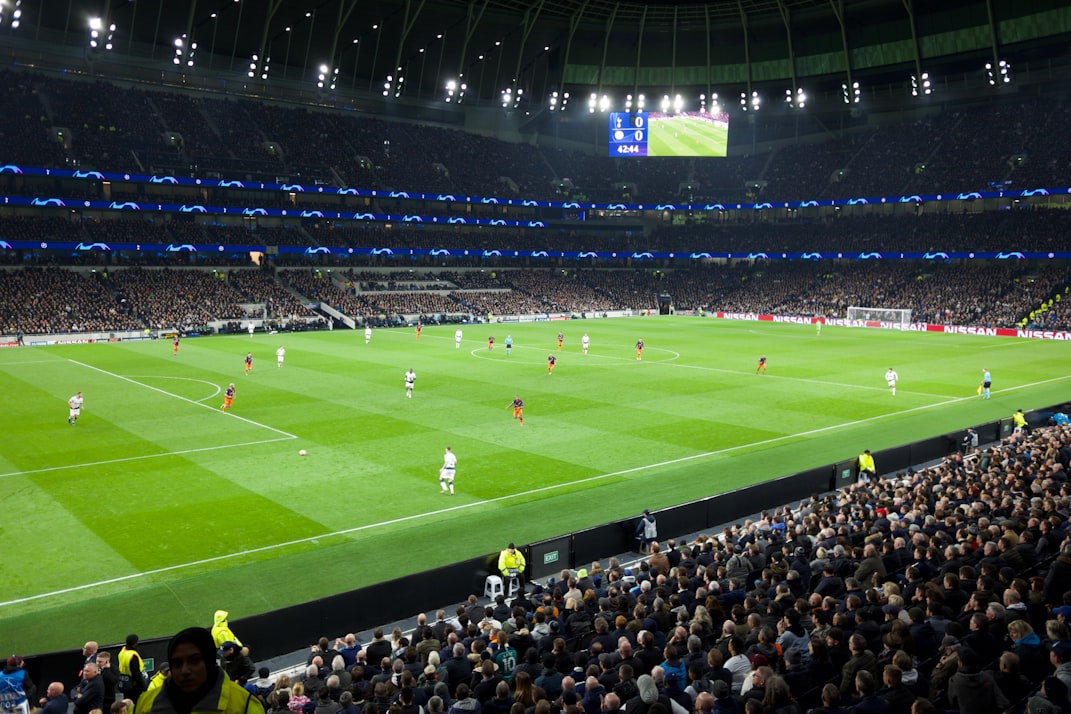
August arrives. Pundits fill columns with bold predictions. Leicester will struggle. Manchester City will dominate. This rookie will win MVP. That veteran is finished.
Then the season actually starts. Leicester finishes mid-table instead of relegated. The predicted champions stumble. The "finished" veteran has a career year. And everyone pretends they never made those August predictions.
Pre-season predictions fail spectacularly year after year. Not occasionally—consistently. Understanding why reveals more about sports than any prediction column ever will.
The Overconfidence Bias
Experts suffer from the same cognitive bias as everyone else: overconfidence in pattern recognition. After watching 20 years of football, analysts believe they can predict how 20 complex variables will interact over 38 matches.
This mirrors behavior seen across prediction markets. Platforms offering sports betting—whether traditional bookmakers or newer casino like stake alternatives that combine casino games with comprehensive sportsbooks—constantly adjust odds based on actual results because pre-match probabilities prove unreliable. The market corrects itself through real data. Pundits rarely do.
The core problem: small sample sizes masquerading as patterns. A striker scores 25 goals one season. Everyone predicts 25+ the next year. But those 25 goals came from 30-35 actual chances. Randomness played a huge role. Next season, he gets 30-35 chances again but converts fewer due to normal variance. Everyone calls it a "decline" when it's just regression to the mean.
Ignoring Injury Probability
Pre-season predictions assume health. "If Player X stays fit, Team Y will challenge for the title."
But injuries aren't random acts of God—they're statistical certainties. Every squad will lose key players. The question isn't "if" but "when" and "who."
Historical data shows teams lose approximately 15-20% of player availability to injury each season. Yet predictions assume 100% availability, then act surprised when hamstring strains affect results.
Smart analysts should predict: "Team X has three players who combine for 40% of their goals. Probability suggests at least one misses 6+ weeks. Their depth at those positions is poor. Therefore, their ceiling is lower than the starting XI suggests."
Nobody writes that. It's boring. "Team X will win the league" generates more clicks.
The Narrative Trap
Sports media loves narratives. The redemption arc. The youth movement. The veteran's last dance. These stories are compelling, which makes them dangerous for predictions.
Narratives ignore statistical baselines. If a 35-year-old striker averaged 15 goals for five straight seasons, the narrative might be "his experience makes him dangerous." The data says: "Age-related decline suggests 10-12 goals with high variance."
The narrative usually wins pre-season. The data usually wins by May.
This applies to team narratives too. "They've strengthened in key areas" ignores that teams strengthen every summer. The question isn't whether they improved—it's whether they improved more than competitors, and whether those improvements address actual weaknesses or just perceived ones.
Squad Depth Miscalculation
August predictions evaluate starting XIs. May results reflect squads.
A team might have the best starting eleven in the league. But if their depth is poor, injuries and fixture congestion destroy them. Conversely, a team with a merely good starting XI but excellent depth can overperform by maintaining consistency when competitors rotate.
Pre-season predictions rarely account for this because depth is boring and hard to quantify. But match data shows that teams playing their "best XI" less than 60% of the time due to rotation and injury significantly underperform predictions based on that XI's quality.
Manager Impact: Overrated and Underrated Simultaneously
Pundits simultaneously overrate manager impact (crediting them for everything) and underrate it (ignoring how drastically systems change results with identical personnel).
A new manager arrives with a proven track record. Predictions assume immediate success. Reality: it takes 15-20 matches to implement systems. Early struggles are normal, not concerning. Yet predictions rarely account for this adjustment period.
Conversely, a manager who overperformed with a limited squad gets ignored when they move to a better team. Everyone credits the better players, not the system that maximizes them.
The Recency Bias
Predictions overweight the last 10 matches of the previous season and ignore the first 28. A team finishing strong gets predicted to challenge. A team that limped to the finish line gets written off.
But season-long data usually provides better prediction than recent form. A team that finished strong might have just faced an easier fixture run. Their underlying metrics (xG, xGA, possession value) might not support the results.
Statistical models that ignore recency bias and focus on full-season baselines consistently outperform expert predictions. Yet experts keep making the same mistake.
What Actually Predicts Success
The best predictors of team performance are:
Previous season's underlying metrics, not results. A team that "overperformed" based on finishing compared to xG usually regresses. A team that "underperformed" usually improves.
Squad depth in key positions. The three positions with highest injury risk (attacking midfield, center back, fullback) determine how well a team handles adversity.
Fixture difficulty balance. Not just "hard fixtures" but when they cluster. Playing City, Liverpool, and Arsenal in three weeks is harder than playing them spread across three months.
Minimal system change. Continuity beats quality more often than predictions suggest. A good manager in year three outperforms a better manager in year one.