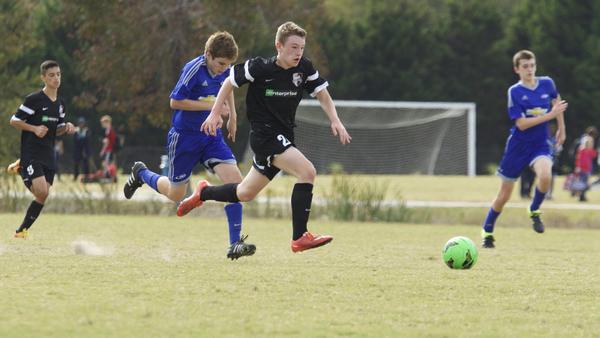

Grassroots football clubs often operate with limited budgets, volunteer coaches, and minimal access to professional sports science support. Yet just a few miles away, universities house cutting-edge research facilities, sports science students seeking practical experience, and academics eager to apply their knowledge in real-world settings. The gap between these two worlds represents a significant missed opportunity - one that forward-thinking clubs are now bridging through strategic partnerships.
A football university partnership connects clubs with academic institutions to access sports science expertise, research facilities, and student support that would otherwise remain out of reach. These collaborations provide clubs with evidence-based training methods, injury prevention strategies, and performance analysis while giving universities practical research opportunities and community engagement. The arrangement creates mutual value: clubs gain professional-level support at minimal cost, whilst students develop hands-on experience that transforms theoretical knowledge into practical competence.
The Benefits of University Partnerships for Grassroots Clubs
Access to Equipment and Expertise
University partnerships deliver tangible advantages that extend far beyond basic coaching support. Sports science departments typically house equipment worth hundreds of thousands of pounds - GPS tracking systems, force plates, video analysis software, and physiological testing facilities that grassroots clubs could never justify purchasing. Through partnership arrangements, clubs can access these resources for player assessments, injury screening, and performance monitoring.
The expertise available within university sports science programmes proves equally valuable. Academics specialising in biomechanics, nutrition, psychology, and strength and conditioning bring research-backed knowledge that challenges traditional coaching assumptions. A youth team manager might discover that their pre-match warm-up routine contradicts current evidence on injury prevention, or that their approach to player hydration needs adjustment based on recent physiological research.
Student Involvement and Practical Support
Student involvement represents perhaps the most practical benefit. Undergraduate and postgraduate students require placement hours and dissertation projects - commitments that align perfectly with club needs. A final-year student studying sports psychology might conduct mental skills training with under-16 players, whilst a master's student researching injury prevention could implement and evaluate a new warm-up protocol across multiple age groups. These arrangements provide clubs with consistent support throughout academic terms whilst giving students the applied experience that employers demand.
Enhanced Credibility and Reputation
The relationship also enhances club credibility. Parents selecting between multiple local clubs increasingly consider the quality of coaching and player development support. A club that can demonstrate university partnerships and evidence-based training methods gains a competitive advantage in attracting and retaining players. This reputation extends to sponsorship opportunities, as local businesses recognise the professionalism and community value that academic partnerships represent.
Identifying the Right University Partners
Research and Alignment
Not all universities offer suitable partnership opportunities, and not all sports science departments prioritise community engagement. Successful partnerships require alignment between institutional priorities and club needs. Start by researching universities within a reasonable travelling distance - typically within 30 miles for regular interaction. Examine their sports science department websites to identify research specialisms, staff expertise, and existing community partnerships.
Universities with established sports science, sports coaching, or sports therapy programmes typically prove most receptive to grassroots football partnerships. These departments require placement opportunities for accreditation purposes and actively seek community connections. Institutions offering undergraduate sports coaching degrees face particular pressure to provide students with diverse coaching contexts, making grassroots youth football an attractive proposition.
Community Engagement and Expertise
Look for universities that already demonstrate community engagement through widening participation programmes or public health initiatives. These institutions have established frameworks for external partnerships and understand the administrative requirements for working with community organisations. A university that has never engaged beyond campus boundaries will require significantly more effort to establish initial contact and navigate approval processes.
Consider the specific expertise available within departments. A university with strength and conditioning specialists might suit clubs seeking physical development support, whilst institutions with sports psychology researchers could help teams address mental skills training. Some universities house specialist facilities like environmental chambers for heat acclimatisation or altitude training, offering unique opportunities for clubs with ambitious development programmes.
Student Demographics and Course Structures
Research student demographics and course structures. Universities with large cohorts of sports science students create more partnership opportunities than smaller programmes. Institutions requiring mandatory placement hours guarantee student availability, whilst those where placements remain optional may struggle to maintain consistent support throughout academic years.
Structuring Effective Partnership Agreements
Formal Agreement Components
Formal agreements protect both parties and establish clear expectations from the outset. Begin with a memorandum of understanding that outlines partnership objectives, responsibilities, and boundaries. This document needn't involve legal complexity - a clear statement of intent signed by club representatives and university staff provides sufficient foundation for most arrangements.
Define specific deliverables and timelines. Rather than vague commitments to "support player development," specify that the university will provide two sports science students per term to deliver weekly fitness testing and monthly injury screening. Clarity prevents misunderstandings and ensures both parties can evaluate whether the football university partnership delivers expected value.
Safeguarding and Data Considerations
Address safeguarding requirements explicitly. All students working with youth players must complete DBS checks and safeguarding training before club contact. Establish who bears responsibility for these checks - typically the university for enrolled students - and confirm that no student will have unsupervised access to players until clearance completes. Document these requirements within partnership agreements to demonstrate compliance with FA safeguarding standards.
Agree on data ownership and usage rights. Universities may wish to use club data for research publications or student dissertations, whilst clubs need assurance that player information remains confidential and GDPR-compliant. Establish protocols for data collection, storage, and anonymisation that satisfy both academic research standards and child protection requirements. TeamStats can help centralise data collection whilst maintaining appropriate access controls and audit trails.
Insurance and Review Mechanisms
Consider insurance and liability arrangements. University students typically remain covered by institutional insurance during approved placements, but confirm this explicitly. Clarify liability if a student's advice leads to player injury or if university equipment damages club facilities. Most universities carry comprehensive insurance for community engagement activities, but written confirmation prevents disputes should incidents occur.
Include review mechanisms within agreements. Schedule quarterly meetings between club representatives and university supervisors to evaluate partnership effectiveness, address emerging issues, and adjust arrangements as needed. These reviews provide opportunities to celebrate successes, resolve problems before they escalate, and ensure the partnership continues meeting both parties' evolving needs.
Practical Applications of Sports Science Support
Injury Prevention
University partnerships enable grassroots clubs to implement professional-level sports science practices that would otherwise remain inaccessible. Injury prevention represents perhaps the most impactful application. Sports science students can conduct movement screening to identify players at elevated injury risk, then design individualised exercise programmes addressing identified weaknesses. Research consistently demonstrates that structured injury prevention programmes reduce injury rates by 30-50%, yet few grassroots clubs implement such protocols due to knowledge and resource constraints.
Performance Testing
Performance testing provides objective data to guide training decisions and track player development. University facilities enable testing that grassroots coaches typically conduct through subjective observation - sprint times measured with timing gates rather than stopwatches, jump height assessed via force plates rather than visual estimation, and aerobic capacity determined through validated protocols rather than guesswork. This data helps coaches tailor training to individual player needs and demonstrates development progress to players and parents.
Video Analysis
Video analysis transforms tactical understanding and technical development. Sports science students trained in performance analysis software can code-match footage to quantify team shape, passing patterns, and individual player actions. This analysis reveals patterns invisible during real-time observation - perhaps the team consistently loses possession in specific pitch areas, or certain players rarely receive passes despite finding good positions. Such insights enable targeted tactical adjustments and individual player feedback based on objective evidence rather than subjective impression.
Nutrition and Psychology Support
Nutrition support addresses a frequently overlooked aspect of grassroots player development. University nutrition students can deliver age-appropriate education on match-day fuelling, hydration strategies, and recovery nutrition. Many youth players arrive at training poorly fuelled or consume inappropriate foods before matches, limiting performance and recovery. Simple interventions - like providing parents with practical snack suggestions or educating players about hydration timing - deliver measurable improvements in training quality and match performance.
Psychology support helps players develop mental skills that distinguish elite performers from talented underachievers. Sports psychology students can teach goal-setting frameworks, pre-performance routines, and anxiety management techniques through individual sessions or team workshops. These skills prove particularly valuable for older youth players facing increased competitive pressure or players struggling with confidence following injury or poor form.
Strength and Conditioning Programmes
Strength and conditioning programmes designed by university students ensure age-appropriate physical development. Many grassroots coaches lack confidence designing resistance training for youth players, fearing injury risk or inappropriate loading. University students studying strength and conditioning understand developmental considerations and can design programmes that enhance physical capacity whilst respecting biological maturation stages.
Overcoming Common Partnership Challenges
Academic Calendar Disruptions
University partnerships rarely proceed without obstacles. Academic calendars create predictable disruption - students disappear during reading weeks, examination periods, and summer holidays, leaving clubs without expected support. Address this challenge by establishing clear availability calendars at partnership commencement and planning club activities around known university closures. Consider recruiting students from multiple year groups to stagger availability and maintain continuity when some students face examination commitments.
Student Capability Variation
Student capability varies considerably. Not all sports science students possess the communication skills, maturity, or practical competence required for effective grassroots coaching support. University supervisors should screen students before placement allocation, but clubs must establish feedback mechanisms to address performance concerns quickly. Create a simple evaluation system that allows coaches to rate student contributions after each session, then share this feedback with university supervisors to inform ongoing student development or trigger intervention when problems arise.
Communication and Expectations
Communication breakdowns between clubs and universities frequently undermine partnerships. Busy volunteer managers struggle to respond promptly to university emails, whilst academic staff juggle teaching, research, and administrative demands alongside partnership coordination. Designate specific individuals as primary contacts for each organisation and establish preferred communication channels - perhaps WhatsApp for urgent matters and email for routine updates. Regular communication prevents small misunderstandings from escalating into partnership-threatening disputes.
Misaligned expectations cause frustration on both sides. Clubs may expect students to deliver fully-formed programmes with minimal supervision, whilst universities anticipate significant coach involvement in student learning. Clarify expectations during partnership establishment - students bring theoretical knowledge and enthusiasm but require guidance on club culture, player characteristics, and practical constraints. Coaches who view student supervision as a partnership cost rather than a benefit typically experience disappointment.
Logistical Coordination
Logistical challenges around facility access, equipment availability, and scheduling coordination require ongoing attention. Universities may restrict facility access to specific hours or require advance booking, whilst clubs need flexibility around fixture changes and weather cancellations. Build buffer time into arrangements and establish protocols for communicating schedule changes promptly. Football coaching apps can streamline schedule coordination and ensure all parties receive immediate notification of changes.
Building Long-Term Partnership Sustainability
Documentation and Recognition
Initial partnership enthusiasm often fades without deliberate sustainability efforts. Successful long-term partnerships require ongoing relationship maintenance and demonstrated value delivery. Document partnership outcomes systematically - track injury rates before and after prevention programme implementation, measure player fitness improvements following university-designed training, and survey parent satisfaction with enhanced sports science support. This evidence justifies continued partnership investment and provides compelling material for attracting additional university or community funding.
Celebrate partnership successes publicly. Feature university contributions in club newsletters, social media posts, and presentation evenings. Recognition matters to universities seeking to demonstrate community impact for research assessments and student recruitment. Public acknowledgement also attracts interest from other potential partners - local businesses, healthcare providers, or sports organisations - who recognise the club's professional approach and community connections.
Relationship Maintenance and Planning
Invest in relationship building beyond formal partnership activities. Invite university staff to club social events, offer complimentary match attendance, and acknowledge their contributions during prize presentations. These gestures strengthen personal connections that sustain partnerships through inevitable challenges and staff changes.
Develop succession planning for both club and university contacts. Partnerships often collapse when key individuals move on and institutional knowledge disappears. Document partnership processes, maintain updated contact lists, and introduce new personnel systematically. When a club manager steps down or a university lecturer changes roles, ensure smooth handovers that preserve partnership continuity.
Funding and Accreditation
Explore funding opportunities to enhance partnership value. Various grants support university-community partnerships, particularly those addressing public health, youth development, or widening participation objectives. Sport England, County FA development funds, and local authority community grants may fund equipment purchases, student bursaries, or programme delivery costs that expand partnership scope and impact.
Consider formalising successful partnerships through charter marks or quality standards. The FA Charter Standard programme recognises well-run clubs meeting specified criteria, whilst university-specific schemes acknowledge community engagement excellence. These accreditations enhance club credibility whilst providing universities with evidence for institutional assessments and funding applications.
Measuring Partnership Impact
Quantitative Metrics
Quantifying partnership value helps justify continued investment and identify improvement opportunities. Establish baseline measurements before partnership commencement, then track relevant metrics throughout the relationship. Injury data provides compelling evidence - record injury frequency, severity, and type before university involvement, then monitor whether sports science interventions reduce injury burden.
Player development metrics demonstrate partnership impact on performance outcomes. Track age-appropriate physical tests - sprint times, jump heights, endurance measures - at regular intervals to identify whether university-designed training programmes deliver expected improvements. Compare development rates with previous years or similar clubs to isolate partnership effects from natural maturation.
Retention rates indicate whether enhanced sports science support improves player and parent satisfaction. Calculate the percentage of players returning each season and survey departing families to understand their reasons for leaving. Clubs offering football university partnership benefits typically experience higher retention than competitors relying solely on volunteer coach expertise.
Qualitative Indicators
Coach development represents an often-overlooked partnership benefit. Volunteer coaches working alongside university students and staff gain exposure to evidence-based practices and contemporary sports science thinking. Assess coach knowledge and confidence through pre- and post-partnership surveys, or track coaching qualification uptake as coaches become inspired to pursue formal education.
Parent feedback provides qualitative insight into partnership value. Conduct annual surveys asking parents to rate club organisation, coaching quality, and player development support. Include specific questions about sports science provision and university partnership awareness to gauge whether parents recognise and value these offerings.
University partners benefit from impact measurement too. Student feedback on placement quality, skill development, and career preparation helps universities refine their partnership approaches and demonstrate teaching excellence. Graduate employment outcomes - particularly students securing sports science roles following grassroots placements - provide powerful evidence of partnership value for recruitment marketing and course accreditation.
Conclusion
Football university partnerships transform grassroots clubs from well-meaning volunteer organisations into evidence-based development environments. These collaborations provide access to expertise, facilities, and support that elevate coaching quality, reduce injury risk, and enhance player development whilst giving universities the community connections and practical placements that enrich academic programmes.
Successful partnerships require deliberate effort - identifying suitable university partners, negotiating clear agreements, managing logistics, and maintaining relationships through inevitable challenges. Yet clubs investing this effort gain competitive advantages in player recruitment, coach development, and community reputation that justify the commitment. The combination of passionate volunteer coaches and academic sports science expertise creates development environments where young players thrive and clubs establish themselves as community assets rather than just weekend football providers.
Universities increasingly recognise that community engagement strengthens their teaching, research, and societal impact. Grassroots football clubs offer ideal partnership opportunities - established community organisations with clear needs, regular activities, and genuine enthusiasm for evidence-based improvement. Clubs that approach universities with clear proposals, professional organisation, and commitment to mutual benefit will find receptive partners eager to support grassroots football development.
For clubs ready to explore these opportunities, systematic data collection, professional communication, and efficient scheduling demonstrate the professionalism that universities seek in community partners. Team management apps provide analytical capabilities that help measure and communicate partnership impact. The combination of university sports science expertise and digital team management creates development environments where grassroots football clubs punch well above their weight and young players receive support that shapes their footballing futures.
═══════════════════════════════════════════════════════════════