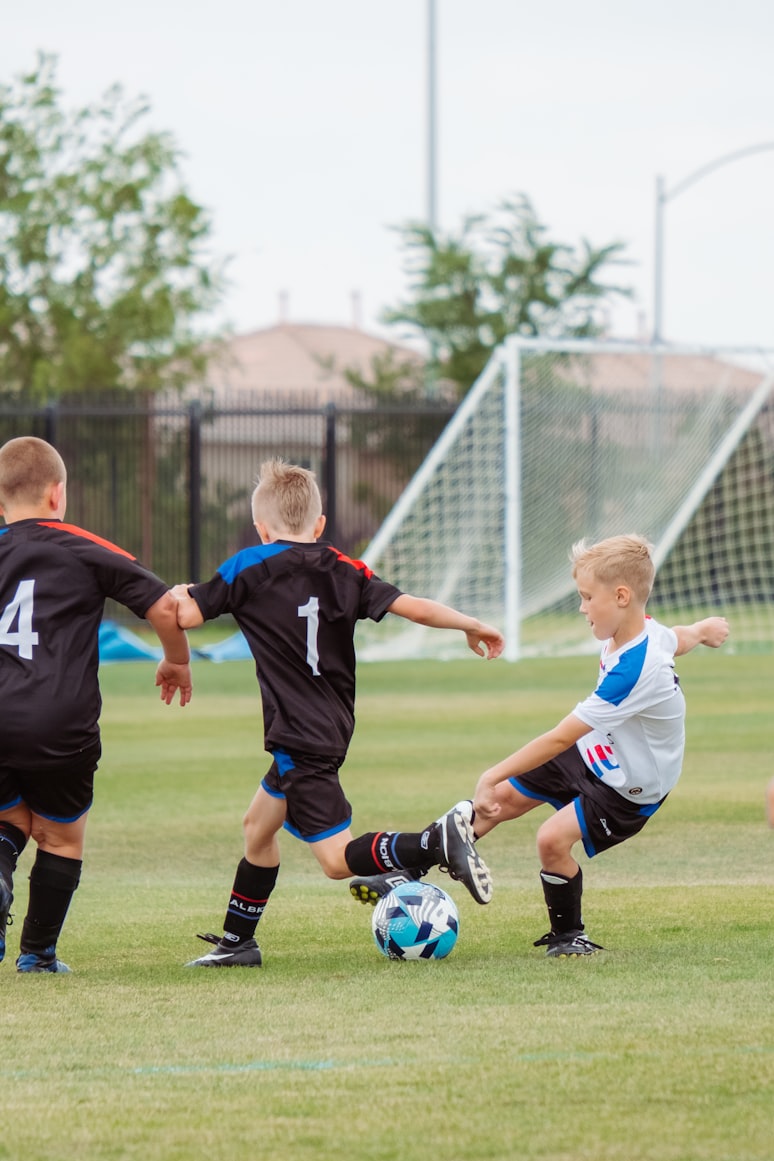

For millions of people, it’s the rhythm of the week: the pre-match chat, the 90 minutes of effort, and the post-match debrief. But playing the game is about so much more than just a result on a Saturday afternoon. It’s about turning up to training on a freezing Tuesday night, trusting the teammate next to you, and finding the strength to chase down a lost cause in the final minute. The real value is in the life lessons amateur football teaches you without you even realising it.
These experiences shape you as a person. The discipline, resilience, and camaraderie you develop on the pitch become part of your character off it. The game has a unique way of preparing you for challenges in your career, your relationships, and your personal life, proving that the most important victories aren't always the ones you see on the scoreboard. It’s a classroom for character, taught on muddy pitches and in bustling changing rooms.
The Unbreakable Value of Teamwork
In football, you learn very quickly that you can't do it all alone. A striker is only as good as the service they get from midfield; a defence is only as strong as its weakest link. Success is built on a foundation of trust, communication, and a shared understanding of a common goal. It’s about learning a collective language spoken in passes, movements, and shouts of encouragement.
Think of a team as a complex engine. Every single part, from the goalkeeper to the centre forward, has a specific job to do. If one piston misfires or one gear grinds, the whole machine slows down. It’s only when every component works in perfect harmony that the engine can perform at its peak. This involves selflessness, making the pass when you could have shot, or covering for a teammate who has been pulled out of position. This is one of the first and most important life lessons amateur football provides: understanding that your individual contribution is vital to the success of the collective.
Discipline: The Engine of Progress
Discipline in amateur football isn't about a manager shouting orders. It's the quiet, internal drive that gets you out of bed on a miserable Sunday morning for a 10:30 kick-off an hour’s drive away. It's about tracking your runner when your lungs are burning, holding your position when the temptation is to chase the ball, and getting your kit washed and ready for the next game.
This commitment to the team, this willingness to do the hard, unglamorous work, builds a powerful sense of personal accountability. It’s the decision to skip a late night out on a Friday because you have a game the next day. It's the dedication to show up for training every single week, not just when you feel like it. It teaches you that consistency and effort are the true drivers of improvement, a principle that applies directly to building a career, learning a new skill, or achieving any long-term goal.
Resilience in the Face of Setbacks
You will lose games you should have won. You will miss a crucial penalty. You will make a mistake that leads to a goal. Setbacks are a guaranteed part of football, and how you respond to them defines you. The game teaches you to process disappointment, learn from it, and move on without letting it consume you.
I’ll never forget a young centre-back I once coached called Tom. He was a great lad, but early in the season, he gave away a last-minute penalty that cost us the game. He was devastated. For the next few weeks, his confidence was shot, and he played within himself, afraid to make another mistake. We spoke about it, focusing not on the error but on the fact that he was brave enough to be in that position in the first place. Slowly, he rebuilt his confidence in training. Months later, in a tight cup game, he made a perfectly timed, match-saving tackle in the final seconds. The cheer from the sideline was twice as loud as any goal we’d scored that season. He didn't let his mistake define him; he used it to become a stronger, more resilient player.
Leadership Beyond the Captain's Armband
Leadership in grassroots football isn't just for the player with the armband. It’s found in every corner of the pitch. It's the veteran midfielder who calms the team down after conceding. It's the player who is first to every training session, setting the standard for others. It's the teammate who puts an arm around a player who’s having a tough game.
These are the actions that build a team's character. True leadership is about influence, not authority. It’s about making the players around you better through your actions and your words. Learning to lead by example, to encourage others, and to take responsibility are invaluable skills that translate directly into the workplace and family life.
Humility and Respect for the Game
Football has a way of keeping you humble. One week you can score a hat-trick and feel on top of the world; the next, you can be marked out of the game completely. It teaches you to win with grace and lose with dignity.
Respect is woven into the fabric of the sport. It's about shaking the opponent's hand after a hard-fought match, regardless of the result. It's about accepting the referee's decision, even when you're convinced it's wrong. This teaches you to respect rules and authority, a crucial lesson in a functioning society. These are some of the most profound life lessons amateur football can offer.
Balancing Life's Demands
Juggling a job, family, a social life, and football is a serious challenge. It forces you to become an expert in time management and prioritisation. You learn to plan your week, to be organised, and to make the most of your time. This is a core part of what is grassroots football for most people.
This is where modern tools can make a huge difference. An effective team management app helps get everyone organised. Scheduling matches, confirming availability, and keeping track of who has paid their subs can all be streamlined, freeing up precious time for managers and players alike.
The Power of Human Connection
One of the greatest life lessons amateur football offers is the bond you build with your teammates. The dressing room is a unique space where people from all walks of life come together, united by their love for the game. Your teammates might be builders, teachers, students, or accountants, backgrounds that might never cross in daily life.
You build friendships that extend far beyond the pitch, creating a vital support network. These are the people you celebrate with after a big win and who pick you up after a tough loss. In an increasingly digital world, being part of a real-world community is more important than ever. If you're looking to find that connection, browsing a directory of Sunday League teams is a great place to start.
Ultimately, the game teaches you about yourself. It reveals your character under pressure and shows you what you're capable of. A platform like TeamStats is designed to handle the admin, so you can focus on what really matters: playing the game and learning from it.
If you have any questions, please contact us. We’re here to help you on your football journey.