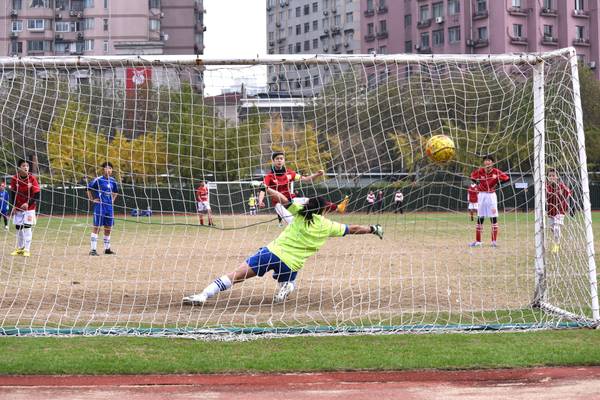
Local football in the UK rarely allows the luxury of huge analyst departments or six-camera feeds. Yet the same truth applies from the Premier League to the Essex Senior League: the match always leaves clues. A well-structured post-match report is essentially a breadcrumb trail pointing toward what an opponent is likely to do next time you meet them.
By following that trail methodically, grassroots and semi-pro coaches can turn everyday match data into tomorrow’s competitive edge, without needing a PhD in data science or a top-flight budget.
This article breaks down a practical, repeatable process for converting last weekend’s footage and stats into concrete tactical foresight.
Why Post-Match Reports Matter
The 90 minutes may have ended, but the “real” coaching week usually starts with the whistle. Post-match analysis gives staff an objective record that cuts through selective memory, confirmation bias, and post-game emotion. Studies estimate that dead-ball situations alone now account for close to 40 per cent of goals in professional football, a figure fuelled by clubs that mine set-piece data relentlessly. Clubs like FC Midtjylland have become famous for using data-driven analysis to maximize set-piece efficiency
What does that mean for a county-level manager? Quite simply, the more systematically you track how an opponent scores, concedes, presses, and reshapes, the less guesswork goes into your next game plan. Scrutinising a report also shortens the feedback loop. That speed means you can spend Monday on solutions rather than diagnosis. Finally, a robust report becomes a shared language: coaches, players, and even the committee can discuss concrete evidence, not hunches.
Building a Repeatable Workflow
A flashy report is useless if you cannot reproduce it every Sunday. Below is a simple three-step workflow many non-league clubs have adopted successfully.
Gather the Right Raw Data
Start with what you can collect consistently. A single elevated camera behind the halfway line captures enough width to understand both defensive shape and attacking spacing. Pair that video with the basic event data most league apps already provide: shots, passes, entries into the final third, and fouls. Add two custom tags that reflect your playing philosophy - perhaps “high press triggers” and “switch of play” - so your reports stay aligned with how you want football played in your club. Consistency beats complexity; five accurately tracked metrics every week trump twenty erratic ones.
Turn Numbers into Narrative
Raw counts rarely change behaviour on the training ground. The key is translating them into stories players grasp instantly. Instead of noting that the opposition completed 42 switches of play, frame it as: “They changed the point of attack every 2.1 minutes, usually through the left-footed centre-back when pressed inside his own third.” Use annotated freeze-frames - arrows and dotted lines built in free tools like LongoMatch - to illustrate that narrative. Then add one impact statement: “If we collapse centrally too early, they will isolate our full-back one-on-one.” This blend of numbers, pictures, and consequences turns a dry spreadsheet into an urgent message the squad can act on.
Betting, Data, and Staying on the Right Side of the Touchline
While the primary goal of post-match analysis is to sharpen your team’s performance, the same insights often spill over into the betting world. Many supporters, and, increasingly, coaches, keep an eye on odds movements that track tactical trends uncovered in match reports. For example, apps such as MelBet (Arabic: تطبيق ) allow users to flag set-piece effectiveness or pressing intensity and receive real-time odds updates tied to those metrics.
Grassroots coaches increasingly notice that data culture in football has spilled into other parts of the sporting ecosystem, including betting analytics. While coaching and wagering occupy very different spaces ethically and professionally, both rely on identifying patterns, spotting trends, and interpreting probability instead of trusting instincts alone. Many fans who follow tactical analysis also use tools like download MelBet for iPhone (French: telecharger MelBet pour iPhone ) to track odds movements or compare statistical models, and that broader engagement with data has indirectly raised expectations around how clubs prepare. The goal is not to participate in betting culture, it's to keep discussions grounded in evidence so decisions around training focus, squad rotation, or set-piece planning remain professional and transparent.
Spotting Opponent Patterns Early
A single match can be a one-off, but three consecutive reports on the same opponent often reveal habits they may not even realise they have. Focus on two areas that reliably repeat at any level of the pyramid.
Formation Shifts Across Phases
Most sides list a formation on the team sheet, but their shape out of possession, in transition, and in sustained attack will differ. Log those phase-based formations in parallel columns. You might discover that an opponent starts in a 4-2-3-1, morphs into a 4-4-2 mid-block, and attacks as a 3-2-5 when their right-back inverts. If you know that the right-back steps inside ten times a match, you can instruct your wide forward to press on his first touch rather than jockey. Over two or three fixtures, you will see whether that habit is a coaching instruction or situational. Either way, you now have a trigger point you can rehearse on Thursday night.
Set-Piece Blueprints
Because set pieces restart from fixed positions, pattern recognition is straightforward. Catalogue delivery zones (near, far, penalty spot), runner start points, and blockers. A team may rotate routines, but most grassroots coaches gravitate to three favourites. If your report shows that their outswinging corner from the right finds the far-post runner 60 per cent of the time, post a defender on that lane and instruct your keeper to take a half-step in anticipation. Conversely, if their defensive clearances from corners tend to drop centrally, structure your counter-press accordingly.
From Insight to Training Ground
Knowledge garners no points until it shapes behaviour. Once the report is distilled, convert each identified pattern into a coaching action item: a drill, a walk-through, or a tweak to selection. For example, if the opponent’s left winger dribbles inside nine times out of ten, run a 4-v-4+2 rondo that forces your right-back to decide between tight marking and funnelling play toward cover. If the report shows their midfield cannot resist pressing a short goal kick, rehearse a pre-planned “bait and switch” long ball to exploit the space they vacate.
Presentation matters too. A five-minute video reel, played before the squad warms up, reinforces the written report. Human attention spans plummet beyond that. Narrate the clips yourself so players hear familiar terminology rather than analyst jargon. End with a clear call to action: “Tomorrow we’ll rehearse these two patterns; Saturday we execute.” As Rasmus Ankersen noted, data’s role is to indicate where to look, not whom to pick. Your tactical eye remains decisive; the report simply sharpens its focus.
Conclusion
Post-match reports are not paperwork - they are predictive tools. By gathering consistent data, weaving it into compelling stories, and drilling the resulting cues in training, local UK coaches can anticipate rival tactics with surprising accuracy. The cycle is self-reinforcing: every fixture you code provides a richer baseline for the next opponent breakdown. Adapt the process to your resources, stay disciplined, and you will arrive on match day feeling one decision ahead.