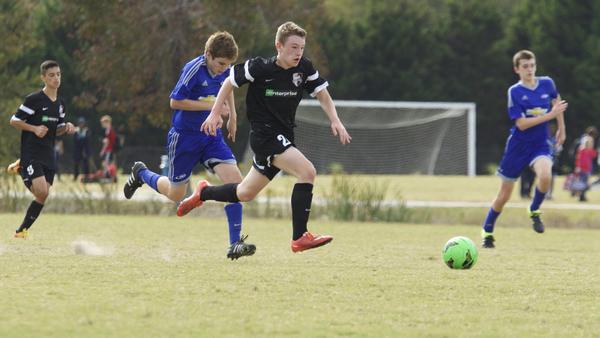

Young footballers develop faster when they take ownership of their improvement. Yet many grassroots football coaches still set goals for players rather than with them. This top-down approach misses a crucial truth: players who define their own targets show 40% greater commitment to achieving them, according to FA Youth Development research.
Player goal setting transforms how young footballers engage with their development. When an under-12 midfielder identifies "winning more aerial duels" as their target, they'll work harder on heading technique than if a coach simply tells them to improve. The difference lies in ownership - players pursue goals they've chosen with genuine intent.
TeamStats provides dedicated goal-tracking features that support this player-centred approach, but the real work happens in how coaches facilitate the goal-setting conversation. The following framework helps grassroots managers guide players toward meaningful, achievable targets without dictating what those targets should be.
Why Player-Led Goal Setting Works
Traditional coaching often follows a simple pattern: the manager identifies weaknesses and assigns corrective drills. A defender struggles with positioning, so they receive extra defensive work. This approach has merit, but it treats players as passive recipients rather than active participants in their development.
Player goal setting flips this dynamic. When a centre-back recognises their positioning needs work and chooses to address it, several psychological shifts occur. They develop self-awareness by analysing their own performance. They build intrinsic motivation because the target comes from within. They learn accountability because they've committed publicly to their aim.
Research-Backed Benefits
Research from the Youth Sport Trust shows young athletes who set personal targets demonstrate 35% better skill retention than those following coach-prescribed programmes alone. The act of defining a goal creates mental investment that passive instruction cannot replicate.
Grassroots football provides the perfect environment for this approach. Teams typically train once or twice weekly, meaning players must practice independently to make significant progress. Self-directed goals give purpose to garden kickabouts and playground sessions - moments when no coach is present to provide structure.
Creating the Right Environment
Before facilitating any goal-setting session, establish psychological safety. Players need to feel comfortable sharing genuine aspirations without fear of judgment or mockery from teammates.
Normalising the Process
Start by normalising the process. Share examples of professional footballers who've used goal setting to overcome specific challenges. When players hear that Kevin De Bruyne worked specifically on weak-foot accuracy or that Virgil van Dijk focused on communication skills, elite development becomes tangible rather than abstract.
Setting Ground Rules
Set ground rules for the session. All goals deserve respect. A player aiming to complete their first full match without substitution has set a target as valid as someone working toward making the district squad. Different starting points require different targets.
Physical Setup
Physical setup matters too. Arrange seating in a circle rather than rows - this signals collaboration rather than instruction. Provide notebooks or team management apps where players can record their goals privately before sharing. Written commitments carry more weight than verbal statements alone.
Timing Considerations
Time the session appropriately. Pre-season works well because players can work toward goals throughout the campaign. Alternatively, use the winter break when half a season's experience informs realistic target-setting. Avoid scheduling these conversations immediately after defeats when emotions cloud judgement.
The SMART Framework for Young Players
The SMART goal framework (Specific, Measurable, Achievable, Relevant, Time-bound) provides structure, but grassroots coaches must adapt it for young footballers. An under-10 player won't naturally think in these categories without guidance.
Specific Goals
Specific goals require concrete definition. "Get better at shooting" lacks clarity. Guide players toward precision: "Score from outside the box" or "Hit the target with my left foot eight times out of ten." Ask probing questions: "What exactly do you want to improve? What would that look like in a match?"
Measurable Targets
Measurable targets need tracking mechanisms. This is where football coaching apps prove valuable. A midfielder targeting "more successful passes" can track completion percentage across matches. A goalkeeper working on distribution can monitor how many throws or kicks reach teammates accurately. Numbers provide objective feedback that feelings cannot.
Achievable Goals
Achievable goals balance ambition with realism. A player who's never scored aiming for twenty goals this season sets themselves up for disappointment. Help players identify stretch targets that push them beyond comfort zones without guaranteeing failure. Ask: "What would represent genuine progress from where you are now?"
Relevant Goals
Relevant goals connect to team needs and player positions. A central defender targeting more assists might be better served improving defensive positioning first. Guide players toward goals that enhance their primary role before expanding into secondary attributes. Question: "How will this help you contribute to the team?"
Time-Bound Targets
Time-bound targets need deadlines. "By Christmas," "before the cup final," or "within six weeks" create urgency. Break season-long goals into monthly checkpoints. A striker aiming for fifteen goals might target three by October, seven by December, twelve by February, with the final push in spring.
Facilitating the Goal-Setting Conversation
Begin with self-assessment. Ask players to identify three strengths and three areas for development. This creates balanced self-awareness - recognising what they do well alongside what needs work. Players often focus exclusively on weaknesses, which damages confidence.
Using Video Evidence
Use video footage when available. Watching match clips helps players spot patterns they don't notice during play. A winger might not realise they consistently check back onto their stronger foot, limiting attacking options. Visual evidence makes development areas obvious without coaches needing to criticise.
Asking Open Questions
Pose open questions rather than leading ones. "What do you want to improve?" works better than "Don't you think your tackling needs work?" The first invites genuine reflection; the second imposes the coach's agenda. Resist the urge to steer players toward targets the coach has identified. If a player's self-assessment misses an obvious weakness, address it separately rather than hijacking their goal.
Encouraging Peer Input
Encourage peer input. Teammates often notice things players miss about themselves. A defender might not realise how much their vocal organisation helps the back line. A forward might underestimate their movement off the ball. Create space for supportive feedback: "What's one thing you've noticed [player name] does really well? What's one area where they could help the team even more?"
Documenting Everything
Document everything. Players should leave the session with written goals they've defined for themselves. This creates accountability and provides reference points for future reviews. TeamStats offers goal-tracking features that let players log targets and monitor progress throughout the season, making abstract aims concrete and measurable.
Different Goals for Different Ages
Player goal setting must match the developmental stage. Under-8s need simple, immediate targets: "Dribble past one player before passing" or "Use both feet in training." These focus on fundamental skills without overwhelming young minds.
Under-10s Development
Under-10s can handle slightly more complexity. Goals might span several weeks: "Complete five successful tackles in a match" or "Score with my weaker foot before half-term." Introduce basic measurement, but keep targets focused on individual actions rather than team outcomes.
Under-12s Tactical Understanding
Under-12s begin understanding tactical concepts. Goals can address positioning, decision-making, and game intelligence: "Recognise when to press and when to hold shape" or "Make forward runs when the winger has the ball." This age group can also set targets around leadership and communication.
Under-14s and Above
Under-14s and above can embrace sophisticated goals that mirror professional development. Technical refinement ("Improve first-touch control under pressure"), tactical awareness ("Identify and exploit space between opposition lines"), physical development ("Increase sprint speed over ten metres"), and psychological growth ("Stay composed after making mistakes") all become appropriate targets.
Adapting Facilitation Approach
Adapt the facilitation approach accordingly. Younger players need more structured guidance and concrete examples. Older players can engage in abstract discussion about their development pathways and long-term aspirations.
Linking Individual Goals to Team Success
Player goal setting works best when individual targets connect to collective aims. A team struggling to retain possession might encourage midfielders to set goals around pass completion. A side conceding from set pieces could see defenders target improved marking or heading.
Making Connections Explicit
Make these connections explicit without dictating specific goals. Explain team challenges, then let players identify how their development could address those issues. This builds tactical understanding alongside personal responsibility.
A team aiming to play out from the back needs defenders comfortable receiving under pressure and goalkeepers confident with distribution. Frame this context, then ask: "Given what we're trying to achieve as a team, what individual skills would help you contribute more effectively?"
Respecting Individual Pursuits
Some players will naturally align their goals with team needs. Others might pursue targets that seem disconnected from collective success. Both have value. A substitute striker working toward starting more matches serves team depth even if that specific goal doesn't address tactical challenges. Trust that player development in any area ultimately strengthens the squad.
Monitoring Progress and Adjusting Goals
Set regular review points - monthly works well for most grassroots teams. These check-ins assess progress, celebrate achievements, and adjust targets when necessary. Goals aren't contracts; they're living commitments that respond to changing circumstances.
Using Match Statistics
Use match statistics to track measurable targets. A midfielder targeting more ball recoveries can review their tackle and interception numbers. A forward working on hold-up play can assess how often they retain possession under pressure. Data removes subjectivity from progress evaluation.
Celebrating Incremental Progress
Celebrate incremental progress, not just completed goals. A defender who's reduced individual errors from three per match to one has made a significant improvement, even if their target was zero mistakes. Recognise the trajectory, not just the destination.
Adjusting When Necessary
Some goals will prove too ambitious; others too easy. Adjust accordingly. A player who achieves their target within four weeks should set a new challenge. Someone struggling despitea genuine effort might need to break their goal into smaller steps or redefine what success looks like.
Addressing Obstacles
Address obstacles openly. If a player isn't progressing toward their goal, explore why. Do they lack specific technical knowledge? Do they need additional practice time? Are external factors (injury, school pressure, family circumstances) affecting their football? Problem-solving these barriers teaches resilience and adaptability.
Common Pitfalls to Avoid
Coaches often derail the process by imposing their own priorities. When a player shares their target and the coach responds with "that's fine, but you really need to work on...", they've invalidated the player's ownership. Address coach-identified needs separately from player-led goals.
Avoiding Vague Goals
Avoid vague, feeling-based goals that resist measurement. "Enjoy football more" or "feel more confident" lack concrete markers. Guide players toward observable behaviours that indicate these outcomes: "Attempt at least three dribbles per match" demonstrates confidence better than the abstract concept.
Managing Performance Pressure
Don't let goal-setting become another performance pressure. Some players, particularly those already anxious about selection or form, might experience goals as additional expectations to fail. Emphasise that goals serve development, not judgment. Missing a target isn't failure - it's information about what to adjust.
Resisting Comparisons
Resist comparing players' goals. One defender targeting ca hampionship selection whilst their partner aims to improve their weak foot represents different ambitions, not different commitment levels. Public comparison breeds resentment and undermines the personal nature of development.
Maintaining Consistency
Finally, don't abandon the process after one session. Goal-setting only works with consistent follow-through. Coaches who facilitate one session and then never mention goals again signal that the exercise was performative rather than meaningful. Regular reviews and genuine interest in player progress demonstrate that their development matters.
Building Long-Term Development Mindsets
The real value of goal-setting extends beyond individual targets. This process teaches youth footballers how to approach improvement systematically - a skill that transfers beyond sport into education, careers, and personal growth.
Teaching Self-Assessment
Players learn to assess themselves honestly, identifying strengths to build upon and weaknesses to address. They discover that improvement requires specific action, not vague intention. They experience the satisfaction of working toward something they've chosen and achieving it through sustained effort.
Reshaping Views on Challenge
These lessons reshape how young people view challenge. Instead of seeing a skill deficit as a permanent limitation, they recognise it as a development opportunity. Instead of waiting for external instruction, they take initiative in their own improvement. Instead of measuring themselves against others, they focus on personal progress.
Creating Autonomous Learners
Grassroots coaches who facilitate genuine player-led goal-setting create environments where young footballers develop autonomy, self-awareness, and intrinsic motivation. These qualities prove far more valuable than any tactical system or technical drill, because they enable lifelong learning and growth.
Conclusion
Player-led goal setting transforms grassroots football development by shifting ownership from coaches to players. When young footballers identify their own targets, they engage with improvement more deeply than any external instruction can achieve. The coach's role changes from director to facilitator - creating space for self-reflection, asking probing questions, and providing structure without imposing specific outcomes.
Effective facilitation requires psychological safety, age-appropriate frameworks, and consistent follow-through. The SMART model provides structure, but coaches must adapt it for young players who think concretely rather than abstractly. Regular reviews celebrate progress, adjust unrealistic targets, and address obstacles preventing achievement.
This approach demands patience. Coaches must resist the urge to correct player-chosen goals that don't align with their own priorities. They must trust that ownership matters more than optimal target selection, because a player pursuing their own goal with genuine commitment will develop faster than one following prescribed improvements half-heartedly.
The process teaches skills beyond football. Self-assessment, systematic improvement, and intrinsic motivation serve young people throughout their lives. Grassroots coaches who facilitate genuine player-led goal-setting prepare young footballers not just for the next match, but for the challenges and opportunities that extend far beyond the pitch. Get started with TeamStats to implement goal-tracking features that support player ownership, monitor progress systematically, and create development pathways that empower young footballers to take control of their improvement journey.
═══════════════════════════════════════════════════════════════