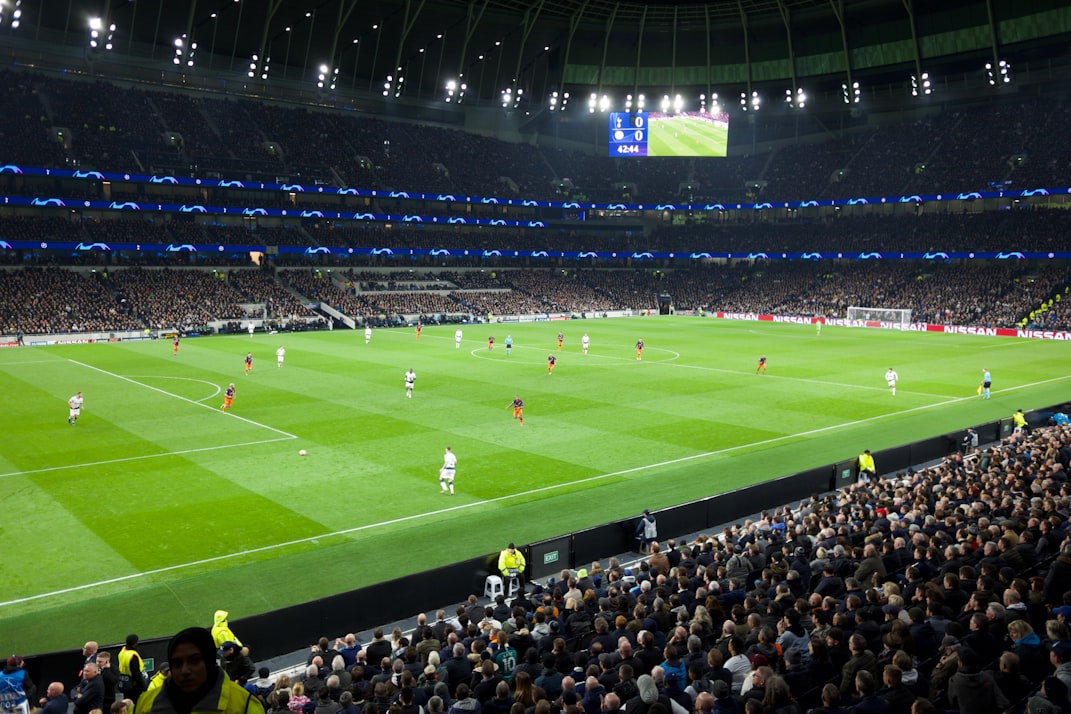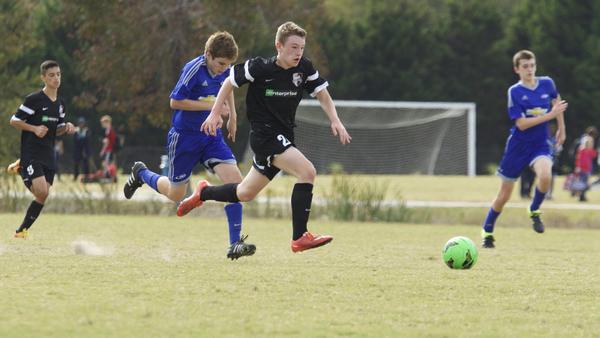

Training sessions at grassroots football clubs typically involve cones, bibs, and coaches shouting instructions across muddy pitches. Yet a growing number of coaches now carry tablets alongside their clipboards, using augmented reality technology to transform how players learn tactical concepts and improve their understanding of the game.
AR football coaching overlays digital information onto the real world through smartphone or tablet screens. Point a device at the pitch, and players see animated movement patterns, defensive shapes, or passing lanes superimposed on the grass beneath their feet. This technology bridges the gap between whiteboard theory and practical application, helping players visualise complex tactical ideas in the exact environment where they'll execute them.
The technology isn't reserved for professional academies anymore. Accessible apps and affordable devices have brought AR coaching tools within reach of volunteer managers running Under-12s teams in Sunday league football. The question isn't whether the technology exists, but whether it genuinely helps grassroots coaches overcome their everyday challenges.
What Augmented Reality Actually Means for Football Coaches
Understanding AR vs Virtual Reality
Augmented reality differs fundamentally from virtual reality. Players don't wear headsets that transport them to digital worlds. Instead, AR football coaching adds layers of information to what they already see. A coach filming a training drill captures the session through their device, then adds arrows showing where players should have moved, highlights positioning errors, or demonstrates alternative passing options.
This immediate visual feedback addresses a persistent coaching challenge. Young players often struggle to translate verbal instructions into spatial awareness. Telling a midfielder to "drop into the pocket between the lines" means little until they see exactly where that space exists during actual play. AR technology shows them precisely that location, overlaid onto their real training environment.
Three Core Coaching Functions
The technology serves three distinct coaching functions. First, it demonstrates tactical concepts before training begins, helping players understand what they're about to practise. Second, it provides real-time guidance during drills, with devices showing movement patterns as players execute them. Third, it offers post-session analysis, reviewing footage with tactical annotations that highlight what worked and what needs adjustment.
The Practical Applications That Actually Work
Tactical Shape Visualisation
Several AR coaching applications have proven valuable at grassroots level, particularly for coaches managing teams without access to professional analysis resources. These tools don't require expensive equipment or technical expertise - most function on standard smartphones or tablets that coaches already own.
Tactical shape visualisation represents the most immediately useful application. Coaches film their team's defensive shape during a match or training drill, then overlay the ideal formation structure onto the footage. Players see exactly how far they've drifted from their assigned positions, making spatial awareness tangible rather than abstract. A centre-back who thinks they're holding the defensive line sees clear evidence they've pushed three metres too high, creating dangerous space behind them.
Movement Pattern Demonstration
Movement pattern demonstration solves another common coaching frustration. Explaining overlapping runs or third-man movements verbally rarely produces consistent understanding across an entire squad. AR apps allow coaches to draw these movements directly onto pitch footage, showing the exact timing, angles, and distances involved. Players watch their own training session replayed with animated arrows demonstrating the runs they should have made.
Set-Piece Planning
Set-piece planning benefits particularly from AR technology. Coaches design corner or free-kick routines on their devices, positioning virtual players in specific locations and drawing movement patterns. During training, they display this AR overlay while players walk through the routine, matching their positions to the digital template. This approach eliminates confusion about who moves where, reducing the time spent explaining set-pieces and increasing the time spent practising them.
Opposition Analysis
Opposition analysis has traditionally remained beyond grassroots capabilities, but AR tools make it accessible. Coaches film upcoming opponents during matches, then annotate footage to identify tactical patterns. They show their own players AR-enhanced clips highlighting how opponents build attacks or defend set-pieces, preparing them for specific tactical challenges they'll face.
How Different Age Groups Benefit From AR Coaching
Under-8s and Under-9s: Gamified Applications
The effectiveness of AR football coaching varies significantly across age groups, with applications needing careful tailoring to developmental stages. Under-8s and Under-9s gain little from complex tactical overlays, but they respond well to gamified AR applications that turn technical practice into interactive challenges. An app that projects virtual targets onto the pitch for shooting practice maintains engagement better than traditional cone-based drills.
Under-10s to Under-12s: The Sweet Spot
Under-10s to Under-12s represent the sweet spot for fundamental tactical AR applications. These players develop spatial awareness and begin understanding positional play, making visual demonstrations of shape and movement patterns particularly valuable. Showing them AR overlays of proper defensive spacing or passing triangles accelerates tactical comprehension without overwhelming them with information.
Teenage Players: Sophisticated Analysis
Teenage players from Under-13s upward benefit from sophisticated AR analysis tools. They grasp complex tactical concepts and appreciate detailed performance feedback. Showing a 15-year-old midfielder AR-enhanced footage of their positioning during defensive transitions provides actionable insights they can immediately implement. These older age groups also engage with AR technology naturally, having grown up with smartphones and interactive digital content.
Adult Grassroots Teams: Objective Evidence
Adult grassroots teams, including Sunday league football sides, use AR coaching differently. Many players in these teams have ingrained habits that verbal coaching struggles to change. Showing them AR-annotated footage of their actual positioning errors proves more persuasive than any amount of instruction. The technology provides objective evidence that overcomes the "I thought I was in position" defence.
Integrating AR With Traditional Coaching Methods
Effective Session Structure
Augmented reality enhances rather than replaces conventional coaching approaches. The most effective implementation combines AR demonstrations with physical practice, using technology to clarify concepts that players then rehearse repeatedly on the pitch.
A typical integrated session begins with a brief AR demonstration. The coach shows players tablet footage of the training drill they're about to attempt, with overlays indicating movement patterns, spacing, and timing. This preview takes two to three minutes, establishing clear expectations before physical practice begins.
Players then execute the drill without devices, applying what they've just seen. The coach observes, making verbal corrections as usual. After several repetitions, they pause to film the drill, immediately reviewing footage with AR annotations that highlight specific improvements or persistent errors. This immediate feedback loop proves more effective than waiting until the next session to discuss performance.
Balancing Technology and Training Time
The technology particularly enhances the effectiveness of football coaching apps that many grassroots coaches already use for session planning and team management. AR capabilities complement rather than complicate existing workflows, adding visual demonstration tools to established organisational systems.
Coaches should resist the temptation to overuse AR technology. Players need pitch time more than screen time. Effective integration means using AR football coaching for brief, targeted demonstrations that clarify specific concepts, then maximising time spent in actual football activity. A session that dedicates five minutes to AR demonstrations and 55 minutes to physical practice achieves better outcomes than one splitting time equally between technology and training.
The Real Costs and Practical Requirements
Financial Investment
Grassroots coaches evaluating AR technology need realistic expectations about costs and requirements. Basic AR coaching capabilities exist in free or low-cost apps that function on standard smartphones. These entry-level options provide sufficient functionality for most volunteer coaches managing youth teams.
Dedicated AR coaching apps typically cost between £5 and £15 monthly for individual coaches, with some offering free basic versions with limited features. These subscriptions include regular updates, cloud storage for annotated footage, and access to template libraries containing pre-designed tactical demonstrations. Team or club subscriptions that cover multiple coaches reduce per-person costs further.
Hardware and Time Requirements
Hardware requirements remain modest. Any smartphone or tablet manufactured within the past four years possesses sufficient processing power for AR coaching apps. Coaches don't need expensive specialist equipment - the device they already carry serves perfectly well. A basic tripod or phone holder, costing £10 to £20, helps when filming training sessions hands-free.
The genuine cost comes through time investment rather than money. Learning to use AR coaching apps effectively requires several hours of familiarisation. Coaches need to experiment with different annotation tools, practise filming techniques that capture useful footage, and develop workflows that integrate AR demonstrations into training sessions without disrupting flow.
Connectivity and Offline Capabilities
Internet connectivity presents the main practical limitation. Many grassroots pitches lack reliable mobile data coverage, restricting real-time AR applications that require cloud processing. Coaches working in these locations need apps that function offline, downloading tactical templates and processing footage locally on their devices. Most quality AR coaching apps now offer this offline capability, recognising the realities of grassroots training environments.
The Learning Curve and Implementation Challenges
Overcoming Resistance and Building Engagement
Introducing AR technology to grassroots coaching creates predictable challenges that coaches should anticipate. The primary obstacle isn't technical complexity but rather changing established habits and convincing players to engage with a new learning method.
Older coaches sometimes resist adopting digital tools, preferring familiar whiteboard-based tactical explanations. This resistance typically dissolves once they experience how quickly players grasp concepts shown through AR demonstrations compared to traditional verbal descriptions. The technology proves itself through results rather than requiring philosophical buy-in.
Players occasionally view AR demonstrations as time wasted when they'd rather be playing football. Coaches overcome this by keeping demonstrations extremely brief and immediately connecting them to practical activity. Showing a 90-second AR clip of a movement pattern, then instantly practising that exact movement, demonstrates clear relevance that maintains player engagement.
Technical Accessibility Concerns
Parent volunteers managing teams without formal coaching qualifications often feel intimidated by technology they perceive as complex. In reality, basic AR coaching apps require less technical skill than many social media platforms these parents already navigate daily. Positioning the technology as a simple filming and drawing tool rather than advanced technical equipment reduces psychological barriers to adoption.
Environmental and Practical Factors
Weather conditions affect AR coaching more than traditional methods. Rain-soaked touchscreens respond poorly to input, and bright sunlight makes tablet screens difficult to see. Coaches need backup plans for sessions when weather prevents effective device use, ensuring they can deliver quality coaching regardless of conditions.
Battery life becomes relevant during long training sessions or match days when coaches want to film multiple games. Carrying a portable power bank solves this problem, ensuring devices remain functional throughout extended coaching periods.
Measuring Whether AR Coaching Actually Improves Performance
Key Performance Indicators
Grassroots coaches need evidence that AR technology delivers genuine improvements rather than just appearing modern. Several indicators reveal whether the investment produces worthwhile returns.
Player understanding represents the most immediate measure. Coaches using AR demonstrations typically notice players grasping tactical concepts in fewer repetitions than traditional verbal explanations required. A defensive shape that previously took three sessions to establish might solidify in one session when demonstrated through AR overlays showing exact positioning.
Tactical shape execution during matches provides harder evidence. Teams that train with AR-enhanced tactical demonstrations often show better positional discipline and spatial awareness during games. Centre-backs maintain more consistent defensive lines, midfielders hold better shape, and attacking players make more intelligent movement off the ball.
Engagement and Efficiency Improvements
Engagement levels during training sessions offer another indicator. Players generally show increased attention during AR demonstrations compared to traditional tactical talks. The visual, interactive nature of AR presentations maintains focus more effectively than verbal explanations, particularly with younger age groups prone to distraction.
Time efficiency improvements become apparent to coaches who track session planning. Creating AR tactical demonstrations takes initial time investment, but these digital templates become reusable resources. A coach who spends 30 minutes creating an AR demonstration of defensive transition shape uses that template repeatedly across multiple sessions and seasons, ultimately saving time compared to re-explaining the concept verbally each session.
The technology proves most valuable when integrated with comprehensive team management apps that handle scheduling, communication, and organisation alongside tactical planning. This integration creates a complete coaching ecosystem rather than isolated technological solutions.
The Future Development of AR Coaching Technology
Emerging AI and Automation
Current AR football coaching represents early-stage technology that will evolve significantly over coming years. Understanding likely developments helps coaches make informed decisions about when and how to adopt these tools.
Artificial intelligence integration will soon enable automatic tactical analysis. Coaches will film training sessions or matches, and AI algorithms will automatically identify positioning errors, highlight tactical patterns, and suggest improvements without manual annotation. This automation will make sophisticated analysis accessible to volunteer coaches who lack time for detailed video review.
Real-Time and Wearable Technology
Real-time AR overlays during actual matches represent another emerging capability. Coaches will eventually view matches through devices that display live tactical information - showing defensive spacing, highlighting passing lanes, or indicating positioning adjustments - as play unfolds. Current technology approaches this capability but requires further development before becoming practical for grassroots use.
Wearable AR devices will replace handheld tablets and smartphones. Lightweight glasses that display tactical information without requiring coaches to hold devices will improve usability during training sessions. These devices remain expensive currently but will reach grassroots price points within several years.
Player-Focused and Collaborative Features
Player-worn AR devices might eventually allow individuals to see tactical information during training without coach mediation. A midfielder wearing AR glasses could see passing options highlighted in real-time, accelerating tactical learning through immediate visual feedback. This technology exists in prototype form but requires substantial refinement before practical grassroots application.
Social and collaborative features will expand, allowing coaches to share AR tactical demonstrations across networks. A coach who creates an effective AR explanation of pressing triggers could share that template with colleagues, building libraries of high-quality tactical demonstrations that benefit the entire grassroots coaching community.
Making the Decision: Is AR Coaching Right for Your Team?
Evaluation Factors
Grassroots coaches should evaluate several factors when deciding whether to adopt AR coaching technology. The decision depends less on the technology itself and more on specific team circumstances and coaching objectives.
Teams struggling with tactical understanding despite repeated conventional explanations represent ideal candidates for AR coaching. If players consistently fail to grasp positional concepts through traditional methods, visual AR demonstrations often provide the breakthrough that verbal instruction couldn't achieve. The technology offers a different learning pathway that reaches players who don't respond to standard coaching approaches.
Implementation Readiness
Coaches who already use digital tools for team organisation will integrate AR coaching more easily than those preferring entirely analogue methods. If a coach already manages their team through apps, tracks statistics digitally, and communicates via WhatsApp, adding AR tactical demonstrations represents a natural extension of existing practices. Coaches who resist all digital tools might find AR adoption frustrating rather than helpful.
Time availability influences implementation success. Coaches must invest several hours learning AR apps and developing effective integration workflows. Volunteer managers already stretched thin might struggle to justify this additional time commitment, regardless of potential benefits. Coaches with capacity to experiment and refine their approach will extract more value from the technology.
Age and Budget Considerations
Player age and technical ability should guide adoption decisions. Teams from Under-10s upward typically benefit from AR tactical demonstrations, while younger age groups gain less from technology-enhanced coaching. Similarly, teams with players who understand basic tactical concepts but need refinement benefit more than complete beginners who require fundamental skill development before tactical sophistication becomes relevant.
Budget considerations matter less than many coaches assume. Free or low-cost AR apps provide sufficient functionality for most grassroots applications, and coaches likely own adequate devices already. The genuine investment comes through time rather than money, making opportunity cost the primary consideration rather than financial expense.
Conclusion
Augmented reality has moved from novelty to practical coaching tool, offering grassroots football coaches genuine solutions to persistent tactical education challenges. The technology excels at making abstract concepts visible, showing players exactly where they should position themselves and how movement patterns should unfold in their actual training environment.
Effective implementation requires restraint rather than enthusiasm. AR coaching works best as a targeted enhancement to traditional methods rather than a wholesale replacement. Brief demonstrations that clarify specific tactical concepts, followed by extensive physical practice, produce better outcomes than extended screen-based sessions that reduce actual playing time.
The technology proves most valuable for coaches who struggle to communicate spatial and tactical concepts through conventional verbal instruction. Showing players AR-enhanced footage of their positioning during defensive transitions or overlaying ideal formation shapes onto training footage provides clarity that words alone often fail to achieve.
Grassroots coaches considering AR adoption should start small, experimenting with free apps and simple applications before committing to paid subscriptions or complex implementations. Film a single training drill, add basic annotations showing movement patterns, and observe whether players respond more effectively than they did to traditional explanations. This low-risk experimentation reveals whether the technology suits a particular team and coaching style without requiring significant investment.
TeamStats supports grassroots coaches exploring new training methodologies by providing comprehensive team management alongside tactical development tools. The platform recognises that effective coaching requires both organisational efficiency and quality training delivery, helping volunteer managers balance administrative responsibilities with genuine coaching work.
The future of grassroots coaching will increasingly blend traditional expertise with technological enhancement. Coaches who develop comfort with AR demonstrations while maintaining focus on fundamental coaching principles position themselves to deliver the most effective player development experiences. The technology serves the coaching, never replacing the human judgment, tactical knowledge, and motivational skills that define quality grassroots football coaching.
═══════════════════════════════════════════════════════════════