
The difference between a collection of talented individuals and a cohesive, successful team often comes down to one critical factor - communication. In grassroots football, where young players are still developing both their technical skills and social confidence, teaching effective team communication football principles can transform match-day performance and create a positive, connected team culture.
Vocal teams dominate matches not because they shout the loudest, but because they share information efficiently, coordinate movements seamlessly, and support each other through constant dialogue. Yet many youth teams play in near silence, with players hesitant to speak, unsure what to say, or simply unaware of how powerful communication can be as a tactical weapon.
This comprehensive guide provides practical strategies for coaches and parents to develop confident, communicative players who understand when to talk, what to say, and how to use their voices to elevate team performance. From foundation-age players taking their first steps in organised football to advanced youth teams competing at high levels, these proven methodologies will build the communication skills that underpin successful teams.
The Importance of Communication in Football
Why Communication Matters
Effective communication provides teams with significant tactical advantages that technical ability alone cannot deliver. When players share information about opponents' positions, available space, and tactical opportunities, they make better decisions faster, reducing errors and creating more scoring chances.
Team communication football builds trust and cohesion within squads. Players who communicate regularly during matches develop stronger relationships, support each other through difficult moments, and create the psychological safety that allows individuals to take calculated risks. This social bonding extends beyond the pitch, strengthening team culture and improving retention.
Clear information sharing dramatically reduces defensive errors. A simple "man on" call alerts a teammate to approaching pressure, whilst "away" instructions help players under stress make decisive clearances. TeamStats helps grassroots teams maintain strong connections through organised communication channels, ensuring players stay engaged both on and off the pitch.
Common Communication Barriers
Shyness and social anxiety prevent many young players from communicating effectively during matches. The fear of saying something wrong, being judged by teammates or parents, or drawing attention to themselves keeps naturally quieter players silent, even when they possess valuable tactical information.
Many players genuinely don't understand what they should communicate or when their voices would help teammates. Without explicit instruction about useful calls, warning phrases, and directional information, even confident players remain relatively quiet because they lack the vocabulary and frameworks for effective football communication.
Age-appropriate challenges compound these barriers. Foundation-age players may struggle with the cognitive load of playing whilst talking, development-phase players navigate complex social dynamics that affect confidence, and older youth players sometimes resist coaching because they feel self-conscious about trying new communication patterns.
Types of Football Communication
Verbal Communication
Calling for the ball represents the most basic form of verbal communication, yet many young players never ask for passes clearly and confidently. Teaching players to call early, loudly, and specifically ("to feet" versus "in behind") improves possession retention and attacking fluidity.
Providing directional information helps teammates make better decisions under pressure. Simple calls like "turn," "back," "switch," or "shoot" give players additional context beyond what they can see themselves, particularly when receiving the ball with their back to opponents.
Alerting teammates to danger through warning calls prevents turnovers and reduces defensive vulnerability. The classic "man on" alerts receiving players to approaching pressure, allowing them to shield the ball, play quickly, or pass backwards to maintain possession rather than losing the ball in dangerous areas.
Non-Verbal Communication
Hand signals and gestures communicate tactical information without verbal noise, particularly useful in loud match environments or when subtlety benefits the team. Pointing to indicate runs, holding up fingers to show formation adjustments, or using eye contact to confirm understanding all contribute to sophisticated team coordination.
Body language reveals intentions before actions occur. Players who adopt open body shapes signal availability to receive passes, whilst aggressive pressing postures communicate defensive intensity. Understanding these non-verbal cues helps teams coordinate movement without constant verbal exchanges.
Positional cues provide continuous tactical information through deliberate positioning. When a central midfielder drops between centre-backs, they signal the team to build from defence; when wide players hold width, they communicate their availability for switching play. These spatial communication methods complement verbal instructions.
Pre-Match and In-Game Communication
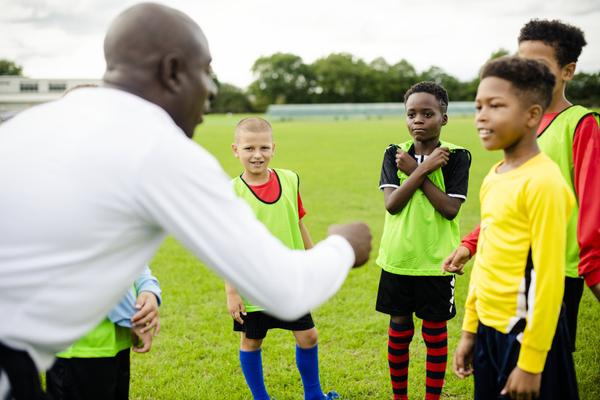
Team talks before matches establish tactical expectations, reinforce positive behaviours, and build collective motivation. Effective coaches balance technical instruction with emotional preparation, ensuring players enter matches both tactically informed and psychologically ready to perform.
Tactical adjustments during play require clear, concise communication from coaches and player leaders. Rather than overwhelming players with complex instructions during matches, effective teams use pre-established phrases and signals that convey tactical changes quickly without confusion.
Halftime discussions provide critical opportunities to address tactical issues, celebrate positive moments, and refocus players for the second half. Structured halftime routines ensure coaches address key points systematically whilst giving players voice to share observations and concerns.
Building Communication Skills in Training
Drills That Require Talking
Blindfold passing exercises force players to communicate verbally, creating environments where silence guarantees failure. One player wears a blindfold or closes their eyes whilst teammates guide them to receive and pass accurately through voice commands alone, highlighting how crucial clear communication becomes.
Back-to-goal receiving drills require teammates to provide directional information constantly. As players receive with their back to the goal, teammates must call "turn," "man on," "set," or "switch" to guide decision-making, developing both the caller's communication skills and the receiver's trust in teammates' information.
Pressure scenarios that require quick decisions under defensive intensity teach players to communicate urgently and clearly. Small-sided games with numerical disadvantages force players to talk constantly, coordinating defensive responsibilities and attacking movements to overcome the challenge.
Creating a Vocal Culture
Leading by example as coaches means communicating clearly, positively, and consistently throughout training sessions. Players mirror their coach's communication style, so demonstrating the specific behaviours you want - encouragement, tactical information, positive body language - establishes cultural norms.
Rewarding positive communication through praise, recognition, and tangible acknowledgement reinforces desired behaviours. Highlighting excellent communication moments during training, perhaps pausing drills to celebrate a player's helpful call, makes communication valued rather than optional.
Making silence uncomfortable in training creates expectations that carry into matches. If training sessions proceed quietly, match-day silence becomes normal; if training demands constant communication, vocal match behaviour develops naturally. Deliberately design drills where silence causes problems.
Position-Specific Communication Training
Goalkeeper commands form the foundation of defensive organisation. Goalkeepers see the entire pitch and must direct defenders confidently, calling "keeper's ball," "away," or specific defensive positioning adjustments. Explicitly teaching young goalkeepers their communication responsibilities develops leadership from the back.
Defensive organisation relies on constant dialogue between centre-backs, full-backs, and defensive midfielders. Training players to call marking assignments, coordinate pressing, and warn teammates about dangerous runs prevents the communication breakdowns that lead to goals conceded. Understanding defensive midfielder positioning helps teams organise their communication structure.
Midfield coordination requires sophisticated communication about transitional moments, positional rotations, and ball circulation. Midfielders must communicate with defence during build-up play and forwards during attacking phases, making them the verbal hub that connects all team lines.
Forward movement calls alert midfielders about runs in behind or dropping movements to receive. Strikers who communicate their intentions help teammates deliver accurate passes, whilst midfielders who call for forwards to "spin" or "check" coordinate attacking patterns more effectively.
Age-Appropriate Communication Development
Foundation Phase (U7-U10)
Simple, fun communication games introduce foundation-age players to the power of talking during football. Games like "traffic lights" where verbal commands control movement, or colour-coded passing games requiring players to call colours, make communication enjoyable and non-threatening.
Building confidence to speak publicly represents a significant developmental milestone for young children. Patient coaches celebrate every communication attempt, regardless of execution quality, creating positive associations with using voices during football that encourage continued effort.
Basic calls and terms should be introduced gradually, perhaps focusing on just one new phrase each training session. "Pass," "shoot," and "help" might suffice initially, with more sophisticated tactical calls added as players develop confidence and understanding.
Development Phase (U11-U14)
Tactical communication becomes possible as players develop cognitive sophistication to understand positional relationships and game situations. Introducing concepts like "squeeze," "drop," "press," or "hold" adds tactical depth whilst developing players' football vocabulary.
Position-specific language helps players understand their unique communication responsibilities. Centre-backs learn different calls than wingers; goalkeepers develop a different vocabulary than strikers. Teaching these specialised communication patterns accelerates tactical development.
Reading game situations to determine appropriate communication requires practice and feedback. Coaches should regularly ask players, "What could you have called there?" or "Who needed information in that moment?", developing analytical thinking alongside communication skills.
Youth Phase (U15+)
Leadership development becomes central to team communication football at advanced youth levels. Identifying natural leaders, providing captaincy training, and distributing communication responsibilities across multiple players create resilient leadership structures that function under match pressure.
Complex tactical calls coordinate sophisticated team movements that younger players couldn't execute. Understanding tactical formations allows older players to communicate positional adjustments, pressing triggers, and attacking patterns through established terminology.
Self-organising during matches represents the ultimate communication achievement - players solving tactical problems collectively without constant coach intervention. This autonomy develops through seasons of communication-focused training that builds trust, shared understanding, and collective problem-solving skills.
Practical Communication Frameworks
Key Calls Every Player Should Know
"Man on" alerts teammates to approaching pressure, giving them critical information about time available. This simple call prevents countless turnovers and helps players make better decisions when receiving possession. Alternatively, "time" indicates the receiver has space to control and turn.
"Away" or "clear" instructs defenders under pressure to prioritise safety over possession, preventing dangerous turnovers in defensive areas. These urgent calls override normal possession principles during moments when ball retention risks conceding goals.
Directional calls, including "left," "right," "turn," "back," or "forward" provide specific guidance about available options. Rather than vague encouragement, these precise instructions help teammates make rapid decisions that keep possession and create attacking opportunities.
Establishing Team Communication Protocols
Determining who speaks in different situations prevents communication chaos where multiple players shout conflicting instructions. Generally, players behind the ball should communicate more actively since they see the full pitch, whilst defenders and goalkeepers should dominate defensive communication.
Standard terminology across the team ensures everyone interprets calls identically. If "squeeze" means pushing forward to one player but holding position to another, confusion undermines communication effectiveness. Establishing shared language creates a common understanding.
Emergency calls versus informational calls require different vocal intensity and urgency. Players must learn when to shout urgently ("man on!") versus when calmer communication suffices ("plenty of time"). This nuanced understanding develops through explicit coaching and match experience.
Using Technology to Support Communication
Recording matches for review allows detailed analysis of communication patterns. Reviewing footage with audio reveals missed communication opportunities, highlights effective calls, and helps players understand their individual communication strengths and weaknesses.
Team messaging platforms maintain off-pitch connections that translate into better on-pitch communication. When players interact regularly through team management apps, they develop comfort communicating with each other that carries into matches, reducing social barriers to vocal teamwork.
Sharing tactical videos and analysis creates a shared understanding that facilitates communication. When players watch professional matches together or analyse their own performances collectively, they develop common tactical language and reference points that improve match-day communication efficiency.
Overcoming Communication Challenges
Addressing Shy or Quiet Players
Building confidence gradually through low-pressure environments helps naturally quiet players develop communication skills. Start with partner work where they only need to communicate with one teammate, progressively increasing to small groups before expecting full-team vocal participation.
Partner work before group scenarios reduces social anxiety by limiting the audience for communication attempts. Pairing shy players with supportive, encouraging teammates creates safe practice environments where mistakes feel less significant and success builds confidence.
Positive reinforcement strategies that celebrate small communication improvements motivate continued effort. Rather than criticising silence, enthusiastically praising any verbal contribution - however small - creates positive associations with communicating that gradually overcome shyness.
Managing Over-Communication
Quality versus quantity of communication determines effectiveness. Teams where everyone shouts constantly create noise rather than information, overwhelming teammates rather than helping them. Teaching players to communicate purposefully rather than continuously improves overall effectiveness.
Teaching when to speak versus when to listen prevents communication chaos during matches. Players must learn to recognise moments when their voice adds value versus moments when they should process information from teammates, particularly regarding players with better tactical visibility.
Avoiding confusion through too many voices requires establishing communication hierarchies. Generally, one or two player leaders should dominate communication during matches, with other players contributing specific information rather than constant commentary on every situation.
Cultural and Language Considerations
Supporting multilingual teams requires deliberate strategies that ensure all players can communicate effectively regardless of native language. Simple English football terms, translated key phrases, and patient cultural integration help diverse squads develop strong communication despite language barriers.
Universal signals and calls based on gestures rather than words allow seamless communication across language differences. Hand signals for common tactical adjustments, agreed-upon whistle patterns, or position-based responsibilities that require minimal verbal communication create inclusive environments.
Creating inclusive communication environments means celebrating linguistic diversity whilst building common football language. Teams that embrace multiple languages often develop richer tactical vocabularies and stronger cultural connections than monolingual squads.
The Coach's Role in Building Communication
Modelling Effective Communication
Clear instructions during training demonstrate the communication standards coaches expect from players. When coaches communicate precisely, positively, and purposefully, players internalise these patterns and replicate them during matches.
Positive language choices create encouraging environments where players feel safe experimenting with communication. Coaches who frame feedback constructively rather than critically, who celebrate attempts even when imperfect, build cultures where communication flourishes.
Active listening with players validates their perspectives and models reciprocal communication. When coaches genuinely listen to player observations, questions, and concerns, they demonstrate that communication involves both speaking and receiving information - essential for effective team communication football.
Creating Safe Environments for Communication
No punishment for speaking up ensures players feel comfortable communicating without fear of negative consequences. If players worry that incorrect tactical calls will result in criticism or embarrassment, they'll remain silent rather than risk judgment.
Encouraging questions and feedback creates cultures of collective learning rather than top-down instruction. When players feel empowered to ask "why?" or suggest tactical alternatives, communication becomes collaborative rather than merely directive.
Building psychological safety requires consistent, patient cultivation of trust and respect. Teams with high psychological safety communicate more effectively because players trust that teammates will receive their contributions supportively rather than critically.
Developing Player Leaders
Identifying natural communicators within squads allows coaches to leverage existing communication strengths whilst developing leadership in quieter players. Not all leaders shout constantly; some lead through calm, authoritative communication that teammates instinctively trust.
Captain and leadership training explicitly teaches communication responsibilities, tactical awareness, and emotional intelligence that effective leaders require. Rather than assuming players naturally understand leadership requirements, structured development programmes accelerate growth.
Distributing communication responsibility across multiple players prevents over-reliance on single leaders and ensures resilient team communication when key players are absent. Developing multiple vocal players creates communication redundancy that maintains standards through squad rotation.
Measuring Communication Improvement
Observable Indicators
Increased vocal activity during matches provides the clearest evidence of developing communication habits. Coaches, parents, and players themselves should notice significantly more talking, calling, and verbal coordination as communication training progresses.
Fewer defensive errors often correlate directly with improved communication. When defenders coordinate marking assignments, warn about dangerous runs, and communicate pressing responsibilities, teams concede fewer goals from communication breakdowns.
Better offensive coordination manifests through improved passing combinations, more successful runs in behind defences, and enhanced team shape during attacking phases. These tactical improvements often stem from communication developments rather than technical skill increases.
Feedback and Assessment
Player self-assessment develops metacognitive awareness about communication effectiveness. Asking players to rate their own communication after matches or training sessions encourages reflection and ownership of communication development.
Parent and spectator observations provide external perspectives on team communication patterns. Parents watching from the sidelines often notice communication improvements before players or coaches recognise changes, particularly regarding volume and frequency of calls.
Video analysis of communication patterns offers objective evidence of development. Recording matches with clear audio allows a detailed review of who communicates, when they speak, what they say, and how teammates respond to communication attempts.
Conclusion
Encouraging effective communication on the pitch transforms good teams into great teams through improved coordination, reduced errors, and stronger team cohesion. The strategies outlined provide comprehensive frameworks for developing vocal, confident players across all youth age groups.
Communication development requires consistent effort, patient coaching, and deliberate practice environments that make talking essential rather than optional. Whether coaching small-sided games or full 11v11 matches, prioritising communication creates tactical advantages that technical ability alone cannot deliver.
Start implementing these communication-building strategies immediately, beginning with simple drills that require talking and progressively adding tactical sophistication. Celebrate every communication attempt, model effective communication yourself, and create training environments where silence feels uncomfortable.
The transformation from silent teams to vocal, coordinated units happens gradually through sustained focus and positive reinforcement. Your commitment to building team communication football skills will yield dividends in match results, player development, and team culture. Whether managing established squads or forming new teams through grassroots football programmes, communication excellence provides the foundation for sustainable success on and off the pitch.
═══════════════════════════════════════════════════════════════