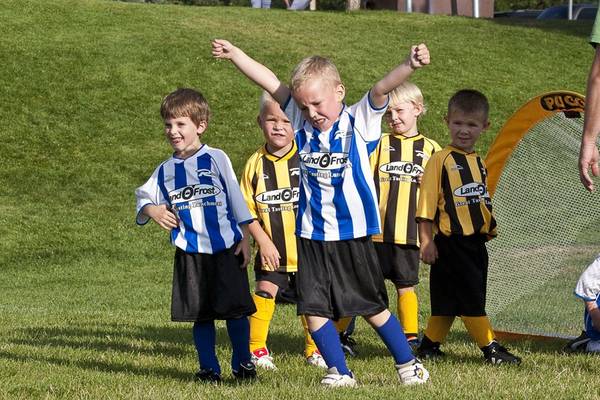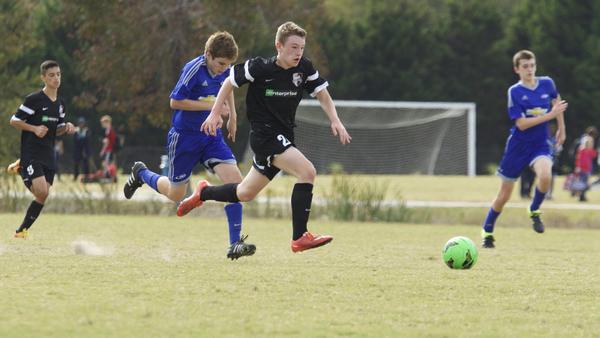

A grassroots football club's visual identity does far more than make the team look professional on match days. The badge, colours, and overall branding create a sense of belonging that transforms a collection of players into a unified team. When a young player pulls on a shirt bearing their club's crest for the first time, that visual identity becomes part of their football journey.
Yet many grassroots football clubs operate with inconsistent branding - mismatched kit colours across age groups, hastily designed badges created in Microsoft Word, and social media graphics that bear no resemblance to the club's actual identity. This inconsistency doesn't just look unprofessional; it undermines the sense of tradition and pride that makes grassroots football such a vital part of community sport.
Creating a distinct visual identity requires more thought than simply picking favourite colours or copying professional club designs. The most effective football club branding tells a story about the club's roots, values, and community whilst remaining practical for volunteer-run organisations with limited budgets.
Understanding What Visual Identity Actually Means
Visual identity encompasses every element that makes a club visually recognisable. The club badge serves as the cornerstone, but the full identity system extends to kit colours, typography, graphic styles, and how these elements combine across different applications.
Professional clubs employ design agencies and brand consultants to develop comprehensive identity systems. Grassroots clubs rarely have such resources, but the principles remain the same: consistency creates recognition, and recognition builds connection.
Complete Identity System Components
A complete visual identity system for a grassroots club includes the primary badge or crest, official club colours (primary and secondary), typography for club communications, graphic treatments for social media and printed materials, and guidelines for how these elements work together. Clubs that establish these foundations early avoid the common pitfall of gradual brand drift, where each new volunteer adds their own interpretation until the club's identity becomes fragmented.
Balancing Distinctiveness and Timelessness
The most successful grassroots club identities balance two competing needs: distinctiveness that makes the club stand out from others in the area, and timelessness that ensures the identity remains relevant for years without requiring costly redesigns.
Starting With Your Club's Story
Every grassroots football club has a story, even newly formed ones. That story provides the foundation for visual identity decisions that feel authentic rather than arbitrary.
Established Clubs and Heritage
Established clubs often have rich histories to draw upon. The year of formation, founding members, original club colours, significant achievements, and connections to local landmarks all offer potential inspiration. A club founded by workers from a local factory might incorporate industrial imagery. Teams formed around a specific neighbourhood could reference local geography or architecture.
Newer Clubs and Authentic Purpose
Newer clubs have different stories but equally valid ones. The motivation for formation, the community served, local geographic features, and the club's core values all provide meaningful starting points. A club created specifically to offer football opportunities to underrepresented groups might reflect that inclusive mission in its visual identity.
Authenticity Over Imitation
The key is authenticity. Copying elements from professional clubs or inventing historical connections that don't exist creates an identity without substance. A club formed in 2020 shouldn't pretend to have Victorian-era heritage, but it can absolutely create a visual identity that reflects its genuine purpose and community.
Consider Peckham Town FC, a South London club reformed in 2015. Rather than attempting to manufacture false history, they embraced their modern reformation with a clean, contemporary badge design that references their local area through simple geometric shapes. The result feels honest and distinctive.
Choosing Colours That Work Practically
Club colours seem like a simple decision until encountering the practical realities of kit procurement, sponsor integration, and visibility on the pitch. The most effective colour choices balance aesthetic preferences with functional requirements.
Football club branding through colour selection requires considering several practical factors.
Kit Availability Constraints
Kit availability presents the first constraint - whilst professional clubs can commission any colour combination imaginable, grassroots clubs order from supplier catalogues with limited options. Choosing colours available across multiple manufacturers and price points prevents future headaches when changing suppliers.
Local Differentiation
Local differentiation matters significantly. When three clubs in the same league all play in royal blue, match days become confusing for players, referees, and spectators. Researching nearby clubs' colours before finalising decisions prevents this issue. County FA websites and league directories provide useful resources for checking local colour usage.
Sponsor Compatibility
Sponsor compatibility influences many grassroots clubs' colour decisions. A local business providing significant sponsorship might request their corporate colours feature in the kit design. Establishing primary club colours that complement rather than clash with potential sponsor colours creates flexibility for these partnerships.
Visibility and Contrast
Visibility and contrast affect both safety and aesthetics. Colours that photograph poorly or blend into typical pitch backgrounds create problems for match photography and video analysis. Similarly, insufficient contrast between shirt and short colours can cause visual confusion during play.
Proven Colour Combinations
Traditional colour combinations offer proven effectiveness: red and white, blue and yellow, green and white, black and amber. These pairings provide strong contrast, photograph well, and remain widely available across suppliers. Less conventional combinations can certainly work but require more careful consideration of practical implications.
Designing or Commissioning Your Badge
The club badge represents the most critical element of visual identity. This single image appears on kits, websites, social media, fundraising materials, and everywhere else the club presents itself. Getting it right matters.
Grassroots clubs typically pursue one of three approaches: commissioning a professional designer, using online design services, or creating something themselves using graphic design software. Each approach has distinct advantages and limitations.
Professional Designer Approach
Professional designers deliver the highest quality results but cost £300-1,500 depending on scope and designer experience. This investment makes sense for established clubs with a budget available and a long-term perspective. The designer should provide multiple concept options, revisions based on feedback, and final files in formats suitable for all applications (embroidery, printing, digital use).
Online Design Services
Online design services like 99designs or Fiverr offer middle-ground options, with badge designs available from £50-300. Quality varies significantly, so reviewing designer portfolios and previous football badge work becomes essential. A clear briefing about the club's story, values, and practical requirements helps these designers deliver appropriate results.
Self-Designed Badges
Self-designed badges created in Canva, Photoshop, or Illustrator cost nothing but require design skills and significant time investment. This approach works best for clubs with members possessing genuine design experience. The most common mistake involves overly complex designs that lose clarity when scaled down to shirt badge size.
Effective Badge Design Principles
Regardless of approach, effective badge design follows several principles.
Simplicity ensures the badge remains recognisable at small sizes and reproduces clearly in embroidery. A badge that looks impressive at A4 size but becomes an indistinct blob when embroidered at 7cm diameter has failed its primary purpose.
Meaningful symbolism connects the badge to the club's story. Local landmarks, founding year, traditional colours, and geographic references all provide relevant content. Avoid generic football imagery (balls, goals, whistles) that could apply to any club anywhere.
Appropriate complexity balances detail with clarity. Professional club badges demonstrate this balance - they contain enough detail to remain interesting but maintain clear silhouettes and readable text. County FA guidelines often specify technical requirements for club badges, including minimum text sizes and colour contrast ratios.
Scalability across applications means the badge must work in colour and monochrome, at sizes from 2cm to 2m, and in embroidery, printing, and digital formats. Testing the design at various sizes before finalising prevents discovering problems after committing to production.
Creating Consistency Across Touchpoints
A distinct visual identity requires consistent application across every place the club appears. Inconsistency undermines the recognition and professionalism that visual identity aims to create.
Digital Presence
Digital presence provides the most visible touchpoint for modern grassroots clubs. The club website, social media profiles, email communications, and digital team sheets all need consistent visual treatment. Using a team management app ensures that match information, fixtures, and team communications maintain a professional presentation aligned with club branding.
Physical Materials
Physical materials extend the visual identity into the real world. Kit design obviously represents the most important application, but consider also training wear, club merchandise, pitch-side equipment, and signage at home grounds. Even clubs without dedicated facilities can create a consistent visual presence through pop-up banners, gazebos, and equipment bags bearing club colours and badges.
Printed Communications
Printed communications, including match programmes, fixture cards, sponsorship proposals, and fundraising material,s should all reflect the established visual identity. Creating simple templates for common documents prevents each volunteer from producing their own interpretation.
Brand Guidelines Documentation
The key to maintaining consistency lies in documentation. A simple brand guidelines document - even just two pages - specifying club colours (with exact codes), badge usage rules, approved fonts, and example layouts gives everyone creating club materials clear direction. This needn't be complex; grassroots clubs need practical guidance, not corporate brand manuals.
Avoiding Common Design Mistakes
Grassroots clubs repeatedly make predictable mistakes when developing visual identity. Awareness of these pitfalls helps avoid them.
Overly Complex Designs
Overly complex designs represent the most frequent error. Badges containing intricate details, multiple colours, small text, and elaborate imagery might look impressive on screen but fail in practical application. Embroiderers charge premium rates for complex designs, and detail disappears at small sizes.
Trendy Design Elements
Trendy design elements date quickly. Visual styles that feel contemporary today often look embarrassingly dated within five years. The most enduring club identities use classic design principles rather than chasing current trends. Consider how many professional clubs maintain badges with roots in designs from decades ago - simplicity and tradition age better than fashionable flourishes.
Inappropriate Symbolism
Inappropriate symbolism damages rather than enhances identity. Copying elements from professional clubs creates legal issues and lacks authenticity. Using imagery with unintended meanings (religious symbols, political references, or culturally specific elements) can cause serious problems. Research thoroughly and consult widely before finalising symbolic elements.
Poor Technical Preparation
Poor technical preparation causes production problems. Badge designs created at low resolution, in inappropriate file formats, or without vector versions create difficulties when ordering kit, printing materials, or creating signage. Professional designers provide files in multiple formats precisely because different applications require different technical specifications.
Ignoring Community Feedback
Ignoring feedback from the club community leads to identity that members don't connect with. Whilst design by committee rarely produces good results, gathering input from players, parents, and volunteers before finalising decisions helps ensure the identity resonates with those it represents.
Implementing Your Identity Gradually
Grassroots clubs rarely have budgets to implement new visual identity across everything simultaneously. A phased approach spreads costs whilst building momentum around the new identity.
Digital Implementation First
Start with digital implementation since this costs nothing beyond time. Update social media profiles, website headers, email signatures, and digital communications immediately. This creates instant visibility for the new identity and allows gathering feedback before committing to physical production costs.
Kit Replacement Timing
Kit represents the most significant investment and highest impact application. Most clubs replace kit on 2-3 year cycles, making the next scheduled replacement the natural moment to introduce new badge and colours. Ordering sample shirts before full team orders prevents discovering production issues after significant expenditure.
Printed Materials Transition
Printed materials can transition gradually as existing stocks deplete. No need to discard hundreds of existing fixture cards simply because the badge has been updated - use current stocks whilst ensuring new orders reflect the updated identity.
Training Equipment Updates
Training equipment and pitch-side materials can be updated opportunistically as items need replacement or budget allows. Consistent visual identity matters, but few people expect grassroots clubs to replace functional equipment simply for aesthetic reasons.
Clear Communication During Transition
The transition period requires clear communication. Explain to club members why the identity is changing, what the timeline looks like, and how the new identity better represents the club. This prevents confusion and builds buy-in for the investment required.
Protecting Your Visual Identity
Once established, club visual identity needs protection from both external copying and internal inconsistency.
Trademark Registration
Trademark registration provides legal protection for club badges and names. Whilst this involves costs (£170 for a UK trademark application), it prevents other organisations from using confusingly similar identities and provides recourse if they do. Established clubs with strong local presence should consider this protection.
Copyright Management
Copyright automatically applies to original badge designs, giving the club (or the designer, depending on commissioning agreements) legal rights over the image. Ensure commissioning agreements specify that the club owns copyright to any badge design created, allowing unrestricted use without ongoing designer permission.
Usage Guidelines
Clear usage guidelines prevent well-meaning volunteers from inadvertently damaging the identity through inconsistent application. Simple rules about badge placement, colour usage, and approved layouts help maintain consistency without creating a bureaucratic burden.
Digital Asset Management
Digital asset management - even just a shared folder containing approved badge files, colour specifications, and template documents - ensures everyone creating club materials works from correct sources rather than grabbing random images from internet searches.
Evolving Your Identity Thoughtfully
Visual identity shouldn't remain completely static, but changes require careful consideration. The most successful clubs evolve their identity gradually rather than making dramatic changes.
Minor Refinements
Minor refinements every 5-10 years keep the identity feeling current without losing recognition. Simplifying details, adjusting proportions, or modernising typography maintains freshness whilst preserving essential elements. Many professional clubs demonstrate this approach - their current badges clearly relate to historical versions but incorporate subtle improvements.
Significant Redesigns
Significant redesigns should occur only when compelling reasons exist: the current identity has serious functional problems, the club has fundamentally changed (merger, relocation, change in status), or the existing identity has become genuinely dated rather than classic. Even then, maintaining some continuity with the previous identity helps preserve the connection to club history.
Community Consultation
Consultation with club members before making changes prevents alienating the community the identity represents. Players, parents, volunteers, and supporters all have legitimate interests in decisions affecting club identity. Their input doesn't mean design by committee, but it does mean understanding how proposed changes land with those who matter most.
Measuring Success
Unlike match results, visual identity success proves harder to quantify, but several indicators demonstrate effectiveness.
Recognition Indicators
Recognition represents the primary measure. Do people in the local football community recognise the club's colours and badge? Can players spot their teammates across crowded tournament venues? Does the identity create immediate association with the club rather than confusion with others?
Member Pride
Pride amongst club members shows emotional connection to the identity. Players requesting club merchandise, parents sharing team photos on social media, and volunteers speaking positively about the club's professional appearance all indicate successful identity.
Practical Functionality
Practical functionality matters too. Does the badge reproduce clearly across all applications? Do kit suppliers deliver accurate colour matches? Can the identity accommodate sponsors without compromising club branding? These practical measures determine whether the identity works in real-world application.
Longevity
Longevity provides the ultimate test. Identity that remains effective and relevant for years without requiring updates demonstrates genuinely successful design. The clubs with strongest identity often maintain recognisable visual elements across decades.
Making Visual Identity Work for Your Club
Creating distinct visual identity for a grassroots football club requires balancing aesthetic ambition with practical constraints, honouring club heritage whilst remaining relevant, and maintaining consistency whilst allowing gradual evolution.
The clubs that succeed in building strong football club branding share common approaches: they root design decisions in authentic club stories rather than arbitrary preferences, they prioritise simplicity and clarity over complexity and detail, they implement identity consistently across all touchpoints, and they protect and maintain their identity once established.
Visual identity ultimately serves a purpose beyond aesthetics. The badge on a player's shirt, the colours they wear, and the visual presence the club projects all contribute to the sense of belonging that makes grassroots football meaningful. When a young player feels pride wearing their club's colours, when parents recognise their team from across the pitch, when the local community associates specific colours and badge with specific values and traditions - that's when football club branding fulfils its true purpose.
Tools like TeamStats help clubs maintain consistent professional presentation across digital communications, ensuring the visual identity extends seamlessly into team management, fixture information, and player communications. Combined with thoughtful design decisions and consistent application, grassroots clubs can build visual identities that rival professional organisations in effectiveness if not budget.
The investment of time, thought, and modest financial resources into developing distinct visual identity pays dividends in club pride, community recognition, and professional presence. For volunteer-run organisations competing for players, sponsors, and local support, that competitive advantage matters considerably. Get started with TeamStats to maintain professional branding across all club communications and build a visual identity that strengthens team unity and community pride.
═══════════════════════════════════════════════════════════════