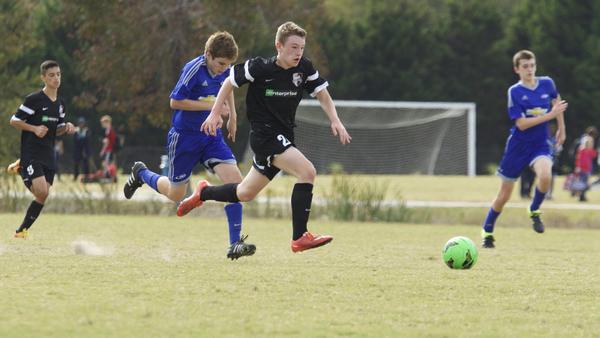

Every grassroots coach faces it sooner or later: a squad filled with players of very different abilities. Some kids glide across the pitch with natural flair, while others are still finding their feet. The challenge is designing mixed ability football training sessions that push your strongest players while keeping beginners motivated. Done right, these sessions help everyone grow, creating a balanced team where no one feels left behind.
Think of it like running a classroom. You wouldn’t hand out the same maths worksheet to both five-year-olds and teenagers , so why expect identical drills to suit a player who’s barely learned to dribble and another who can already hit top corners? A coach’s job is to find that sweet spot where everyone is engaged, stretched, and supported.
Understanding the Challenge
When ability levels vary, training can feel like walking a tightrope. Push too hard, and your less experienced players lose confidence. Keep it too simple, and advanced players switch off. The aim is balance , sessions must be challenging, inclusive, and enjoyable. That’s what keeps everyone improving and eager to come back week after week.
This isn’t about watering down drills. It’s about smart coaching: adjusting tasks, varying complexity, and creating multiple entry points into the same activity. An under-12 defender who’s just learning positioning and a confident winger who thrives on 1v1 battles can both benefit from the same exercise if you set it up with layered objectives.
Key Takeaways:
Avoid overwhelming beginners or boring advanced players.
A balanced session challenges everyone at their own level.
Smart adjustments keep all players engaged.
Assessing Player Abilities
Before planning, you need to know what you’re working with. Proper assessment sets the foundation for effective mixed ability football training. Without it, you risk misjudging players’ needs and missing opportunities to stretch them.
Observation: Watch players in games and drills to see how they cope under pressure. Notice decision-making as much as technical ability.
Skills Tests: Run short assessments in passing, dribbling, and shooting. Simple “keep the ball in a square” drills reveal as much as goal-scoring exercises.
Feedback: Speak to players one-on-one. Ask what they enjoy most and where they struggle. Personal insight builds trust and helps you tailor sessions.
With TeamStats’ Analyse feature, you can record these assessments, turning gut instincts into measurable data that inform future training.
Key Takeaways:
Collect data through tests, observation, and feedback.
Assess both technical ability and decision-making.
Use insights to shape coaching plans.
Differentiated Drills and Activities
Differentiation means adjusting tasks so all players benefit, no matter their level. The goal isn’t to create two separate sessions but to design activities that naturally scale.
Progressive Drills: Start simple, then add layers. For instance, begin with two-touch passing in pairs. Progress to one-touch with movement, then finish with passing under pressure.
Levelled Challenges: Beginners focus on accuracy and control; advanced players add speed, power, or weaker-foot use. Same drill, different emphasis.
Small-Sided Games (SSGs): Perfect for mixed squads. Change team sizes, field dimensions, or rules to keep balance. A 3v2 attacking overload can sharpen skills for both attackers and defenders.
During these sessions, use TeamStats’ Analyse tools to track who’s excelling and who needs extra support, ensuring no player slips under the radar.
Key Takeaways:
Adapt activities to multiple levels.
Use progressive challenges to maintain engagement.
SSGs provide flexible learning opportunities.
Modified Game Scenarios
Scrimmages don’t have to be “winner takes all.” A clever coach tweaks rules to ensure development for every player.
Conditional Games: Add rules like “three passes before shooting” or “use weak foot in attacking zones.” This encourages patience and skill variety.
Zoned Games: Divide the pitch into areas. Beginners work in controlled zones with simpler roles, while advanced players face higher-pressure situations.
Handicap Systems: Balance competition by giving the weaker side an extra player, smaller pitch, or time advantage.
With TeamStats’ Organise feature, you can plan these scenarios in advance, saving valuable time on training days.
Key Takeaways:
Conditions highlight specific skills.
Zones simplify learning for beginners.
Handicaps balance competition.
Individualised Feedback and Support
Personal feedback matters more in mixed-ability squads than anywhere else. It’s the key to making each player feel valued.
Specific Praise: Highlight the detail. “Great one-touch pass, Sam” is far more powerful than “good job.”
Constructive Criticism: Keep it focused and actionable. “Try scanning before receiving, Ella.”
One-on-One Coaching: Dedicate short bursts of time to individuals during drills.
Using the Communicate feature, coaches can extend this feedback beyond the session through personalised notes and reminders.
Key Takeaways:
Be specific, not generic.
Pair praise with constructive advice.
Provide individual coaching moments.
Creating a Positive Environment
Even the best drills fail if the atmosphere isn’t right. Mixed-ability training thrives when the environment supports learning for everyone.
Celebrate Effort: Reward commitment and improvement, not just goals. A player who finally masters shielding the ball deserves recognition.
Promote Teamwork: Encourage stronger players to mentor less experienced ones. This builds leadership while reinforcing basics.
Patience and Empathy: Remind the squad that improvement takes time , whether it’s learning positioning or perfecting a step-over.
A coach I know used to give “Effort Awards” each week for bravery, teamwork, or attitude. The prize was nothing more than leading the warm-up next session, but kids wore it like a badge of honour.
Key Takeaways:
Focus on effort as much as results.
Foster support and mentorship within the squad.
Keep sessions positive, fun, and safe.
Using Tech to Track Progress
Technology can turn good coaching into great coaching by providing measurable evidence of improvement.
Performance Metrics: Track passing accuracy, tackles, goals, or distances covered.
Attendance Records: Spot patterns in commitment levels.
Progress Reports: Generate insights on individuals and the group to guide next week’s focus.
With the TeamStats Team Management App, coaches can capture, review, and adjust training plans using real-time data. Instead of “I think Jamie’s improving,” you’ll know his passing accuracy has jumped 15% this month.
Key Takeaways:
Track stats for accountability.
Use attendance logs to identify trends.
Generate reports for targeted coaching.
Building Leadership Within Mixed Squads
Leadership isn’t only for captains. In mixed squads, sharing responsibility helps everyone feel part of the team.
Advanced Players: Assign warm-up duties, let them mentor teammates, or lead tactical discussions.
Beginners: Give small but meaningful jobs like managing bibs or setting up cones. These build self-esteem and keep them engaged.
It’s a simple but effective strategy. A young striker in one club I worked with went from shy and reserved to leading pre-match stretches. The confidence carried onto the pitch, and his performance improved too.
Key Takeaways:
Delegate tasks to experienced players.
Give beginners smaller roles to build confidence.
Use leadership as a development tool.
Conclusion
Coaching a mixed-ability squad is demanding, but it’s also one of the most rewarding challenges in football. By blending differentiated drills, modified games, and personalised support, you can create an environment where every player thrives. Add tools like TeamStats to track performance and keep communication strong, and you’ve got a recipe for long-term development.
Next Steps:
Assess each player’s current level.
Plan progressive drills and SSGs for inclusivity.
Use feedback to motivate individuals.
Foster positivity and teamwork.
Track and adapt with TeamStats’ features.
Mastering mixed ability football training is about unlocking potential. With patience, planning, and the right tools, you can transform a squad of varying levels into a united, competitive team.