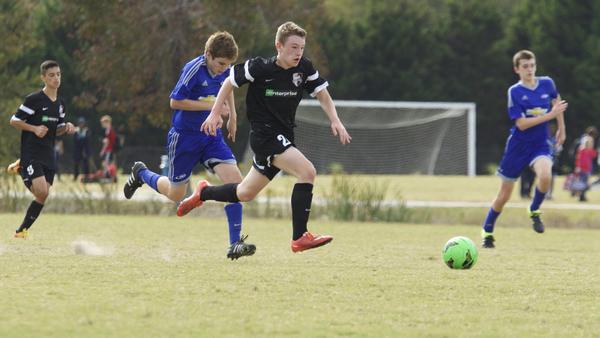

Every grassroots coach knows the feeling of being outgunned. You line up against sides with bigger squads, slicker kits, and perhaps a striker who seems destined for academy football. For under-resourced teams, controlling possession for ninety minutes isn’t always realistic. The solution? Outsmart the opposition. Counterattacking tactics in grassroots football provide a way to turn limited resources into maximum impact.
Counter-attacks aren’t about parking the bus or playing negatively. They’re about discipline, timing, and turning defence into attack in seconds. For teams without the luxury of dominating the ball, it’s the great leveller. Done well, it can frustrate stronger opponents and leave them vulnerable to the very strengths they try to impose.
Why Counter-Attacking Works for Underdogs
Counter-attacking relies on exploiting space. When an opponent pushes forward with numbers, they leave gaps behind their midfield and back line. These spaces are golden opportunities if your team is organised enough to seize them.
Think of your team like a spring. Compact when defending, loaded with tension. Once possession is regained, that spring is released with explosive force, sending players charging forward into vacated space. This is the essence of grassroots football counterattacking tactics, using patience and compactness as fuel for devastating bursts.
Teams with fewer resources often lack the depth to rotate players or sustain constant pressing. Counter-attacking offers efficiency. Instead of expending energy chasing the ball, your side conserves it, waiting for the right moment to strike.
The Defensive Foundation: Organisation First
No counter-attack exists without a strong defensive base. If your side can’t regain the ball cleanly, you’ll never launch effective breaks.
Compact Shape
Your players must move as a unit. The gaps between lines must be tight, denying opponents time to pick out passes.
Narrow Formation: Wide players tuck in, protecting central areas.
Vertical Compression: Forwards drop back while defenders step up to squeeze the pitch.
Patience: Instead of reckless lunges, players focus on interceptions and pressing triggers.
The Holding Midfielder’s Role
The “Number Six” position is pivotal. Acting as a shield, this player breaks up play and transitions quickly into attack. They’re often the one who wins possession and immediately looks to release a runner. You’ll find more on this role in TeamStats’ dedicated piece on the Number Six position.
The Trigger: Transitioning to Attack
Once possession is regained, everything depends on speed and clarity. Players must already know where the ball should go before they win it.
First Look Forward
The instinct must be drilled in: the first pass after a regain goes forward if possible. Backwards or sideways passes kill momentum and allow opponents to recover. Quick, decisive distribution is non-negotiable.
Supporting the Ball Carrier
Counter-attacks fail if the ball carrier is isolated. Other players must react instantly:
Wingers: Provide width, stretching defenders.
Strikers: Run diagonally to pull markers away.
Midfielders: Burst forward late to create overloads.
A well-drilled team understands these patterns, ensuring counters aren’t wasted.
Anecdote: Ben’s Decisive Break
In one fictional grassroots side, there was a winger named Ben. Small, fast, and fearless, but often underused. His coach drilled the defence with a simple instruction: when you win the ball, find Ben.
During a local semi-final, the team spent most of the game under pressure. With minutes remaining, their centre-back blocked a shot, recovered the ball, and immediately clipped it into the right channel. Ben sprinted onto it, outpaced the last defender, and slotted calmly into the corner.
That goal didn’t just happen in the moment. It was the product of weeks of drilling, building confidence that the first ball forward would always find its outlet. That one strike carried them to the final, proof of how grassroots football counterattacking tactics can change fortunes.
Analogy: Counter-Attacking as Chess
Counter-attacking is like a chess game. The opponent throws pieces forward, seeking dominance. But in overcommitting, they create weaknesses in their structure. The underdog doesn’t need to match every move. Instead, they wait for the perfect opening, then strike decisively, taking advantage of their opponent’s overextension.
In football, that means waiting for the turnover, then attacking with ruthless simplicity.
Executing the Counter: Precision and Finishing
The hardest part of counter-attacking isn’t starting the break; it’s finishing it. Players often arrive in advanced positions exhausted, so composure is critical.
Drills to Practise Finishing on the Break
Sprints into Shooting: Players sprint from halfway before finishing. This simulates real fatigue.
2v1 Scenarios: Train attackers to make the right decision, shoot or pass.
Timed Attacks: Give players a five-second window to score, emphasising urgency.
A counter is only as good as its end product. Practise ensures composure doesn’t desert your side in decisive moments.
Tactical Systems for Counter-Attacking
Counter-attacks adapt to different formations. For example:
4-4-2: Classic for underdogs, with two banks of four and two strikers ready to break.
4-2-3-1: Defensive double pivot offers stability, while three attackers spring forward.
3-5-2: Provides defensive security with wing-backs bursting forward on the counter.
For more insight on setups, see TeamStats’ Best Football Formations guide and the companion Best 7-a-side Football Formations for small-sided play.
Building Belief in the System
Counter-attacking only works if the whole squad buys into the philosophy. If one player presses out of sync or hesitates to track back, the shape collapses. Coaches must stress: it’s a collective effort.
Reinforce unity by framing counter-attacks as opportunities, not desperate measures. Show players that patience and discipline are just as valuable as flair. That belief turns defending into anticipation rather than dread.
This sense of togetherness is central to grassroots football, as captured in the what is grassroots football piece. It’s not just about winning matches; it’s about teaching players the value of resilience, teamwork, and shared goals.
Using Tools to Refine the Approach
Modern coaches benefit from digital support. The Team management app helps organise sessions, track player data, and review match stats. By analysing transitions, passing patterns, and player workload, coaches can fine-tune how their side counters.
Organisation off the pitch leads to sharper execution on it.
Final Thoughts: Turning Defence into Opportunity
For under-resourced teams, counterattacking tactics in grassroots football offer hope against stronger opponents. They rely on structure, discipline, and an unshakable belief that opportunities will come. With the right drills, organisation, and mindset, any side can frustrate favourites and strike decisively when the chance arises.
By teaching compact defending, lightning transitions, and ruthless finishing, coaches equip their players with the tools to thrive. What looks like a weakness, limited resources, can become a strength when the system works. And when that counterattack flies in, few victories feel sweeter.