
Football has always been about far more than drills and results. The most successful coaches understand that the secret to long-term development lies in adapting how you teach. Every age group brings new physical abilities, emotional needs, and motivations to the pitch. The five-year-old just discovering how to dribble needs something completely different from the fifteen-year-old chasing academy trials or the thirty-year-old finding a second wind in Sunday League.
That’s where understanding coaching styles by age football becomes invaluable. It’s the difference between helping players grow and leaving them disengaged. Each phase of development requires the right blend of instruction, encouragement, and challenge; a rhythm that shifts as young players mature.
This guide looks at how coaching evolves from early childhood through to adulthood, and how tools like TeamStats make it easier to plan sessions, track progress, and manage every age group efficiently.
The Foundations of Age-Appropriate Coaching
Good coaching is as much about psychology as it is about tactics. Every player interprets information differently depending on their age, and every team dynamic changes as players grow. Adapting your approach doesn’t mean lowering standards; it means aligning expectations with realistic developmental stages.
Children process feedback emotionally before they process it logically. Teenagers crave independence but still need guidance. Adults, meanwhile, prefer collaboration and self-responsibility. Recognising these shifts allows coaches to create environments where players are challenged appropriately without losing enjoyment.
At its core, adapting coaching styles by age football is about respecting that development isn’t linear. A nine-year-old might show tactical awareness beyond their peers but still struggle emotionally with setbacks. Your role is to balance technical, psychological, and social learning without overloading any one area.
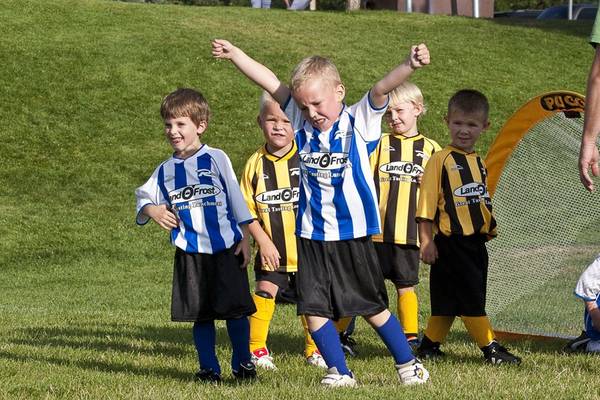
Early Childhood (Ages 5–7): Introducing Football Through Play
At this age, the pitch is more playground than performance space. Children are developing motor skills, learning balance, and understanding teamwork in its simplest form. The focus here should be fun, freedom, and basic coordination.
Key Coaching Priorities
Keep instructions short and simple; under ten seconds if possible.
Focus on ball familiarity rather than structure.
Use storytelling to spark imagination. “You’re pirates chasing the ball!” often works better than “Defend your space.”
Rotate positions frequently to avoid early specialisation.
Praise effort constantly; ignore mistakes unless they affect safety.
Effective Coaching Style
Young players thrive under democratic coaching that combines gentle direction with freedom. You’re more facilitator than instructor. Avoid discipline-based methods; children respond to enthusiasm and creativity, not criticism.
Use mini-games that encourage exploration. For instance, a “traffic light” drill (green for go, red for stop) teaches control and spatial awareness without the monotony of repetitive drills.
Middle Childhood (Ages 8–10): Building Fundamentals
As coordination and understanding improve, this stage introduces more structured skill development. Players can now grasp simple tactics and teamwork, but the emotional landscape remains delicate.
Coaching Focus
Introduce concepts like space, passing lanes, and teamwork.
Emphasise technique: first touch, short passing, body control.
Keep games small-sided (4v4 or 5v5) for maximum involvement.
Begin gentle competitive play but avoid overemphasising results.
At this stage, the democratic style still works well, but with subtle transitions towards guided discovery; letting players experiment while steering their decisions. Encourage reflection: “What could you try next time?” rather than “You did that wrong.”
Real-World Example
During a youth session at a community club, a coach noticed his U9 winger constantly losing the ball under pressure. Instead of correcting him mid-match, the coach waited until the break and asked, “What happens when two defenders close you down?” The player paused, thought, and suggested passing earlier. That moment of ownership did more for his development than a thousand shouted instructions.
It’s a small but powerful demonstration of player-led learning.
Late Childhood (Ages 11–12): Encouraging Awareness and Confidence
This is often the “golden age” of skill learning, when players can blend physical ability with tactical curiosity. However, confidence can rise and fall quickly, particularly during growth spurts and social transitions.
Coaching Priorities
Increase technical difficulty gradually.
Start using video or data feedback from tools like the Team Management App to highlight individual progress.
Encourage communication: let captains lead warm-ups or drills.
Introduce positional understanding without rigidly defining roles.
Coaching Style Shift
This age group benefits from a cooperative style, mixing structure with flexibility. Coaches begin guiding from the side-lines while players take more control.
The key phrase here is constructive autonomy. You’re preparing players to think like mini-coaches; spotting space, anticipating passes, adjusting movement. Your feedback should be precise but positive: focus on what can be improved, not what went wrong.
Early Adolescence (Ages 13–15): Nurturing Identity and Independence
Puberty brings unpredictable changes, physically, mentally, and socially. Some players experience rapid growth and coordination issues; others lag behind. Motivation also fluctuates.
At this point, coaching styles by age football become about patience and adaptability. Players are forming identities, and your influence extends beyond football.
Coaching Objectives
Support emotional resilience. Mistakes are normal; use them as teaching moments.
Tailor communication individually. Some players prefer quiet correction; others need vocal reinforcement.
Introduce video analysis to show development visually.
Balance discipline with empathy. Set standards, but don’t humiliate.
Practical Coaching Style
The most effective coaches during this period use an autocratic-democratic blend. Structure is necessary; teenagers respect fairness and consistency, but they also appreciate collaboration.
Encourage leadership by rotating captaincy and asking players for tactical input during halftime. Build ownership by letting them plan a warm-up session or lead stretching routines.
Late Adolescence (Ages 16–18): Sharpening Tactical Intelligence
Older teens are ready for complex strategy and competition. The focus now shifts toward performance, consistency, and self-management.
Coaching Goals
Implement full-size 11-a-side training scenarios.
Teach adaptability across multiple systems (4-4-2, 3-5-2, 4-3-3); link this to TeamStats’ analysis tools and tactical guides like the Best Football Formations.
Demand professional standards: punctuality, attitude, and preparation.
Integrate match analysis data into individual feedback.
Coaching Style in Practice
At this level, adopt a transformational approach; motivating through shared purpose. Teen players respond best when they understand why something matters.
Use video tools and statistical analysis to explain tactical adjustments. For example, show how switching from a 4-4-2 to a 4-3-3 affects midfield overloads. Pair the explanation with interactive questioning: “How could this shape help us control possession next week?”
Analogy
Think of it like tuning an instrument. Each player contributes a note, but unless every part is in harmony, the melody falters. Coaching teenagers means fine-tuning timing, tone, and temperament until the collective rhythm becomes instinctive.
Early Adulthood (Ages 19–25): Turning Training Into Execution
By now, players have the foundation to make decisions autonomously. The role of the coach evolves into that of a mentor and strategist rather than an instructor.
Coaching Focus
Prioritise tactical flexibility and fitness.
Introduce analytical feedback tools to fine-tune decision-making.
Foster leadership qualities; empower senior players to mentor younger ones.
Maintain competitive motivation while managing workload and injury prevention.
Style & Approach
Adopt a collaborative coaching style, where players contribute to tactical discussions. This group appreciates being treated as equals. The focus is less on drilling and more on partnership.
Encourage post-match analysis using tools from the Team Management App; such as player statistics, heat maps, and match reports, to deepen understanding.
Mature Players (Ages 26–35): Balancing Performance and Life
Players in this range juggle careers, family, and fitness. The coach’s challenge is to keep sessions purposeful without overwhelming them.
Coaching Priorities
Adapt workloads to suit schedules and recovery needs.
Keep training varied to maintain enthusiasm.
Focus on strategy, set pieces, and game intelligence.
Support fitness through structured warm-ups and conditioning drills.
Coaching Style
This age group benefits from player-centred coaching, where communication is open and feedback is mutual. Coaches must respect players’ life commitments while maintaining professionalism.
The democratic approach remains ideal, balancing flexibility with discipline. Match analysis can highlight strengths and limitations without heavy criticism; showing respect for their experience while guiding improvements.
Veterans (Ages 35+): Coaching for Enjoyment and Longevity
At this stage, competition still matters, but camaraderie and physical well-being take priority. Veterans’ teams are full of former players who know the game but may lack fitness or recovery time.
Coaching Essentials
Prioritise enjoyment and safety.
Keep warm-ups extended to prevent injury.
Reduce session intensity while maintaining competitiveness.
Use team meetings to discuss tactics, upcoming fixtures, or fundraising initiative,s such as those found in Grassroots Football Fundraising Ideas.
Appropriate Style
Veteran players respond to collaborative coaching grounded in respect and humour. The best coaches at this level are part tactician, part motivator, and part organiser. They know when to push, when to laugh, and when to simply let the game flow.
Fictional Anecdote: The Coach Who Changed His Game
When “Coach Martin” started managing a U14S side in the Midland Junior Premier League, his biggest challenge wasn’t tactics; it was temperament. He’d been coaching adults for years and carried the same strict expectations into youth football.
After a few weeks, enthusiasm faded. Training felt tense, and players stopped smiling. One Saturday, Martin noticed his captain deliberately making mistakes in warm-up just to get a laugh from teammates. Instead of shouting, he tried something new: he asked the team how they wanted sessions to feel. The answers surprised him: “fun,” “relaxed,” “less shouting.”
He adjusted. Music during warm-ups, shorter explanations, and more mini-games. By Christmas, the same players were leading drills themselves and celebrating small improvements as much as goals. The difference? A coach who learned that coaching styles by age football meant changing himself first.
The Role of Technology in Supporting Adaptable Coaching
Modern football management isn’t just clipboards and cones anymore. Platforms like TeamStats have transformed how grassroots teams plan, communicate, and grow.
For coaches managing multiple age groups, these tools simplify:
Scheduling and Availability: Organise fixtures, training sessions, and attendance effortlessly.
Performance Tracking: Analyse player stats, goals, assists, and trends over time.
Match Reports and Line-Ups: Generate reports automatically, reducing admin.
Communication Channels: Keep parents, players, and assistants aligned.
Finance and Fundraising: Manage budgets transparently with integrated tools.
In youth football, technology supports structure without losing human connection. For adult teams, it streamlines logistics so the focus stays on football rather than spreadsheets.
It’s not just convenient; it reinforces consistency, helping coaches maintain high standards across all age levels.
Linking Coaching to League Contexts
Different leagues emphasise different values, from development to competitiveness. Understanding the structure and culture of grassroots competitions helps coaches set appropriate goals.
For example:
The Eastern Junior Alliance focuses on youth development across U13–U18, ideal for testing advanced coaching techniques.
The East Manchester Junior Football League prioritises community engagement and fair play; perfect for nurturing inclusive values.
The Echo Junior Football League offers a competitive yet supportive environment for developing tactical understanding.
Each structure provides lessons for coaches adjusting to different levels of maturity and motivation.
Encouraging Emotional Intelligence in Coaches
Tactics and drills mean little without empathy. Great coaches read not just formations but faces. Emotional intelligence, the ability to sense motivation, frustration, or anxiety, separates the average from the exceptional.
To improve it:
Observe non-verbal cues during sessions.
Ask open questions (“How did that feel?” instead of “Why did you mess that up?”).
Celebrate effort publicly; correct mistakes privately.
Build trust by maintaining consistency; never favouritism.
By understanding emotion, you foster resilience. And that’s the heart of age-appropriate coaching: shaping better players and people.
Encouraging Long-Term Player Pathways
Football isn’t a single season. It’s a journey. Every age group prepares players for the next, and continuity between coaching styles ensures steady progress.
For example, skills built in 7-a-side formats naturally evolve into positional understanding in 9-a-side and later into tactical systems like those explored in The Best Tactics and Formations for 9-a-Side Football.
Coaches who collaborate across age groups build stronger clubs. Using shared performance data and training plans through platforms like TeamStats ensures each transition feels seamless.
Building a Coaching Philosophy Around Growth
Adaptability doesn’t mean inconsistency. The best coaches develop a philosophy, a set of principles that apply at every level but evolve in delivery.
For instance:
Always encourage creativity.
Value effort over results in younger teams.
Reward leadership and teamwork equally.
Promote respect, regardless of opposition or scoreline.
This consistent philosophy becomes a club identity; something parents recognise, players value, and new coaches emulate.
Supporting Coaches Through Education
Even experienced coaches benefit from ongoing learning. Workshops, online courses, and club mentoring programmes keep knowledge fresh. Using match analysis and league data (e.g., from the Leagues Directory) helps adapt strategies across different competition levels.
Modern coaching isn’t about perfection; it’s about progress. The most effective leaders know there’s always room to learn, whether that’s from a senior mentor or a six-year-old who reminds you why the game matters.
Final Thoughts: Coaching with Heart and Adaptability
The art of coaching lies in balance between structure and spontaneity, teaching and listening, ambition and enjoyment. Adapting coaching styles by age football doesn’t mean changing who you are; it means fine-tuning your methods to suit the player in front of you.
Every smile, every small victory, every shared laugh in the rain matters. Because when coaches grow with their players, football becomes more than a sport; it becomes a lifelong education in teamwork, resilience, and joy.
To make that journey smoother, smarter, and more connected, explore what TeamStats can do for your club. And if you’re ready to streamline your management, get in touch today to start shaping your team’s next chapter.