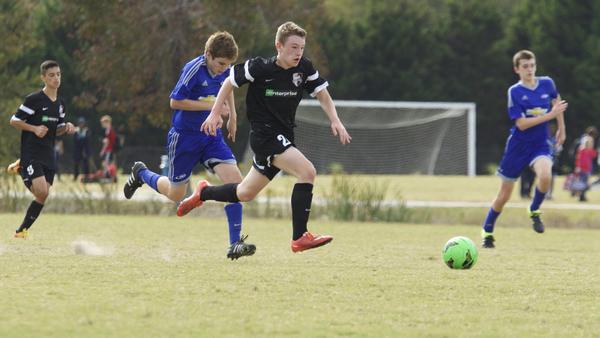

Grassroots football teams now have access to technology that was exclusive to Premier League clubs just five years ago. Wearable devices track everything from distance covered to heart rate variability, providing coaches with data that once required expensive sports science departments. For volunteer managers juggling 15 players and limited training time, this raises a crucial question: does tracking this information actually improve player development, or does it create unnecessary complexity?
The answer depends entirely on how teams implement the technology. GPS vests and heart rate monitors generate thousands of data points per session, but raw numbers mean nothing without context. A central midfielder covering 8km in a match isn't inherently better than one covering 6km - the quality of movement, tactical positioning, and decision-making matter far more than total distance. Teams that succeed with wearable football tech focus on specific metrics tied to clear development goals rather than collecting data for its own sake.
What Wearable Technology Actually Measures
Physical Output Metrics
Modern wearable devices track three primary categories of data: physical output, physiological response, and movement quality. Understanding what each category reveals helps coaches identify which metrics matter for their specific team and age group.
Physical output metrics include total distance, high-speed running distance (typically above 19.8 km/h), sprint distance (above 25.2 km/h), and acceleration/deceleration counts. These numbers show how much work players complete during training and matches. For youth teams, this data helps prevent overtraining - a U14 player covering 9km in a match then running another 7km in training the next day faces significantly higher injury risk than coaches might realise without objective measurement.
Physiological Response Data
Physiological response data captures heart rate, heart rate zones, recovery time between high-intensity efforts, and sometimes heart rate variability. This information reveals how hard players work relative to their individual fitness levels. Two players running the same distance might experience vastly different physiological stress - one operating at 75% maximum heart rate whilst the other pushes 90% throughout the session.
Movement Quality Metrics
Movement quality metrics analyse acceleration patterns, change of direction frequency, asymmetry between left and right movements, and impact forces. These measurements identify potential injury risks before they become apparent through traditional observation. A striker favouring one leg during acceleration or a defender showing reduced explosiveness after 60 minutes provides actionable information for coaching staff.
Teams using football coaching apps can integrate wearable data with match statistics and training attendance, creating a complete picture of player development rather than isolated performance snapshots.
The Reality of Implementation at Grassroots Level
Starting With Targeted Objectives
Professional clubs employ dedicated analysts to interpret wearable data, but grassroots football teams rarely have this luxury. The technology itself has become affordable - basic GPS units now cost £50-150 per player - but the time investment required for meaningful analysis remains substantial.
Successful implementation starts with identifying one or two specific problems the technology might solve. A team struggling with late-match fitness could use heart rate data to assess whether players maintain intensity throughout 90 minutes. A squad dealing with recurring hamstring injuries might track high-speed running loads to identify players at risk before problems develop. Starting with targeted objectives prevents data overload and ensures the technology serves actual coaching needs.
Distributed Responsibility Approach
The most common mistake teams make is purchasing devices without establishing clear protocols for data collection, analysis, and player feedback. Wearable units generate reports automatically, but someone must review the information, identify relevant patterns, and translate findings into coaching interventions. This typically requires 30-45 minutes after each session - time that volunteer coaches often don't have between work commitments and family responsibilities.
Teams that successfully integrate wearable football tech typically assign specific responsibilities. One coach handles device distribution and charging, another reviews post-session reports for injury risk indicators, and a third translates findings into training adjustments. This distributed approach prevents the technology from becoming one person's overwhelming burden.
Age-Appropriate Application
U9-U12: Limited Value Focus
The Football Association provides clear guidance on physical development across age groups, and wearable technology should align with these principles rather than contradict them. The metrics that matter for U12 players differ fundamentally from those relevant to adult teams.
For U9-U12 teams, wearable devices offer limited value. Players at this age develop fundamental movement skills, and training should emphasise technical development over physical conditioning. If teams do use basic tracking, the focus should be ensuring all players receive equal playing time and participate in varied movement patterns rather than monitoring intensity or distance covered.
U13-U16: Careful Interpretation
U13-U16 players enter a phase where physical development becomes more relevant, but wearable data must be interpreted carefully during growth spurts. A player who suddenly shows reduced sprint speed or increased fatigue might be experiencing normal adolescent development rather than declining fitness. Heart rate monitoring helps coaches adjust training intensity for individuals going through different developmental stages, preventing the common mistake of training all players identically regardless of biological maturity.
U17-U19 and Adult Teams
U17-U19 and adult teams benefit most from comprehensive wearable tracking. Players have typically completed major growth phases, making physical data more stable and predictive. Teams competing in demanding Sunday league football schedules can use load monitoring to prevent overtraining when players face multiple matches per week.
The key principle across all age groups: wearable technology should support player development priorities, not drive them. A U14 team shouldn't modify training to increase distance covered simply because the data exists - technical and tactical development remain paramount.
Injury Prevention Through Load Monitoring
Understanding Acute:Chronic Workload Ratio
The most valuable application of wearable football tech at grassroots level is identifying players at elevated injury risk before problems occur. Research consistently shows that rapid increases in training load - particularly high-speed running and sprint distance - correlate with higher injury rates.
The acute:chronic workload ratio provides a practical framework for this monitoring. The "acute" load represents what a player has done in the past week, whilst "chronic" load covers the previous four weeks. When acute load significantly exceeds chronic load (typically ratios above 1.5), injury risk increases substantially. A player averaging 2km of high-speed running weekly who suddenly completes 3.5km in one week faces heightened risk regardless of their overall fitness level.
Simple Tracking Methods
For grassroots teams, this doesn't require sophisticated analysis. Simple spreadsheet tracking of key metrics identifies concerning patterns. A midfielder who misses two training sessions then plays a full match on Saturday experiences a load spike that wearable data makes visible. The coach can then make informed decisions about substitution timing or modified training intensity for the following week.
This approach proves particularly valuable for teams with players participating in multiple squads. A talented U16 player might train with their age group twice weekly, play for the U18s on Saturday, and join adult training on Tuesday. Without objective load monitoring, coaches don't realise the cumulative stress until an injury occurs. Wearable devices make these patterns visible across different teams and contexts.
Practical Metrics for Different Positions
Central Defenders
Not all positions require the same physical output, and wearable data should reflect these tactical realities rather than imposing uniform standards. A number six position defensive midfielder covers different distances at different intensities compared to a box-to-box number eight or an attacking winger.
Central defenders typically show lower total distance but higher counts of high-intensity decelerations and changes of direction. Their wearable data should focus on explosive movements - sprints to cover through balls, acceleration to close down attackers - rather than total distance covered. A centre-back covering 8km with 15 sprint efforts performs differently than one covering 9km with 8 sprints, and the data helps coaches understand these distinctions.
Full-Backs and Wing-Backs
Full-backs and wing-backs generate some of the highest physical outputs in modern football, combining defensive recovery runs with attacking overlaps. Their wearable metrics should track both total high-speed distance and the frequency of transitions between defensive and attacking actions. A full-back making 12 high-intensity runs forward then immediately recovering position demonstrates different fitness qualities than one making 6 attacking runs with longer recovery periods.
Central Midfielders
Central midfielders show the most varied profiles depending on tactical role. Defensive midfielders might cover less total distance but maintain higher average heart rates due to constant positional adjustments and physical duels. Attacking midfielders often show more intermittent high-intensity efforts with lower average heart rates between actions.
Forwards
Forwards typically cover the least total distance but record the highest sprint speeds and most frequent maximum-intensity efforts. Their wearable data should emphasise sprint frequency and recovery time between explosive actions rather than total distance covered.
Understanding these positional differences prevents coaches from making inappropriate comparisons. A striker isn't "less fit" than a midfielder because they cover 2km less distance - they're performing different tactical roles that demand different physical outputs.
Integration With Match Analysis
Combining Physical and Tactical Data
Wearable football tech provides the most value when combined with tactical and technical analysis rather than viewed in isolation. A player covering significant distance might be working hard but making poor positional decisions that create unnecessary running. Conversely, a player with lower distance metrics might be reading the game exceptionally well, requiring less physical output to achieve better tactical outcomes.
Teams using digital platforms can link wearable data with match statistics, creating context for physical metrics. A centre-back showing reduced sprint distance might correlate with the team maintaining better possession, requiring fewer defensive recovery runs. This represents tactical improvement rather than declining fitness, but the distinction only becomes clear when physical and tactical data combine.
Enhanced Player Feedback
Video analysis enhances wearable data interpretation significantly. Reviewing footage whilst considering physical metrics helps coaches understand whether high-intensity running occurs in tactically valuable areas. A winger making repeated sprints that don't create goal-scoring opportunities needs different coaching than one making fewer but more effective runs.
This integrated approach also improves player feedback conversations. Rather than simply telling a midfielder they covered less distance than usual, coaches can show specific moments where positioning choices reduced effectiveness whilst explaining the physical implications. This combination of tactical and physical feedback accelerates player development more effectively than either element alone.
Privacy and Data Management Considerations
GDPR Compliance Requirements
Collecting detailed physiological and performance data on players - particularly youth players - creates responsibilities around data protection and privacy. The General Data Protection Regulation (GDPR) applies to wearable technology data, requiring teams to obtain appropriate consent, store information securely, and use data only for stated purposes.
For youth teams, this means obtaining parental consent before collecting wearable data and clearly explaining how the information will be used. Parents should understand what metrics are tracked, who accesses the data, how long it's retained, and whether it's shared with leagues or other organisations. Transparency builds trust and ensures compliance with child data protection requirements.
Storage Security and Access Protocols
Teams should establish clear protocols for data access. Typically, only coaches directly involved with the team should view individual player data, and information should never be shared publicly or used for purposes beyond player development and injury prevention. Some teams anonymise data when discussing general patterns, protecting individual privacy whilst still enabling useful analysis.
Storage security matters as well. Wearable devices and associated apps should use password protection, and data should be deleted when players leave the team or reach specified retention limits. Many grassroots teams don't consider these requirements until problems arise, but proactive data management prevents complications.
Cost-Benefit Analysis for Grassroots Teams
Investment Considerations
Wearable technology represents a significant investment for grassroots clubs operating on limited budgets. A full squad setup costs £750-2,250 depending on device sophistication, with ongoing subscription fees for data platforms adding £200-500 annually. Teams must weigh these costs against alternative investments in coaching education, equipment, or facility access.
The strongest case for wearable football tech exists for teams facing specific, measurable problems that the technology directly addresses. A squad with recurring soft tissue injuries might justify the investment through reduced player absences and medical costs. A team competing at high levels where marginal gains matter could benefit from the competitive advantage that objective performance data provides.
Alternative Approaches
Conversely, teams with limited coaching capacity to analyse data or younger age groups focused on technical development might find better value in alternative investments. A U11 team would likely benefit more from additional coaching education or improved training equipment than from GPS tracking devices.
Some teams adopt phased implementation, starting with a small number of devices used for players returning from injury or those at elevated risk. This approach allows coaches to develop analysis skills and establish protocols before committing to full squad coverage. If the initial implementation proves valuable, expansion becomes easier to justify.
Shared Resource Options
Shared resources offer another option. Some grassroots leagues or club networks pool resources to purchase wearable devices that multiple teams use on rotation. This reduces individual team costs whilst still providing periodic access to performance data for load monitoring and development tracking.
The Human Element Remains Essential
Complementing Coach Observation
The most sophisticated wearable technology cannot replace coach observation, player communication, and relationship-based development. Devices measure what players do physically but cannot assess decision-making quality, communication effectiveness, or tactical understanding. A player might show excellent physical metrics whilst making poor choices that undermine team performance.
Experienced coaches often identify concerning patterns before wearable data confirms them. A player appearing fatigued, showing reduced enthusiasm, or reporting minor aches provides qualitative information that complements quantitative metrics. The most effective approach combines both - using wearable data to validate observations and identify patterns that might otherwise go unnoticed, whilst maintaining the human relationships that drive player development.
Framing Data in Development Context
This balance becomes particularly important when discussing data with players. Presenting raw numbers without context can create anxiety or misunderstanding. A player learning they covered less distance than teammates might feel criticised without understanding that their tactical role demands different physical output. Coaches must frame wearable data within broader development conversations, emphasising growth rather than comparison.
TeamStats helps teams maintain this balance by integrating objective performance data with communication tools, training schedules, and development tracking. Rather than focusing exclusively on metrics, the platform supports the full range of coaching activities that contribute to player growth.
Making Wearable Technology Work for Your Team
Clear Objectives and Protocols
Successful implementation of wearable football tech at grassroots level requires clear objectives, realistic time commitments, and integration with existing coaching practices. Teams should start by identifying specific questions the technology might answer: Are players maintaining intensity throughout matches? Do training loads align with match demands? Are any players at elevated injury risk?
Once objectives are clear, establish simple protocols for data collection and analysis. Assign specific responsibilities for device management, identify which metrics matter most for your team's goals, and create regular review times rather than attempting continuous monitoring. Most teams find that reviewing data after matches and once mid-week provides sufficient insight without overwhelming coaching capacity.
Communication and Flexibility
Communicate with players and parents about what's being measured and why. Transparency about data usage builds trust and helps players understand how wearable information supports their development. For youth teams, frame data collection as one tool among many rather than the primary measure of performance.
Finally, remain flexible and willing to adjust implementation based on what proves valuable. Some teams discover that heart rate monitoring provides more useful information than GPS tracking, or that weekly summaries matter more than session-by-session analysis. The technology should serve coaching needs rather than dictating them.
Conclusion
Wearable football tech offers grassroots teams unprecedented insight into player physical performance, but the technology's value depends entirely on thoughtful implementation. Teams that succeed focus on specific metrics tied to clear development goals, integrate wearable data with tactical and technical analysis, and maintain the human relationships that drive player growth.
The most valuable application at grassroots level is injury prevention through load monitoring - identifying players at risk before problems occur and adjusting training intensity accordingly. This practical benefit justifies the investment more readily than pursuing marginal performance gains that matter primarily at elite levels.
For teams considering wearable technology, start with clear objectives, establish realistic protocols for data management, and ensure the time investment aligns with available coaching capacity. The devices themselves have become affordable, but the analysis and application still require significant commitment. When implemented thoughtfully, wearable football tech provides objective information that enhances coaching decisions, protects player welfare, and supports long-term development across all positions and age groups. Team management apps complement this technology by coordinating the broader coaching activities that transform data insights into meaningful player development.
═══════════════════════════════════════════════════════════════