Grassroots football has always depended on people who give their time to keep teams running. Coaches plan training after work, parents arrange transport, secretaries handle registrations, and volunteers prepare pitches before players arrive. Those fundamentals remain in place for the 2026/27 season. What has changed is the amount of information that clubs can collect and use without running a professional analysis department.
Smartphones, digital match records, video, attendance systems and simple statistical tools now give community teams access to information that once required considerable time and specialist equipment. England's football authorities have also expanded digital administration for the new campaign. Full-Time supports digital match returns and player statistics, while updated Respect Marks for 2026/27 will produce new behaviour dashboards for leagues.
Football also exists inside a much larger digital entertainment culture. Players and supporters move between match coverage, football games, streaming and other online games throughout the week. Adult gaming services such as gamblerina sit within that broader category, alongside searches for the best online ?asino, where users access casino-style games through digital interfaces. Grassroots clubs use technology for a very different purpose: they need practical information that helps volunteers organize squads, plan sessions and understand what happens on matchday.
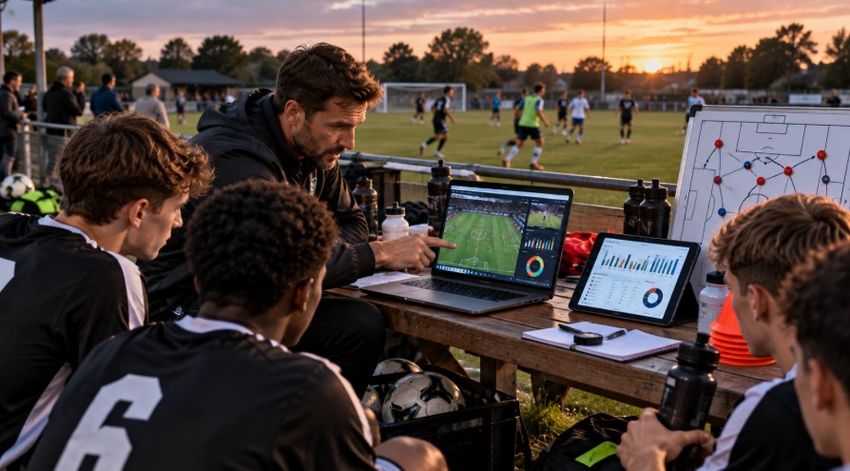
For most community teams, this does not mean advanced predictive models or rooms full of analysts. It means answering ordinary questions with clearer information. Who attended training? Who played 70 minutes on Sunday? Which formation did the team use? Which players have missed several sessions? Where did goals come from?
Those questions increasingly shape preparation for 2026/27.
Data Starts With Basic Team Administration
The most useful information at grassroots level often looks simple.
A coach who knows player availability before Thursday evening can plan Saturday's starting team with less uncertainty. Accurate attendance records can show whether a player has trained regularly. Playing-time figures can help youth coaches distribute minutes more fairly.
Digital systems reduce the need to keep all this information across notebooks, message threads and memory.
For the 2026/27 season, English grassroots administrators can use digital systems for player registration, fixtures, results and match statistics. Full-Time allows authorized team managers, coaches and secretaries to enter match returns and player information.
This matters because grassroots football rarely has spare administrative capacity.
One volunteer may perform several roles. Removing ten minutes of repetitive work from each match can create meaningful savings across a season.
Technology works best here when it simplifies an existing task rather than adding another one.
Coaches Can Track More Than Goals
Goals and results remain the easiest statistics to understand, but they tell only part of a match.
A team might win 3-1 after struggling for long periods. Another side might lose despite creating several good chances. Coaches who record additional events can identify patterns that the final score hides.
Community teams can track metrics such as:
-
minutes played;
-
starts and substitutions;
-
goals and assists;
-
shots and chances created;
-
training attendance;
-
player availability;
-
disciplinary incidents;
-
positions and formations.
A coach does not need every possible statistic.
In fact, collecting too much information can make the process less useful. Volunteers have limited time, and somebody needs to record, check and interpret every figure.
A small set of consistent measurements often gives a team more practical value than dozens of categories that nobody reviews after Sunday.
Playing Time Has Become Easier to Measure
Playing time offers a good example of where basic data can improve team management.
Youth coaches often need to consider development and participation rather than simply select the same starting group every week. Memory can create problems, especially with large squads.
A coach may genuinely believe that players receive similar minutes. A season record may show something different.
Digital match records allow teams to check.
That information can help coaches plan substitutions before a game rather than react only during it. It can also make conversations with parents more factual.
Instead of saying that a child "plays regularly," a coach can review the actual number of appearances and minutes.
The same principle applies to adult amateur teams. A manager can see which players have carried a heavy match load or which squad members have had little time on the pitch.
Numbers do not decide who should play. They give the coach another piece of evidence.
Youth Football Is Changing in 2026/27
The new season carries particular significance for youth football in England because playing formats have changed.
The FutureFit programme introduces a 3v3 entry format at U7 level from 2026/27. Other formats move one year later through the pathway, including the shift to 11v11 at U14 rather than U13. The changes follow research that examined more than 400 grassroots matches from U6 to U14.
Researchers examined the technical and physical effects of different formats.
That connection between evidence and rule design illustrates a wider change in grassroots football. Data no longer belongs only to professional performance departments. Governing bodies can use information from community matches to examine how children interact with the ball and experience different forms of the sport.
Individual coaches can apply the same principle on a much smaller scale.
A U7 coach does not need a research department. The coach can observe whether each child gets regular touches, stays involved and receives enough playing time.
The technology can support those observations rather than replace them.
Video Gives Coaches Another Source of Evidence
Video analysis has also become easier to use.
Grassroots teams no longer need an expensive broadcast setup to record a match. A phone, tablet or basic camera can capture enough footage for a coach to review important situations.
Video offers one major advantage over memory: it allows repeated examination.
During a match, a coach needs to watch the ball, communicate with substitutes, respond to injuries and make tactical decisions. It becomes easy to miss movement away from the immediate action.
Afterward, footage can answer specific questions.
Why did the opposition repeatedly find space on one side? Did the midfield move too far from the defence? Did the forwards press together or individually? What happened before the team conceded?
The coach can then use a few short clips during the next session.
That approach keeps analysis practical. Players usually gain more from seeing one clear example connected to a training exercise than sitting through a long video meeting.
Technology Can Improve Session Planning
Match analysis only matters if coaches turn observations into training.
Suppose a team struggles to play through pressure. The coach identifies the problem through match footage and notes from several games. The next step should involve a session that addresses receiving angles, support positions and decision-making.
Digital planning tools can help coaches store exercises, organize session timings and record what they covered each week.
That creates continuity.
Without records, a volunteer coach may unintentionally repeat the same type of practice while neglecting another area. A simple training log shows what the squad has worked on across a month.
For youth teams, coaches can also check whether sessions cover an appropriate range of technical skills.
The goal does not require complicated software. A structured digital record can already improve preparation.
Availability Data Reduces Last-Minute Problems
Every grassroots manager knows the practical difficulty of assembling a squad.
Work schedules change. Children attend family events. Players become ill. Transport falls through. Someone sends a message late on Friday saying they cannot play.
Digital availability tools cannot remove those problems, but they can make them easier to see.
Teams can request availability earlier in the week and view responses in one place. Coaches then know whether they need another goalkeeper, an extra defender or support from another eligible squad.
The difference sounds administrative, but it affects football decisions.
A manager who knows the likely squad on Tuesday can design Thursday's training around the players who will actually take part in the match.
That creates a direct connection between organization and coaching.
Behaviour Data Is Becoming More Structured
Not every useful grassroots statistic concerns performance.
For 2026/27, the FA has changed its Respect Marks system. Match reports now score players, coaches and spectators separately on a 1-to-5 scale. New dashboards will allow leagues to examine patterns, while teams will receive reports that show their averages against national benchmarks.
This represents an important expansion of how grassroots football uses information.
A club may have good administrative records and strong results while still experiencing problems with touchline conduct. Behaviour data gives leagues another way to identify recurring issues.
It can also show improvement.
If reports reveal repeated concerns around spectator behaviour, a club can address that specific group rather than issue a general warning to everyone.
Technology therefore supports governance as well as coaching.
Simple Dashboards Can Make Statistics Useful
Collecting information has little value when nobody can understand it.
Grassroots teams need simple summaries.
A practical dashboard for a community side might look like this:
|
Area |
Useful measurement |
Coaching purpose |
|
Attendance |
Sessions attended |
Track consistency |
|
Availability |
Match confirmations |
Plan squads |
|
Playing time |
Minutes per player |
Manage participation |
|
Attack |
Goals, assists, shots |
Identify attacking patterns |
|
Discipline |
Cards and incidents |
Monitor conduct |
|
Formation |
Results by setup |
Review tactical choices |
|
Training |
Session topics |
Plan future work |
This type of table gives coaches information they can actually discuss.
It also limits the temptation to collect statistics simply because software makes collection possible.
The best question for a grassroots coach remains straightforward: What decision will this number help me make?
If nobody can answer, the team probably does not need the metric.
Wearable Technology Requires More Care
GPS trackers and other wearable devices have become increasingly visible in football.
They can record distance, speed and movement information. For advanced teams with trained staff, those figures can support physical monitoring.
Grassroots clubs need to approach such systems carefully.
Raw distance does not explain whether a player performed well. A midfielder may cover considerable ground because the team's positioning failed. Another player may run less while making effective tactical decisions.
Age also matters.
Coaches working with children should prioritize enjoyment, development and appropriate participation rather than turn every session into a physical monitoring exercise.
Wearable information can support coaching in the right setting, but community teams should not copy professional practices without understanding why elite clubs use them.
Cost creates another consideration. Many grassroots teams will gain more from improving basic attendance, playing-time and video records before spending money on detailed physical tracking.
Data Privacy Cannot Become an Afterthought
More digital information also creates responsibility.
Football clubs may hold names, contact details, dates of birth, emergency information and registration records. Youth clubs may also handle parent or carer details.
The FA's guidance notes that exported information from its administration systems can contain personally identifiable information and falls under UK data protection requirements. It advises organizations to limit unnecessary storage, protect copies, secure data during transfer and control access.
Grassroots clubs should therefore avoid collecting information simply because an app offers a field for it.
They should know what they store, why they need it and who can see it.
A spreadsheet shared casually across several personal accounts can create unnecessary exposure. So can keeping old player records long after a legitimate need disappears.
Technology makes data collection easier. It does not remove the club's responsibility for that information.
Coaches Still Need Context
Statistics can describe events, but coaches must interpret them.
Imagine that a striker has scored once in six matches.
The number alone says little about why.
Perhaps the team creates few chances. Maybe the player has moved into a different position. The opposition may defend deeply. The striker could also contribute through pressing and assists.
The coach needs context before changing anything.
The same applies to attendance. A player who misses three sessions due to injury differs from someone who repeatedly fails to communicate.
Good grassroots analysis combines numbers with observation and conversation.
This principle keeps technology in the right role. It supports decisions; it does not make them.
Volunteers Need Tools That Save Time
Professional football can employ analysts whose full-time job involves studying information.
Grassroots football cannot.
Any technology aimed at community clubs must respect that difference.
Coaches need systems that reduce administration, display information clearly and work on devices they already use. A tool that requires hours of data entry each week may create more work than it removes.
Recent coaching-app discussions reflect this practical focus. Availability, session planning, playing-time records and basic statistics remain central needs for grassroots coaches in 2026.
That helps explain why smartphones matter so much.
A volunteer can confirm attendance, check a fixture, enter a result or record a substitution without returning home to a computer.
Small efficiencies accumulate across a long season.
Technology Can Support Better Conversations
One overlooked benefit of data involves communication.
Coaches regularly speak with players about development, selection and roles. Youth managers also communicate with parents.
Specific information can make those conversations clearer.
A coach can show that a player attended eight of ten sessions, started four matches and entered three more from the bench. The discussion then starts from shared facts.
Video can serve the same purpose.
Instead of telling a defender that their starting position needs adjustment, the coach can show one clip and discuss what happened.
This does not remove disagreement. Football always involves judgment.
It does make feedback more specific.
The 2026/27 Season Will Test Practical Use
Grassroots football does not need to imitate professional clubs to benefit from technology.
The strongest uses remain relatively simple: knowing who can play, recording minutes, reviewing a few clips, planning sessions, submitting accurate match information and identifying patterns across several weeks.
The 2026/27 season makes that approach particularly relevant.
Youth formats have changed in England following extensive match research. Digital match administration continues to expand. Behaviour monitoring now produces more detailed information. Clubs can access coaching and organizational tools from devices that volunteers already carry.
None of this changes the central role of the coach.
A spreadsheet cannot understand why a nervous young player needs encouragement. A dashboard cannot know when a team needs a simpler session after a difficult week. A video clip cannot conduct a conversation.
People still make those choices.
Data works when it gives those people clearer evidence and saves them time. For grassroots teams preparing for 2026/27, that represents the practical value of technology: fewer guesses about what happened, less scattered administration and more information that coaches can turn into useful action.