Youth football has become more organized, more closely watched, and, in many places, more expensive. Clubs identify promising players at younger ages, academies widen their recruitment networks, and parents face growing pressure to treat childhood sport as the beginning of a career pathway.
Not every football nation has responded in the same way. Some have protected the role of local clubs, while others have strengthened school competition or redesigned matches around age and ability.
Looking at the Netherlands, Germany, Japan, Australia, and the United States reveals competing ideas about how early development should work, where elite selection belongs, and what can be lost when the pathway becomes more important than the weekly game.

The Netherlands Makes the Game Fit the Child
Dutch youth football begins by adjusting the match rather than expecting the child to cope with an adult version of it.
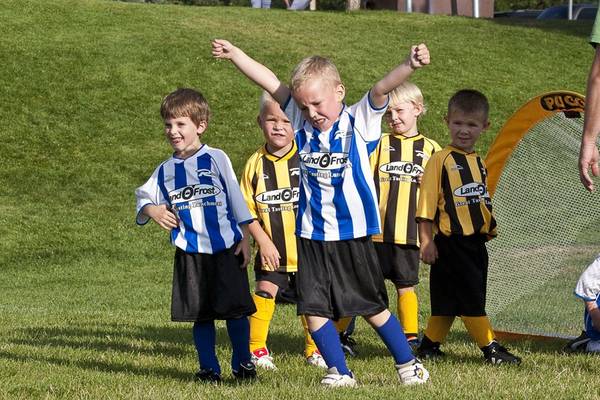
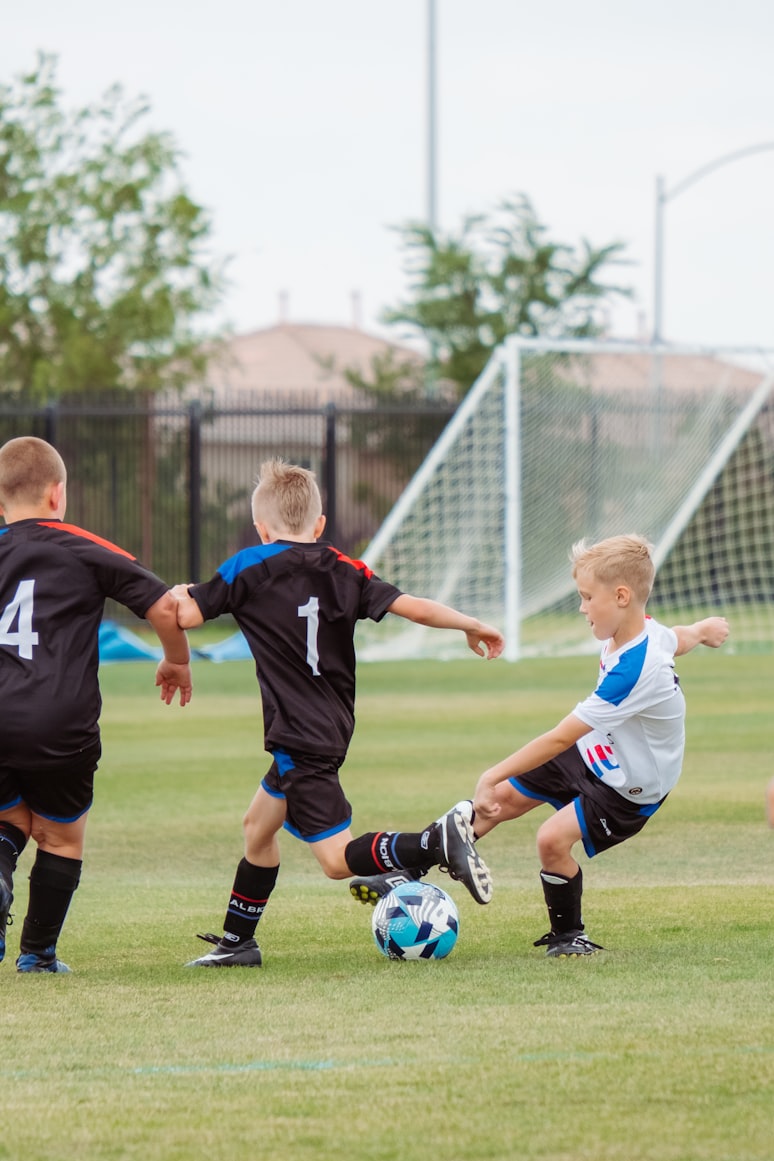
KNVB guidance places the youngest age groups in four-a-side games on reduced pitches, with larger formats introduced gradually. The reasoning behind these small-sided games is simple: frequent involvement gives players more chances to control the ball, make decisions, and recover from mistakes.
The format also limits one of youth football's oldest problems, the child who spends an hour barely involved. Thus, said smaller pitches keep the action close and make technical development part of the game itself.
Coaching still decides how that experience feels, of course.
The KNVB Academy trains coaches and referees across youth and amateur football, but a sensible framework can be undermined by the adult on the touchline. Constant instructions leave little room for experimentation. Results-first coaching can turn a development format into another weekly test.

Germany Builds From the Local Club
In Germany, the pathway still runs through the local club. The German Football Association represents millions of members across roughly 24,000 clubs, giving community football clubs a presence in cities and small towns.
For many children, football begins close to home and remains tied to an organization serving several age groups.
The DFB's regional talent program adds specialist coaching without immediately removing promising players from that environment. Hundreds of centers provide supplementary sessions for selected youngsters, while most continue with their home clubs. Imperatively, the system creates a bridge between local participation and elite development.
Clubs also compete for attention in a leisure market that barely pauses. The phone used to confirm Saturday availability is the same device carrying streaming platforms, social media, and searches for the best pay-by-phone online casinos.
Germany's advantage isn't novelty. It is the accumulated pull of clubs already embedded in family routines and community life.
Japan Keeps Education Inside the Pathway
Japan's school tournaments remain a stage for emerging players, even as professional academies have expanded. Community clubs add another route. That overlap gives youth football development several places to recognize ability, rather than forcing every promising player into the same structure.
The Japan Football Association links grassroots participation, coach education, youth development, and the national teams within a shared philosophy. Its academy model also combines football with secondary education and residential life.
As a result, training is only one part of the week; study, routine, and personal responsibility sit alongside it.
That structure brings pressure. School teams can demand heavy schedules, and access to elite programs remains uneven. Even so, the connection between education and football gives the Japanese model a social base that purely commercial youth football pathways often struggle to reproduce.
Australia and the United States Standardize the Early Years
Distance shapes the Australian model. Football Australia's MiniRoos program uses modified formats to give younger children an accessible entry point, while the wider system must serve communities separated by enormous geography. The federation recorded 1.93 million participants across football formats in 2025, a scale that depends on a broad base rather than one narrow academy route.
U.S. Soccer has taken a similar approach to match design. Its framework moves players through four-a-side, seven-a-side, and nine-a-side football before the full 11-a-side game begins at under-13 level. The sequence gives families a common reference point, although the experience still varies sharply. Travel demands, registration costs, and regional differences can shape a season as much as national rules.
The Real Divide Comes Before Elite Selection
The most visible differences appear in match formats, but the decisive split comes earlier: who provides the place, the coach, and the weekly reason to return.
The Netherlands redesigns the match around the child. Germany relies on club density. Japan keeps education close to development, while Australia and the United States use standardization to manage distance and scale.
Strong grassroots football systems give children an ordinary place to return to each week, without every session becoming a family expedition or financial gamble. That continuity gives coaches time to improve and players room to develop at different speeds.
Sure, the national team may be the visible product, but the machinery underneath is usually modest: a suitable pitch, a trusted adult, and another fixture close to home.