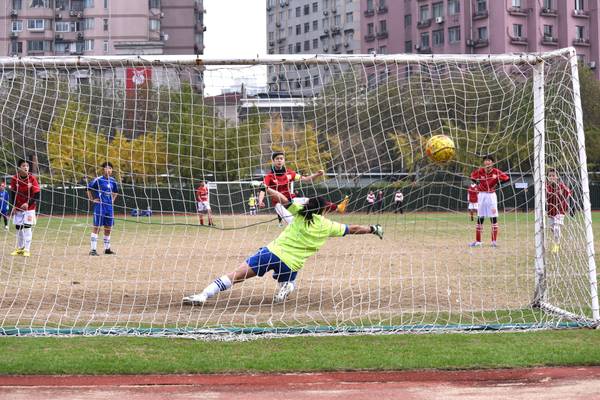
For decades, the measure of a good goalkeeper seemed simple: how many shots they stopped. The fewer goals conceded, the better the keeper, or so the logic went. Yet, modern football has shifted that definition entirely. In today's game, a goalkeeper's contribution extends far beyond reflex saves. Their positioning, distribution, communication, and decision-making play equally decisive roles in a team's success.
That's where true goalkeeper performance analysis comes into focus. It's no longer enough to count saves; coaches now study the nuances of how keepers anticipate danger, organise defenders, and initiate attacks. At the grassroots level, this evolution in analysis is just as vital as in professional academies. Understanding the broader picture helps coaches develop complete players, not just shot-stoppers.
TeamStats, with its integrated tracking and data tools, gives clubs a framework for analysing all aspects of goalkeeping, turning subjective impressions into measurable performance insights.
The Expanding Role of the Goalkeeper
Goalkeepers were once viewed as isolated figures, the last line of defence, detached from the rhythm of play. But as football tactics evolved, so did expectations. Today's keepers are decision-makers, leaders, and distributors. Their influence stretches from the penalty area to the halfway line.
The Sweeper-Keeper Revolution
Modern tactics demand goalkeepers who can read the game as effectively as outfield players. Whether sweeping up behind a high defensive line or initiating counterattacks, keepers are now an integral part of a team's shape.
This approach, often seen in elite systems like 4-3-3 or 3-4-3 formations, filters down into grassroots football. Coaches want goalkeepers who are comfortable receiving passes, assessing pressure, and playing with composure. Tools such as TeamStats' Team Management App help monitor these elements during match reporting and training sessions, ensuring technical and tactical data are recorded consistently.
Leadership and Organisation
Goalkeepers see the entire pitch, every run, mistake, and opening. Effective keepers act as on-field organisers, directing defenders and maintaining line integrity. While these contributions rarely appear in standard statistics, they are fundamental to defensive structure.
By applying goalkeeper performance analysis principles, coaches can assess not only saves but communication efficiency, such as how often a keeper prevents danger through early direction rather than reactive intervention.
To explore tactical systems that influence keeper behaviour, many coaches refer to Best Football Formations, which outlines the defensive and spatial demands across different systems.
Key Components of Goalkeeper Performance Analysis
1. Positioning and Anticipation
The ability to anticipate play and maintain ideal positioning often determines whether a save is even necessary. A keeper who reads the game early can narrow angles and limit options for attackers.
Performance analysis tools like TeamStats allow coaches to log and review positioning errors or moments of anticipation that prevent attempts altogether. Tracking these moments helps teams appreciate defensive contribution beyond the visible highlight reel.
2. Command of the Penalty Area
High claims, aerial presence, and decisive clearances reveal a goalkeeper's authority. These moments relieve pressure from defenders and create stability across the back line. Recording aerial duels won, punches made, and successful catches provides quantifiable evidence of confidence and command.
Clubs competing in structured youth systems such as the Eastern Junior Alliance and Midland Junior Premier League often measure these indicators to benchmark progress among young goalkeepers.
3. Distribution and Transition
A modern goalkeeper isn't just a stopper; they're often the first passer in every attack. Kicks, throws, and short passes dictate tempo and can catch opponents off guard.
Accurate distribution percentage, pass length, and successful counterattack initiations are now part of standard goalkeeper performance analysis. Coaches using TeamStats can integrate these metrics into post-match reviews, highlighting not only how possession was saved but how it was used to create attacking momentum.
For a tactical breakdown of transitions and passing patterns, the article Number Six Position in Football complements this topic by explaining how defensive midfielders and goalkeepers share overlapping responsibilities in build-up play.
4. Communication Efficiency
Not every save requires gloves. Sometimes, a single shouted instruction prevents an entire defensive collapse. Tracking the effectiveness of a goalkeeper's communication, measured by how well defenders respond to their cues, adds another layer to holistic performance evaluation.
Strong communication builds team connectivity, ensuring that defenders move as a unit and react instantly to shifting threats. In this way, analysis blends data with leadership awareness, showing how presence and voice influence outcomes.
5. Decision-Making Under Pressure
Whether to come off the line, commit to a tackle, or stay back, these are split-second decisions. Analysing outcomes of such moments can identify tendencies that help tailor training. For instance, a keeper who hesitates during one-on-one situations may need positional reinforcement or confidence drills.
With TeamStats' detailed match reporting, every decision can be reviewed objectively rather than relying on post-match recollection.
Data Beyond the Numbers
While data tracking is valuable, context transforms it into insight. Two keepers might share identical save percentages but perform entirely different roles within their teams. Numbers must always be interpreted through tactical and situational awareness.
Analytical Context
Goalkeeper performance analysis should examine not only the type of saves but when and how they occur. A routine catch in a 3–0 win isn't equal to a one-on-one stop in stoppage time. Understanding match context allows coaches to weigh statistics according to pressure and impact.
Likewise, analysing positioning before a shot provides more value than recording the save itself. Did the keeper anticipate well? Was defensive organisation part of the success? These questions elevate performance review from mechanical counting to strategic learning.
Analogy: The Conductor Behind the Defence
A goalkeeper functions much like an orchestra conductor. They may not play every note, but their direction sets the tempo and harmony of the piece. When defenders and midfielders respond to their signals, the entire structure stays composed. Without them, even the best instruments fall out of tune.
This analogy reflects how the keeper's unseen influence, positioning, command, and composure, defines overall team rhythm. TeamStats' integrated metrics help coaches visualise that influence rather than letting it fade into match-day noise.
Training Implications of Goalkeeper Performance Analysis
Tailoring Sessions Based on Measured Data
The purpose of analysis isn't just evaluation, it's improvement. By identifying patterns across matches, coaches can design goalkeeper-specific sessions that target weak areas.
If data shows poor success in dealing with high balls, drills can replicate that pressure. If distribution accuracy drops under fatigue, conditioning and technical training can blend to build stamina with precision.
Using structured planning tools within TeamStats, coaches can build progressive sessions and record outcomes week by week. That ongoing refinement ensures that training decisions stay grounded in evidence rather than instinct alone.
Integrating Technical and Tactical Growth
Goalkeepers don't develop in isolation. Their performance intertwines with team tactics, particularly defensive coordination. By combining performance analytics with tactical models like those found in Best Tactics and Formations for 9-a-Side Football, coaches can align keeper movements with defensive transitions.
This integration ensures that every drill mirrors reality, reinforcing both technical ability and strategic understanding.
The Mental and Psychological Dimension
Confidence Through Feedback
Goalkeeping can be an unforgiving role. One mistake overshadows ten saves. Consistent analysis supported by objective data provides psychological reassurance. Players see measurable progress and gain confidence from knowing their strengths as well as their improvement areas.
With TeamStats' clear statistical layout, goalkeepers can view season-long summaries, clean sheets, distribution success, high-ball recovery, turning emotional reactions into constructive development.
Composure Under Pressure
Mental resilience is as critical as reflexes. Coaches should include composure metrics in performance reviews, such as how keepers recover after conceding or how quickly they reset focus during transitions.
By combining these observations with communication data, clubs can support not only technical training but emotional stability, helping goalkeepers build calm authority across the season.
Building Club-Wide Standards for Goalkeeper Evaluation
Creating a Shared Framework
For consistency, clubs should adopt standardised goalkeeper performance analysis templates across all teams. This ensures that data remains comparable from youth to senior levels. Using TeamStats, each match entry follows uniform metrics, saves, positioning, distribution, command, and communication, allowing precise progression tracking.
Clubs featured in the Leagues Directory often apply such frameworks, maintaining professionalism from grassroots to regional competition. These practices not only enhance individual player growth but also raise the overall defensive standard of a club.
Linking Evaluation to Recruitment and Development
Objective analysis also supports better recruitment. By quantifying performance attributes rather than relying solely on reputation, clubs can identify players whose style fits their tactical identity. TeamStats' centralised data makes this evaluation straightforward, whether assessing a youth prospect or a senior keeper seeking new challenges.
Similarly, internal development reviews become transparent. Coaches and players discuss progress with shared evidence, encouraging trust and collaborative growth.
Using Data to Communicate With Stakeholders
Communication isn't limited to players and coaches. Parents, scouts, and league coordinators all benefit from transparent reporting.
By integrating TeamStats with communication channels, updates on goalkeeper metrics can be shared automatically. This keeps stakeholders informed without overloading inboxes. It also promotes accountability across the entire support network.
When clubs communicate progress effectively, team connectivity strengthens. Everyone understands expectations, recognises improvement, and supports consistent coaching values.
For more insights on communication-driven management, refer to Integrating TeamStats with Team Communication Channels, which explains how data and messaging systems unite teams both on and off the field.
Encouraging Holistic Goalkeeper Development
A well-rounded goalkeeper programme balances physical conditioning, technical mastery, and tactical intelligence. Relying solely on save percentages narrows the development scope. The modern approach blends agility, distribution skill, anticipation, and leadership.
When clubs use TeamStats' Team Management App to collect multi-dimensional data, they move towards complete player evaluation rather than one-dimensional grading.
Additionally, holistic evaluation links naturally to wider club strategies, such as fundraising, league administration, and development pathways, which can be managed through integrated tools like Grassroots Football Fundraising Ideas.
Final Thoughts
Evaluating goalkeepers has evolved from simply counting saves to understanding how every decision, movement, and communication affects the game. True goalkeeper performance analysis blends data with observation, turning isolated statistics into a complete picture of influence.
TeamStats empowers coaches to measure those unseen moments: the command before a cross, the calm distribution after pressure, the communication that prevents disaster. When these details are captured and understood, goalkeepers aren't just rated, they're developed.
For clubs seeking to refine evaluation and raise coaching standards, TeamStats provides the perfect platform to record, compare, and communicate performance. To learn how your club can implement smarter analysis frameworks, get in touch and start transforming how you see goalkeeping today.
"