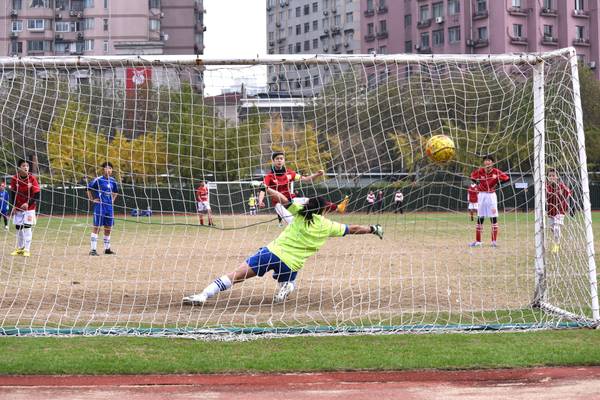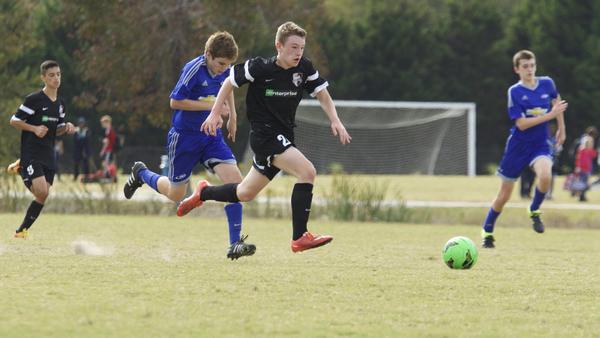

The final whistle blows on the last match of the season, and within minutes, players scatter to their families whilst managers gather muddy kit bags. For many grassroots football teams, this marks the end - a quick "well done everyone" and a promise to reconvene in August. Yet this moment represents one of the most valuable opportunities in youth football: the chance to reflect, celebrate, and set the foundation for genuine player development through football season reviews.
Football season reviews transform how young players understand their progress. Rather than letting months of effort dissolve into vague memories of wins and losses, structured end-of-season reviews help players recognise specific improvements, understand their tactical development, and approach the next season with clear purpose. For volunteer managers juggling work and family commitments, these reviews needn't consume weekends - when conducted thoughtfully, they become powerful tools that strengthen team culture whilst requiring minimal time investment.
Why Season Reviews Matter Beyond the Pitch
Youth football exists within a results-driven culture where league tables and cup runs often overshadow individual development. Parents check scores on Saturday evenings, players compare their team's position with rivals, and even well-intentioned coaches feel pressure to prioritise winning over learning. Football season reviews counteract this by redirecting focus toward measurable personal growth.
Research from The FA's Youth Development Review consistently shows that players who receive structured feedback demonstrate higher retention rates and greater long-term progress than those who receive only match-day comments. When a 12-year-old defender can articulate how their positioning improved from September to March, they've internalised learning that extends beyond football - they've developed self-awareness and growth mindset thinking.
These reviews also provide documentary evidence of development that proves invaluable during difficult conversations. When a parent questions why their child isn't playing striker, referring to specific observations from football coaching apps - noting their child's defensive contributions, improved tackling success rate, or enhanced reading of the game - transforms subjective opinion into objective discussion. The review becomes a shield against the emotional intensity that sometimes accompanies grassroots football.
Creating a Review Framework That Actually Works
The most effective football season reviews balance structure with flexibility. Overly rigid frameworks feel corporate and disconnected from grassroots realities, whilst completely unstructured conversations meander without producing actionable insights. The optimal approach divides assessment into four core areas: technical skills, tactical understanding, physical development, and team contribution.
Technical skills encompass the fundamental abilities specific to each position. For goalkeepers, this includes shot-stopping, distribution, and positioning. For outfield players, it covers first touch, passing accuracy, dribbling effectiveness, and finishing. Rather than vague assessments like "good passer," effective reviews identify specific progression: "In September, struggled with weighted through balls under pressure. By March, consistently delivered accurate passes in tight spaces, leading to three direct assists."
Tactical understanding reflects how players read the game and make decisions. A young midfielder might have developed better awareness of when to press versus when to hold position. A winger might now recognise when to take on defenders versus when to recycle possession. These cognitive developments often prove more significant than technical improvements, yet they're frequently overlooked because they're harder to measure.
Physical development matters differently across age groups. For under-9s, it might focus on coordination and balance. For under-15s experiencing growth spurts, it acknowledges how rapid physical changes affect performance. This section should never compare players to teammates - instead, it tracks individual progress against their own baseline.
Team contribution captures the intangibles: leadership moments, supporting teammates, maintaining positive attitude during difficult matches, and demonstrating respect toward opponents and officials. These qualities define grassroots football culture and deserve equal prominence alongside technical assessments.
Gathering Evidence Throughout the Season
The quality of end-of-season reviews depends entirely on evidence collected throughout the campaign. Memories prove unreliable - by May, specific details from October matches have faded, leaving only general impressions that often reflect recent performances rather than season-long trends.
Modern team management apps solve this challenge by enabling quick post-match observations. Immediately after each fixture, spending five minutes recording three specific observations per player creates a rich evidence base. These needn't be lengthy paragraphs - bullet points suffice: "Strong defensive header cleared goal-bound shot," "Struggled with offside trap positioning first half, improved second half," "Excellent communication organising defensive line."
Training session observations prove equally valuable. Match day represents just a fraction of player development - the bulk occurs during Tuesday and Thursday evening sessions. Noting when a player masters a new skill, demonstrates improved decision-making in small-sided games, or helps a struggling teammate provides evidence of development that match statistics miss entirely.
Video analysis, increasingly accessible through smartphones, offers objective evidence that settles debates and reveals patterns invisible in real-time. A 30-second clip showing a player's positioning across three different matches demonstrates tactical improvement more convincingly than any written description. For teams using platforms like TeamStats, integrating video clips with performance data creates comprehensive development records.
Parent and player self-assessments add crucial perspectives. Midway through the season, asking players to identify their strongest area and one aspect they want to improve generates insights that inform coaching focus. Comparing these self-assessments with coach observations often reveals interesting disconnects - a player might consider themselves weak in an area where they've actually improved significantly, indicating a confidence issue rather than a technical one.
Structuring the Review Conversation
The format of football season reviews should match team age and maturity. Under-8s need brief, positive conversations focused on effort and enjoyment. Under-16s can engage with detailed tactical analysis and goal-setting discussions. Misjudging this balance results in younger players feeling overwhelmed or older players feeling patronised.
For younger age groups (under-7 to under-10), 10-minute conversations work best. Meet in a comfortable, informal setting - perhaps at the pitch after the final training session whilst parents chat nearby. Focus on three specific positives, frame any developmental area as an exciting challenge for next season, and let the player share their favourite memory from the campaign. Keep language simple and concrete: "You scored six goals this season - remember that brilliant one against Oakfield?" rather than "Your finishing improved significantly."
Intermediate age groups (under-11 to under-14) benefit from 15-20 minute structured conversations. Begin by asking the player to reflect on their season - what went well, what challenged them, what they enjoyed most. This player-led opening often surfaces insights that pure coach assessment misses. Then share specific observations across the four core areas, using examples to illustrate each point. Conclude by collaboratively setting 2-3 goals for next season, ensuring these are specific, measurable, and within the player's control.
Older age groups (under-15 to under-18) can handle 30-minute analytical discussions. These players often have representative ambitions or are considering whether to continue playing. Reviews for this age group should include honest assessments of their current level, realistic discussion of pathways available to them, and tactical analysis that respects their growing football intelligence. If a player has county trial potential, say so and explain what specific improvements would strengthen their case. If their future lies in enjoying grassroots football with mates, frame that positively - Sunday league football provides lifelong enjoyment and community connection.
Delivering Difficult Feedback with Care
Not every season goes well for every player. Some struggle with form, others face persistent injury, and a few discover that their passion for football has diminished. Addressing these situations requires honesty balanced with sensitivity, particularly given that youth football operates within a safeguarding framework that prioritises player welfare.
When discussing a difficult season, start by acknowledging the challenge explicitly: "This season was tough for you, and I want to talk about that honestly." This validation matters - players know when they've struggled, and pretending otherwise undermines trust. Then identify specific factors that contributed: "You missed seven matches through injury, which made it hard to build match fitness and rhythm."
Frame developmental areas as solvable problems rather than fixed limitations. Instead of "Your left foot is weak," try "Developing your left foot would give you more options in tight spaces - let's work on that this summer." This subtle shift from diagnosis to development plan maintains motivation whilst addressing the issue directly.
For players considering stopping, resist the urge to convince them otherwise unless genuinely believing they're making a mistake. Football should enhance young people's lives, not become a source of stress. If a player has lost enthusiasm, exploring why often reveals issues that extend beyond football - friendship dynamics, pressure from parents, or simply changing interests as they mature. Sometimes the most supportive action is affirming their right to choose, whilst leaving the door open for return.
Celebrating Progress and Building Momentum
Whilst developmental feedback matters, celebration forms the emotional core of effective season reviews. Young players invest significant time in football - training twice weekly, matches most weekends, travel to away fixtures - and this commitment deserves recognition beyond participation medals.
Specific celebration proves more meaningful than generic praise. Rather than "You had a great season," try "You started the season nervous about tackling, but by the spring you were winning the ball cleanly and starting attacks - that took real courage to develop." This specificity shows genuine attention and helps players recognise their own growth.
Team-wide celebrations complement individual reviews. An end-of-season event - whether a formal presentation evening or a casual pizza gathering - creates shared memories and reinforces team bonds. Recognising different types of contribution ensures every player receives acknowledgement: most improved player, best trainer, players' player, and leadership award alongside traditional top scorer or player of the season.
For teams using TeamStats, compiling season statistics provides objective celebration material. Discovering that the team's passing accuracy improved from 64% in autumn to 79% in spring demonstrates collective progress. Revealing that 18 different players contributed goals or assists across the season shows how widely success was distributed.
Setting Goals That Actually Motivate
The final component of inspiring football season reviews involves collaborative goal-setting for the upcoming campaign. Goals provide direction during summer training and create anticipation for the new season, but only if they're properly constructed.
Effective goals follow a modified SMART framework adapted for youth football. They should be Specific (not "get better at defending" but "improve 1v1 defending success rate"), Measurable (trackable through observation or statistics), Achievable (within the player's current developmental stage), Relevant (connected to their position and ambitions), and Time-bound (achievable within one season).
Player ownership of goals proves crucial. When players choose their own development priorities, they invest more effort in achieving them. The coach's role involves ensuring goals are appropriately challenging - neither so easy they require no effort nor so difficult they guarantee failure - and helping players identify specific actions that support goal achievement.
Recording goals matters as much as setting them. Written goals, photographed and shared with players and parents, create accountability and enable progress tracking. Revisiting these goals at mid-season provides opportunity to celebrate progress, adjust targets if circumstances change, and maintain focus on development.
Making Reviews Sustainable for Volunteer Managers
The greatest barrier to implementing thorough football season reviews isn't player engagement or parent resistance - it's manager time. Volunteer coaches already sacrifice evenings and weekends to run teams. Adding hours of individual meetings feels impossible when juggling work deadlines and family commitments.
Sustainability requires ruthless efficiency. Not every review needs face-to-face conversation - for larger squads, written reviews supplemented by brief conversations for players needing additional support creates manageable workload. A well-structured 300-word written review, referencing specific examples from throughout the season, provides valuable feedback whilst taking 15 minutes to write.
Scheduling reviews strategically prevents them becoming an overwhelming burden. Rather than attempting 20 reviews in one week, spreading them across the final month of the season - perhaps five per week - makes the task manageable. Some teams conduct reviews during the final training sessions, rotating players through 10-minute conversations whilst others participate in small-sided games.
Technology reduces administrative burden significantly. Platforms designed for grassroots football enable quick post-match notes that automatically compile into season summaries, eliminating the need to trawl through memory or scattered paper records when writing reviews. The time invested in brief weekly observations throughout the season saves hours during review period.
Delegation also helps. Assistant coaches can conduct reviews for specific position groups, bringing specialist insight whilst sharing workload. For clubs with multiple teams, coordinating a review evening where several coaches work simultaneously creates supportive environment and shares best practices.
The Long-Term Impact of Thoughtful Reviews
The true value of comprehensive football season reviews emerges over multiple years. Players who receive consistent, specific feedback develop stronger self-awareness and take greater ownership of their development. They learn to evaluate their own performance objectively, set meaningful goals, and persist through challenges - life skills that extend far beyond football.
For managers, accumulated reviews create invaluable records that inform coaching decisions and track long-term development patterns. Reviewing a player's assessments from under-11 through under-16 reveals their developmental journey, highlights persistent challenges that need addressing, and demonstrates how far they've progressed. This historical perspective proves particularly valuable when players hit difficult patches - reminding them how they've overcome previous challenges reinforces resilience.
Season reviews also strengthen relationships between coaches, players, and parents. Demonstrating genuine investment in individual development builds trust and loyalty that sustains teams through inevitable difficult periods. Parents who see their child receiving thoughtful, specific feedback become advocates rather than critics, understanding that development takes precedence over short-term results.
Conclusion
End-of-season reviews represent far more than administrative obligation - they're opportunities to reinforce why grassroots football matters. When conducted thoughtfully, these conversations help young players understand their progress, recognise their potential, and approach the next season with renewed purpose and confidence.
The most inspiring reviews balance honest assessment with genuine celebration, acknowledge challenges whilst maintaining optimism, and create specific development plans that players own and pursue. They require time investment, certainly, but far less than many managers assume, particularly when supported by tools that streamline evidence gathering throughout the season.
For volunteer managers committed to player development over league position, for coaches who measure success in individual progress rather than points accumulated, and for anyone who believes football should build character alongside skills, structured season reviews transform good teams into great developmental environments. They ensure that when players look back on their grassroots football journey years later, they remember not just the matches won or lost, but the specific ways they grew, the challenges they overcame, and the coach who took time to notice and celebrate their progress.
Ready to implement inspiring season reviews for your team? Discover how TeamStats helps coaches track player development throughout the season, making end-of-season reviews more meaningful and less time-consuming.
═══════════════════════════════════════════════════════════════