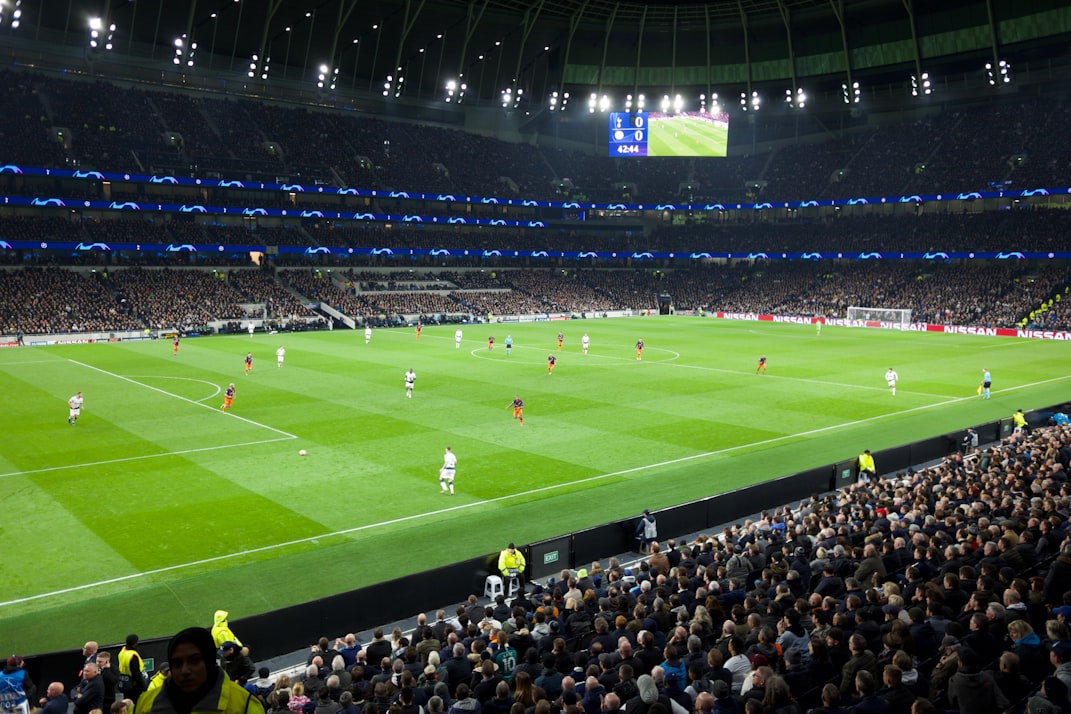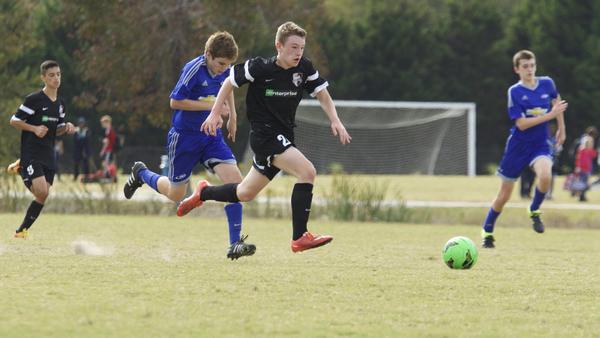

The biggest shock for young players stepping up competitive levels isn't the skill difference - it's the intensity. Training sessions that felt demanding suddenly seem comfortable compared to the relentless pace of match day. Players complete 85% of passes in practice, then struggle to hit 60% when opponents press aggressively. Fitness that carries them through training sessions leaves them gasping in the final twenty minutes of matches.
This intensity gap appears across all levels of grassroots football. Football training metrics help coaches identify where practice fails to replicate competition demands, enabling targeted adjustments that better prepare players for match situations. The teams that systematically measure and bridge this gap consistently outperform those with superior technical ability but inadequate preparation.
Understanding the Intensity Gap
Intensity encompasses more than physical exertion. A truly intense training environment replicates the physical demands, mental pressure, and technical challenges players face during competitive matches. Most grassroots training falls short in at least one of these areas.
What Intensity Actually Means
Physical intensity includes running volume, sprint frequency, and high-speed distance covered. A midfielder might run 8 kilometres during a match, with 1.5 kilometres at high intensity and fifteen separate sprints. If training sessions consistently deliver just 5 kilometres total with minimal high-speed running, the physical preparation gap becomes obvious.
Mental intensity refers to decision-making speed and quality under pressure. Training ground decisions happen with time and space. Match decisions occur whilst opponents close down, teammates shout conflicting instructions, and fatigue clouds thinking. This psychological component separates effective training from match simulation.
Technical execution under load measures skill quality when tired, pressured, or stressed. TeamStats data shows players' pass completion rates typically drop 15-25% from training to matches. A player completing 90% of passes in unopposed drills but 65% in matches lacks the technical capacity to perform under genuine intensity.
Why the Gap Exists
Training environments feel safe and predictable. Players know the drills, understand expectations, and face familiar teammates rather than aggressive opponents. This comfort reduces intensity naturally. Even well-designed sessions struggle to replicate the unpredictability and pressure of competitive matches.
Coaches often unconsciously reduce intensity to maintain positive atmospheres or avoid injuries. Training that leaves players exhausted risks complaints from parents, reduced attendance, or actual physical breakdowns. The pressure to keep training "enjoyable" conflicts with preparing players for competitive reality.
Measuring the Difference
Quantifying intensity requires tracking consistent metrics across training and matches. Distance covered provides the simplest starting point. GPS data or manual estimation shows whether training sessions approach match demands. If matches average 7 kilometres but training sessions deliver 4 kilometres, the physical gap is clear.
Football training metrics should include both volume (total distance) and intensity markers (high-speed distance, sprint count, heart rate peaks). A session delivering equal total distance but minimal high-intensity efforts still falls short of match demands. Elite players might spend 10-15 minutes of match time in high-intensity zones; grassroots training often includes just 5 minutes at comparable intensity.
Key Metrics for Training Intensity
Effective monitoring doesn't require sophisticated technology. Several accessible metrics provide actionable insights into whether training approaches match demands.
Distance Covered and Movement Patterns
Total distance per training session establishes baseline physical load. Position-specific benchmarks help - midfielders cover more ground than goalkeepers. Compare training distances to match averages for each position. Significant shortfalls indicate physical preparation gaps.
High-intensity running distance matters more than total volume. A player jogging 6 kilometres learns different lessons than one covering 5 kilometres with sustained high-intensity periods. Track how much distance occurs above moderate pace thresholds (roughly 75% of maximum speed).
Sprint frequency indicates explosive demand replication. Forwards might sprint 20+ times per match; if training includes just 5-6 sprints, the preparation gap is substantial. Count discrete sprint efforts (runs at near-maximum speed lasting 2-10 seconds) to quantify this element.
Heart Rate Monitoring
Heart rate zones reveal cardiovascular demand. Zone definitions vary, but generally:
Zone 1-2 (50-70% max HR): Low intensity, recovery
Zone 3 (70-80% max HR): Moderate intensity, sustainable
Zone 4 (80-90% max HR): High intensity, challenging
Zone 5 (90-100% max HR): Maximum intensity, brief
Matches typically show 10-20 minutes in Zone 4-5 combined. Training sessions with under 5 minutes in these zones fail to replicate cardiovascular demands. Heart rate monitors (chest straps or smartwatches) provide objective intensity measurement that perception alone misses.
Time in high-intensity zones reveals whether training creates genuine physical stress. A session with 20 minutes in Zone 4+ approaches match demands; one with 2 minutes doesn't, regardless of how "hard" it felt.
Technical Execution Under Load
Pass completion rates during high-intensity periods show technical capacity under stress. Record passing accuracy during the most physically demanding training sections. Compare these to match statistics. A player maintaining 80% passing accuracy when tired demonstrates better training adaptation than one dropping to 50%.
First touch quality measurements include how often players control balls cleanly versus requiring multiple touches. Fatigue degrades first touch noticeably. Track this in both training and matches to identify technical breakdown patterns.
Key Metrics for Match Intensity
Match statistics establish the benchmarks training must meet or exceed. Understanding actual competitive demands enables targeted training design.
Physical Output in Competition
Position-specific distance averages vary significantly. Centre-backs might cover 6-7 kilometres per match whilst central midfielders approach 9-10 kilometres. Full-backs and wide midfielders often exceed 8 kilometres. GPS data or post-match analysis from video provides these baselines.
Peak speed and repeated sprint ability separate good from exceptional athletes at grassroots level. A winger who hits 30 km/h maximum speed but can only repeat near-maximum efforts three times before significant decline shows different capacity than one maintaining explosive speed through 10+ sprints.
High-intensity distance per position reveals specific demands. Strikers might cover just 300-400 metres at high intensity but include 15 separate sprints. Midfielders accumulate 1,000+ metres at high intensity through constant transitions. Training must replicate position-specific patterns, not generic conditioning.
Technical Performance Under Pressure
Pass accuracy with opponents within 3-5 metres drops compared to unopposed situations. Measure this gap through match video analysis or statistical tracking. A central midfielder completing 75% of passes when pressed versus 90% when comfortable shows technical vulnerability under specific conditions training should address.
Dribbling success rates reveal ball control under defensive pressure. Players might complete 80% of dribbles in training but just 40% when defenders tackle aggressively in matches. This gap indicates technical skill execution breaking down under intensity.
Mental and Tactical Intensity
Decision-making speed requirements increase dramatically under match pressure. Training drills allowing 3-5 seconds to choose options don't prepare players for match situations demanding instant decisions. Tracking average decision time in training versus matches (through video analysis) reveals cognitive intensity gaps.
Concentration levels throughout 90 minutes determine late-match performance. Errors in the final 20 minutes often stem from mental fatigue rather than physical tiredness. Recording error patterns by match period shows whether intensity training develops sufficient mental stamina.
Identifying Common Training-Match Gaps
Certain patterns appear repeatedly when comparing training to match performance across grassroots football.
Physical Conditioning Shortfalls
Teams frequently conceding late goals despite adequate fitness training often lack match-specific conditioning. Training sessions hitting cardiovascular intensity without replicating the stop-start nature of football fail to develop the repeated high-intensity capacity matches demand.
Second-half performance drops in technical execution or decision-making indicate insufficient intensity conditioning. If pass completion falls from 70% in the first half to 55% in the second, players lack the conditioning to maintain technical standards when fatigued.
Recovery time between high-intensity actions reveals fitness specificity. A player completing a single sprint-backtrack sequence successfully but requiring 2 minutes to attempt another similar effort at match speed demonstrates inadequate recovery capacity for football's demands.
Technical Skill Degradation
Skills that disappear under pressure reveal training-match gaps. A defender comfortable playing out from the back in training but hoofing clearances when opponents press aggressively hasn't trained under sufficient pressure to develop true competence.
Position-specific technical failures often stem from unrealistic training. Midfielders who receive passes comfortably in training sessions but get tackled frequently in matches haven't practiced receiving under the tight pressure competitive matches create.
Psychological Unpreparedness
Handling competitive pressure requires exposure and adaptation. Teams training in comfortable, supportive environments struggle when matches become tense or hostile. Players who've never experienced genuine competitive pressure in training lack mental resilience for difficult match situations.
Decision-making panic under time pressure indicates insufficient training complexity. Sessions allowing players time to think through decisions don't prepare them for the instantaneous choices matches demand. This manifests as hesitation, safe choices avoiding risk, or poor decisions made under stress.
Tools for Measuring Training Intensity
Grassroots teams can access various monitoring tools at different price points and complexity levels.
GPS and Wearable Technology
Consumer GPS units designed for runners provide basic distance and speed data sufficient for grassroots intensity monitoring. Units costing £40-£100 track total distance, average pace, and maximum speed. More sophisticated football-specific GPS (£200-£500 per unit) adds high-intensity distance, sprint counts, and heat maps.
Position data from GPS shows where players spend time and how movement patterns differ between training and matches. A winger covering 2 kilometres in wide areas during training but 1 kilometre during matches indicates training failing to replicate positional demands.
Heart Rate Monitors and Smartphone Integration
Chest strap heart rate monitors (£30-£80) provide accurate cardiovascular intensity measurement. Many integrate with smartphone apps offering real-time zone tracking and post-session analysis. This technology makes intensity monitoring accessible to grassroots teams without significant investment.
Smartwatches with heart rate monitoring (£100-£400) combine convenience with reasonable accuracy. Whilst wrist-based heart rate detection is less precise than chest straps, it's sufficient for intensity zone identification and session load quantification.
Session RPE (Rate of Perceived Exertion)
The simplest intensity metric costs nothing. After each session, players rate perceived exertion on a 1-10 scale. Multiply this rating by session duration (in minutes) to calculate training load. A 60-minute session rated 8/10 = 480 training load units.
Compare session RPE across training and matches. If training sessions consistently rate 5-6/10 whilst matches rate 8-9/10, the intensity gap is obvious. Track session RPE over time to ensure progressive intensity increases as season advances.
Session RPE also reveals individual variations. Two players completing identical sessions might report 6/10 and 9/10, indicating different fitness levels or effort investment. This individual feedback guides personalized training load management.
Designing Match-Realistic Training Sessions
Closing intensity gaps requires deliberate session design replicating competitive demands.
Small-Sided Games for Intensity
Small-sided games naturally generate high intensity through increased involvement. Every player touches the ball more frequently, makes more decisions, and covers more high-intensity distance than in full-sized games. Research on 7-a-side formations shows these formats replicate match intensity effectively whilst developing tactical understanding.
Game size affects intensity differently by position. Goalkeepers require different formats than outfield players to achieve appropriate intensity. Consider position-specific small-sided games occasionally to ensure every player experiences sufficient intensity.
Pitch dimensions influence physical demands. Smaller pitches create congestion, increasing technical and decision-making pressure. Larger pitches emphasize running volume and transition speed. Varying dimensions across training sessions develops capacity for different intensity types.
Opposed Practice
Adding defensive pressure to technical drills dramatically increases intensity. Unopposed passing patterns allow comfortable technique execution. Adding passive defenders requires faster decision-making. Introducing active defenders replicates match pressure fully.
Progressive opposition intensity helps players adapt gradually. Start drills with passive defenders (limited movement, no tackling), progress to active defenders (full movement, 50% tackling intensity), and finish with competitive defenders (match intensity). This progression develops technical skill under increasing pressure.
When to use passive versus active defenders depends on training objectives. Developing new skills warrants passive opposition allowing successful repetition. Preparing for imminent matches requires active opposition replicating competitive intensity.
Tactical Pressure Scenarios
Time-constrained decision-making drills force quick thinking under pressure. Setting 5-second possession limits, requiring three passes within 10 seconds, or creating other time constraints replicates the rushed decisions matches demand.
Numerical disadvantage situations (defending 2v3, attacking 3v4) create intensity through overload management. Players must work harder physically, think faster, and execute precisely to succeed. These scenarios appear regularly in matches but rarely in training unless deliberately included.
Position-Specific Intensity Requirements
Different positions face distinct intensity profiles requiring tailored training approaches.
Midfielder Physical Demands
Midfielders cover the highest total distance of any outfield position, typically 8-10 kilometres per match at grassroots level. Central midfielders transition between attack and defence constantly, creating high-intensity demand patterns. Training must replicate this box-to-box running through transition-focused exercises.
Central midfielder positioning determines specific intensity requirements. Defensive midfielders make more short, explosive movements whilst attacking midfielders emphasize sustained high-intensity running. Position-specific training accounts for these variations.
Forward Intensity Patterns
Forwards demonstrate different intensity profiles than midfielders - lower total distance but higher sprint frequency and greater explosive demands. A striker might run 6-7 kilometres total with 400-500 metres at high intensity and 20+ separate sprints. Training emphasizing constant movement at moderate pace fails to replicate forward demands.
Rest periods between efforts matter for forwards. Match analysis shows strikers often get 60-90 seconds recovery between explosive efforts. Training including similar work-rest ratios prepares players for position-specific demands better than continuous high-intensity work.
Using Data to Adjust Training Loads
Football training metrics guide systematic load management ensuring players develop without overtraining.
Individual Load Management
Tracking cumulative training load across weeks identifies overtraining risk. Players accumulating significantly higher loads than teammates might be at increased injury risk. GPS data, heart rate monitoring, or session RPE totals all provide load quantification.
Acute-to-chronic workload ratios compare recent load (past week) to typical load (past month average). Ratios above 1.5 suggest overload risk; maintaining ratios between 0.8-1.3 optimizes adaptation whilst minimizing injury risk.
Pre-Match Preparation Optimization
The final week before matches requires careful intensity management. High-intensity work 4-5 days pre-match develops sharpness without causing fatigue. The final 2-3 days emphasize tactical preparation and light physical work maintaining fitness without accumulating fatigue.
Using a team management app helps track training loads across the week, ensuring players enter matches optimally prepared rather than overtrained or underprepared.
Age-Appropriate Intensity Considerations
Intensity expectations must align with developmental stage rather than applying adult standards to youth players.
Youth Development (U9-U12)
Young players develop intensity tolerance naturally through play-based activities rather than structured conditioning. Small-sided games provide age-appropriate intensity without formal fitness training. Focus on engagement and skill development; physical capacity emerges naturally.
Avoiding burnout matters more than maximizing intensity at young ages. Players introduced to excessive intensity early often lose enthusiasm for football. Patient physical development yields better long-term outcomes than rushing intensity progression.
Adolescent Players (U13-U16)
Growth spurts affect intensity tolerance significantly. Some players handle high loads comfortably whilst others struggle during rapid growth phases. Individual monitoring through session RPE or observation prevents overloading players whose bodies are already stressed by growth demands.
Age-appropriate football development considers that physical maturation varies widely. Early-maturing players tolerate higher intensity than late-maturing peers. Avoid comparing players directly; focus on individual progress.
Bridging the Gap Systematically
Closing training-match intensity gaps requires structured approaches rather than random intensity increases.
Progressive Intensity Introduction
Gradual pressure increases allow adaptation without overwhelming players. If current training sessions rate 5/10 intensity whilst matches rate 8/10, target 6/10 for several weeks, then 7/10, before attempting match-level intensity regularly. Jumping directly from 5 to 8 risks injury and discourages players.
Monitoring adaptation responses through performance metrics and player feedback guides progression speed. If players handle increased intensity whilst maintaining technique and enthusiasm, continue progressing. If technical execution degrades or complaints increase, slow progression.
Regular Testing and Benchmarking
Monthly fitness assessments quantify whether training intensity produces desired adaptations. Simple tests (sprint times, high-intensity running capacity, technical skills under fatigue) reveal improvement trends or stagnation.
Comparing training outputs to match benchmarks shows gap closure over time. If the season begins with training sessions delivering 60% of match intensity but reaches 85% by mid-season, the systematic approach is working.
Conclusion
Comparing training and match intensity levels reveals where preparation falls short of competitive demands. Football training metrics provide objective evidence guiding session design, load management, and systematic gap closure. Teams that measure both training and match intensity, identify shortfalls, and progressively increase preparation intensity consistently outperform those relying on subjective assessments.
Start with accessible metrics: distance covered, heart rate zones, session RPE, and technical execution quality. Track these consistently across training and matches. Design sessions deliberately replicating match demands through small-sided games, opposed practice, and tactical pressure scenarios. Monitor individual players to prevent overload whilst ensuring sufficient intensity for adaptation.
The intensity gap closes through systematic measurement and progressive adjustment, not random difficulty increases. Build training environments that challenge players appropriately for their age and development stage whilst steadily approaching competitive demands. The result is players who perform their best when it matters most - during matches - because training has genuinely prepared them for those moments.
Transform your team's preparation by implementing football coaching apps that track training metrics systematically and compare them to match performance. Close the intensity gap, and watch training improvements translate directly into competitive success.
═══════════════════════════════════════════════════════════════